Sodium hydride → HCID 131726837, compound
Reaction equation

[N:1]([C@@H:4]1[CH2:13][C:12]2[C:7](=[CH:8][CH:9]=[CH:10][CH:11]=2)[CH2:6][C@H:5]1[OH:14])=[N+:2]=[N-:3].[H-].[Na+].Br[CH2:18][C:19]([O:21][C:22]([CH3:25])([CH3:24])[CH3:23])=[O:20]>O1CCCC1>[N:1]([C@@H:4]1[CH2:13][C:12]2[C:7](=[CH:8][CH:9]=[CH:10][CH:11]=2)[CH2:6][C@H:5]1[O:14][CH2:18][C:19]([O:21][C:22]([CH3:25])([CH3:24])[CH3:23])=[O:20])=[N+:2]=[N-:3]Participants
Reactant 3

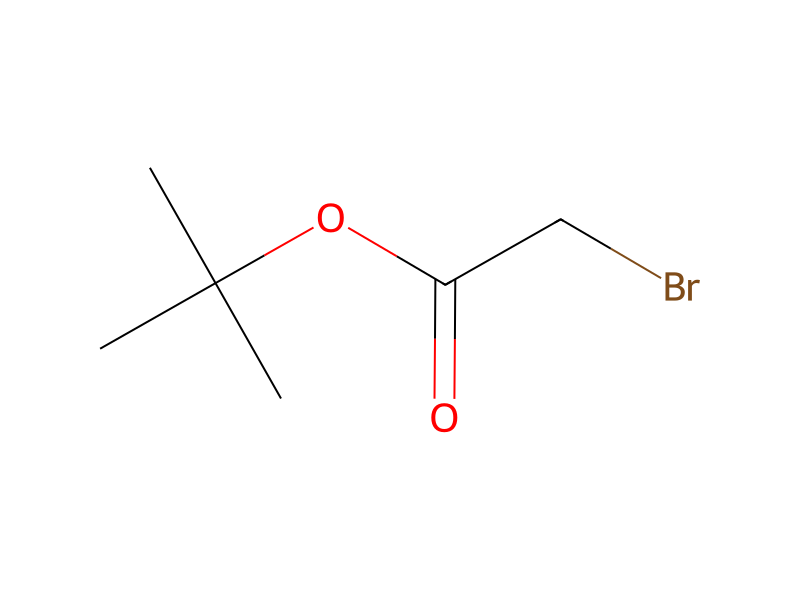

Product 1

Reagents, catalysts & solvents 1

Procedure
To a stirred solution of trans 3-azido-2-hydroxy-1,2,3,4-tetrahydronaphthalene (95 mg, 0.55 mmol) in tetrahydrofuran (5 mL) at 0° C. under nitrogen was added sodium hydride (60% oil dispersion, 26 mg, 0.66 mmol). Gas evolution was observed and the reaction mixture turned cloudy. After slowly warming up to room temperature for 20 min, t-butyl bromoacetate (0.12 mL, 0.83 mmol) was added. After 2 h, the reaction mixture was quenched by addition of saturated aqueous ammonium chloride solution and diluted with ethyl acetate. The organic layer was washed with aqueous ammonium chloride solution and brine, dried over anhydrous magnesium sulfate, and concentrated under vacuum to yield a residue. The residue was purified by silica gel chromatography (7% ethyl acetate in hexane was used) to obtain the title compound (90 mg). 13C NMR (400 MHz, CDCl3) δ 169.59, 133.18, 132.59, 128.88, 128.45, 126.50, 126.37, 81.76, 78.89, 67.99, 61.40, 33.95, 33.51, 28.08. 1H NMR (400 MHz, CDCl3) δ 7.03-7.17 (m, 4H), 4.20 (s, 2H), 3.91 (m, 1H), 3.73 (m, 1H), 3.29 (dd, J=5.7, 16.8 Hz, 1H), 3.16 (dd, J=5.7, 16.8 Hz, 1H), 2.90 (dd, J=8.4, 17.0 Hz, 1H), 2.80 (dd, J=8.4, 17.0 Hz, 1H), 1.48 (s, 9H).
Workup
- customthe reaction mixture was quenched by addition of saturated aqueous ammonium chloride solution
- additiondiluted with ethyl acetate
- washThe organic layer was washed with aqueous ammonium chloride solution and brine
- dry with materialdried over anhydrous magnesium sulfate
- concentrationconcentrated under vacuum
- customto yield a residue
- customThe residue was purified by silica gel chromatography (7% ethyl acetate in hexane was used)
Sources & evidence
- ORD record
- ord-9bf3c0c9bba34f13996f813bab4a174c
- Source dataset
- uspto-grants-2008_04
- Patent number
- US07365061B2
Reaction notes
Loading…