1,2-Dichloro-4-nitrobenzene → 2-Chloro-1-fluoro-4-nitrobenzene
Reaction equation

[Cl:1][C:2]1[CH:3]=[C:4]([N+:9]([O-:11])=[O:10])[CH:5]=[CH:6][C:7]=1Cl.[F-:12].[K+].[F-].[Cs+].C1S(=O)(=O)CCC1>>[Cl:1][C:2]1[CH:3]=[C:4]([N+:9]([O-:11])=[O:10])[CH:5]=[CH:6][C:7]=1[F:12]Participants
5




Procedure
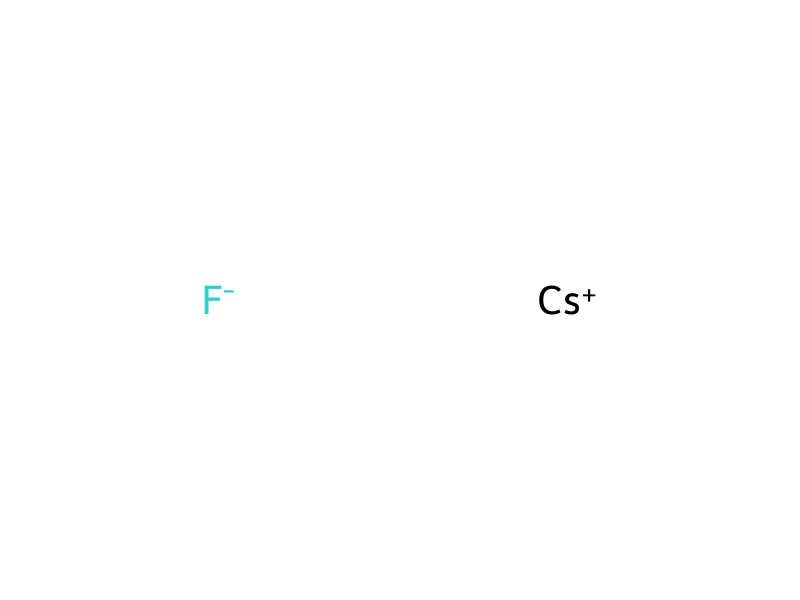
1,500 parts of 3,4-dichloronitrobenzene, 680 parts of potassium fluoride and 5 parts of cesium fluoride are stirred in 1,500 parts of tetramethylenesulfone under nitrogen for 3 hours at 220° C. Working up takes place as described in Example 1(a). 1,275 parts (93% of theory) of 3-chloro-4-fluoronitrobenzene of melting point 41°-42° C. are obtained.
Sources & evidence
- ORD record
- ord-54ce1f86f54c48cc9dfab5c428c9a694
- Source dataset
- uspto-grants-1980_10
- Patent number
- US04229365
Reaction notes
Loading…