4-Hydroxybiphenyl → HCID 67944780, compound
Reaction equation

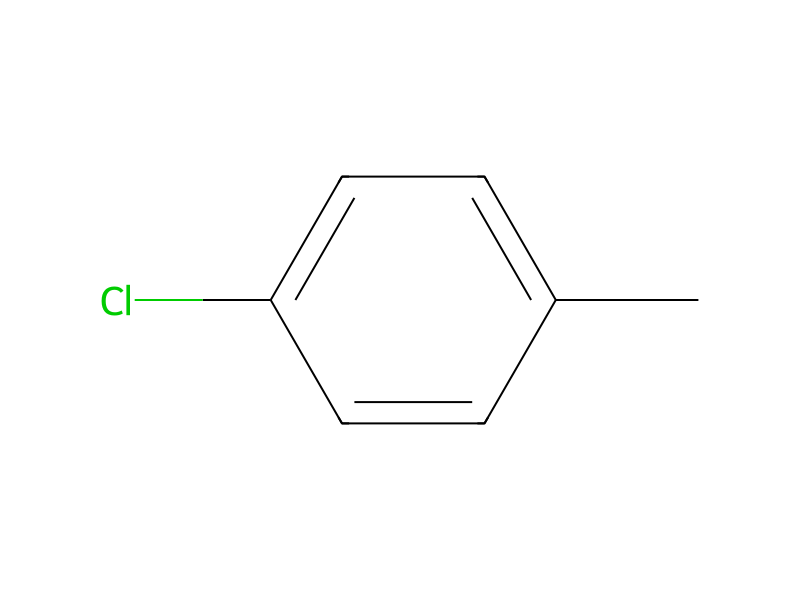
[C:1]1([C:8]2[CH:13]=[CH:12][CH:11]=[CH:10][CH:9]=2)[CH:6]=[CH:5][C:4](O)=[CH:3][CH:2]=1.[OH-:14].[K+].Cl[C:17]1[CH:22]=[CH:21][C:20]([CH3:23])=[CH:19][CH:18]=1>Cl[Cu].[Cu].O>[C:1]1([C:8]2[CH:13]=[CH:12][CH:11]=[CH:10][CH:9]=2)[CH:6]=[CH:5][CH:4]=[CH:3][C:2]=1[O:14][C:21]1[CH:22]=[CH:17][CH:18]=[CH:19][C:20]=1[CH3:23]Participants
Reactant 3


Product 1

Reagents, catalysts & solvents 3



Procedure
A mixture of 1,123 g (6.6 moles) of biphenyl-4-ol. 396 g (6.0 moles) of potassium hydroxide (85%), 1,519 g (12.0 moles) of p-chlorotoluene, and a catalyst mixture consisting of 7.5 g of CuCl, 3.0 g of CuCl2, 3.0 g of CuCO3.Cu(OH)2H2O, 3.0 g of copper powder, and 18 g of activated alumina were heated to reflux with stirring for 15 hr. The reaction was conducted under a nitrogen blanket. Water of reaction was removed by azeotropic distillation, and when the pot temperature had reached 167°, 70 ml of dimethylacetamide, 6.0 g of CuCl, 3.0 g of CuCl2, 3.0 g of CuCO3. Cu(OH)2.H2O, 6.0 g of copper, and 14 g of alumina were added. Refluxing was continued for 4 hr. and approximately 20 ml of p-chlorotoluene was removed by distillation. After an additional 10 hr. of reflux the pot temperature was raised to 230° and 180 ml of p-chlorotoluene was distilled off. The reaction mixture was cooled to about 180° and then poured into ice water with stirring. The resulting precipitate was filtered, washed with water, and recrystallized from ethanol to give 1,303 g (5.0 moles, 76%) of p-biphenylyloxytoluene, mp 97° to 99°. Vacuum distillation followed by recrystallization from ethanol gave colorless platelets of mp 99° to 100°. IR (KBr): 1270 cm-1 (aryl ether). A 988 g (3.8 moles) sample of this compound was dissolved in 7.5 liters of acetic acid, together with 94.5 g (0.38 mole) of cobalt acetate tetrahydrate, and 3.1 g (0.038 mole) of hydrobromic acid. Oxygen was passed through the solution with stirring and heating to 100°. After approximately 3 hours, the reaction was complete. After cooling to room temperature, the resulting crystalline precipitate was filtered and recrystallized from o-dichlorobenzene to give 799 g (2.75 moles, 72%) of colorless crystals, mp 243° to 244°, IR(KBr): 1700 cm-1 (acid carbonyl), 1280 cm-1 (aryl ether). Reaction of 798.0 g (2.75 moles) of acid with 399.0 ml (5.50 moles) SOCl2 in 1500 ml benzene (containing 4 drops pyridine) at 60°-70° followed by vacuum distillation (up to 215° at 0.40 mm Hg) yielded 805.7 g (95.0%) colorless crystals of p-(4-biphenylyloxy)benzoyl chloride of mp 93.5°-94.7° and a light-brown forecut of 20.86 g (2.46%).
Workup
- temperatureto reflux
- customwas removed by azeotropic distillation, and when the pot temperature
- customhad reached 167°
- additionCu(OH)2.H2O, 6.0 g of copper, and 14 g of alumina were added
- temperatureRefluxing
- waitwas continued for 4 hr
- customand approximately 20 ml of p-chlorotoluene was removed by distillation
- waitAfter an additional 10 hr
- temperatureof reflux the pot temperature
- temperaturewas raised to 230°
- distillation180 ml of p-chlorotoluene was distilled off
- temperatureThe reaction mixture was cooled to about 180°
- additionpoured into ice water
- stirringwith stirring
- filtrationThe resulting precipitate was filtered
- washwashed with water
- customrecrystallized from ethanol
Sources & evidence
- ORD record
- ord-a1a8c1c8c4d247e0bde6e57678811edd
- Source dataset
- uspto-grants-1980_10
- Patent number
- US04229564
Reaction notes
Loading…