6-Chloro-8-formyl-4-oxo-10-propyl-4H-pyrano[3,2-g]quinoline-2-carboxylic acid → Hydrochloric Acid
Reaction equation

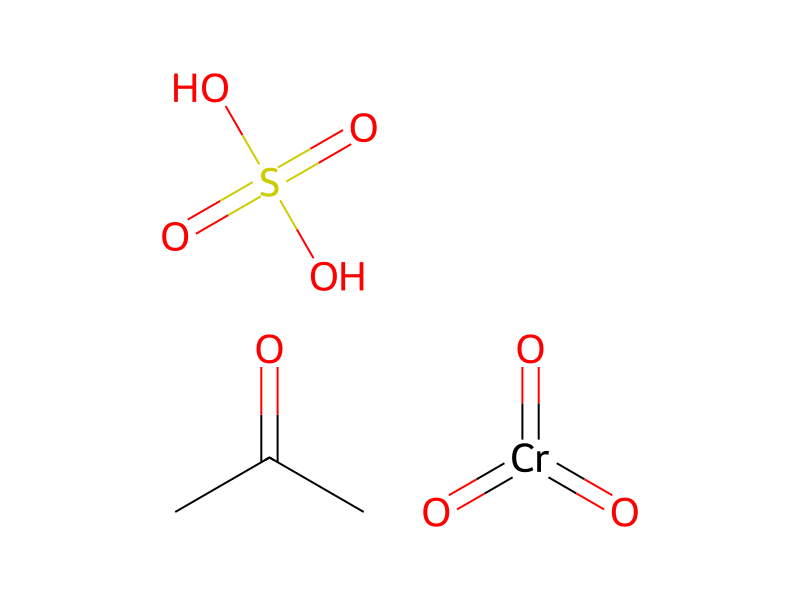
[Cl:1][C:2]1[C:11]2[C:6](=[C:7]([CH2:20][CH2:21][CH3:22])[C:8]3[O:15][C:14]([C:16]([OH:18])=[O:17])=[CH:13][C:12](=[O:19])[C:9]=3[CH:10]=2)[N:5]=[C:4]([CH:23]=[O:24])[CH:3]=1.CC(C)=[O:27].OS(O)(=O)=O.O=[Cr](=O)=O>CC(C)=O.[Cl-].[Na+]>[ClH:1].[Cl:1][C:2]1[C:11]2[C:6](=[C:7]([CH2:20][CH2:21][CH3:22])[C:8]3[O:15][C:14]([C:16]([OH:18])=[O:17])=[CH:13][C:12](=[O:19])[C:9]=3[CH:10]=2)[N:5]=[C:4]([C:23]([OH:27])=[O:24])[CH:3]=1Participants
6





Procedure
6-Chloro-8-formyl-4-oxo-10-propyl-4H-pyrano[3,2-g]quinoline-2-carboxylic acid (0.23 g) in acetone (20 ml) was treated with Jones reagent (0.8 ml), left 20 min. at 0°, then diluted with saturated aqueous sodium chloride, and extracted with 10% sodium bicarbonate. Acidification with 2 N-hydrochloric acid gave the title compound, (200 mg), mp 340° C.
Workup
- extractionextracted with 10% sodium bicarbonate
Sources & evidence
- ORD record
- ord-23600d1eea0a442896c8550237e26359
- Source dataset
- uspto-grants-1983_12
- Patent number
- US04419352
Reaction notes
Loading…