Sorbitol → Sorbitol
Reaction equation

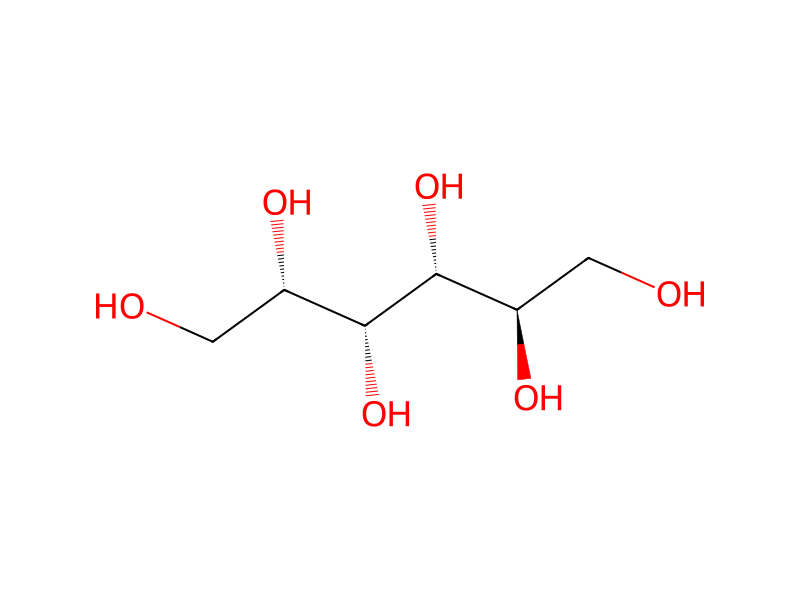
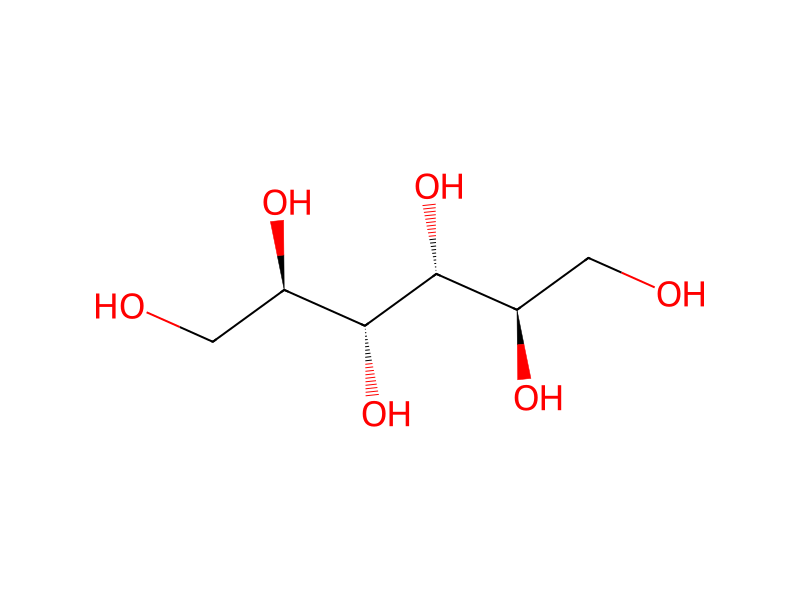
[OH:1][CH2:2][C@@H:3]([C@H:5]([C@@H:7]([C@@H:9]([CH2:11][OH:12])[OH:10])[OH:8])[OH:6])[OH:4].[CH2:13]([OH:24])[C@H:14]([C@H:16]([C@@H:18]([C@@H:20]([CH2:22][OH:23])[OH:21])[OH:19])[OH:17])[OH:15]>>[OH:12][CH2:11][C@@H:9]([C@H:7]([C@@H:5]([C@@H:3]([CH2:2][OH:1])[OH:4])[OH:6])[OH:8])[OH:10].[OH:24][CH2:13][C:14]([C@H:16]([C@@H:18]([C@H:20]([CH2:22][OH:23])[OH:21])[OH:19])[OH:17])=[O:15].[CH2:11]([OH:12])[C@H:9]([C@H:7]([C@@H:5]([C@@H:3]([CH2:2][OH:1])[OH:4])[OH:6])[OH:8])[OH:10]Participants
5

Procedure
Th aerobic fermenting bacteria include: Gluconobacter oxydans (subsp. suboxydans). The amount of suboxydans used is generally related to the amount of the D-sorbitol or D-mannitol fed. This latter amount ranges from about 20 g to about 80 g./hr./g. of catalyst. D-sorbitol yields L-sorbose and D-mannitol yields D-fructose.
Sources & evidence
- ORD record
- ord-65bff43c26594c7892899f77ab6343ba
- Source dataset
- uspto-grants-1983_12
- Patent number
- US04421568
Reaction notes
Loading…