Sodium hydride → 2-bromo-5-((2-(trimethylsilyl)ethoxy)methyl)-5H-pyrrolo[2,3-b]pyrazine
Reaction equation

[H-].[Na+].[Br:3][C:4]1[N:5]=[C:6]2[CH:12]=[CH:11][NH:10][C:7]2=[N:8][CH:9]=1.[CH3:13][Si:14]([CH2:17][CH2:18][O:19][CH2:20]Cl)([CH3:16])[CH3:15]>CCCCCC.CN(C)C=O>[Br:3][C:4]1[N:5]=[C:6]2[CH:12]=[CH:11][N:10]([CH2:20][O:19][CH2:18][CH2:17][Si:14]([CH3:16])([CH3:15])[CH3:13])[C:7]2=[N:8][CH:9]=1Participants
6
Reactant 3

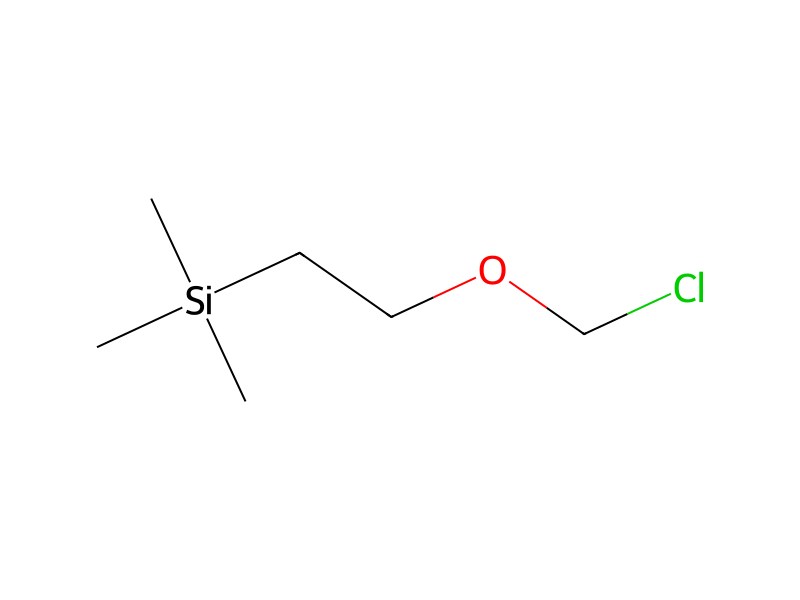

Product 1

Reagents, catalysts & solvents 2


Conditions
- Temperature
- 2.5 °C
Procedure
Sodium hydride (60% in mineral oil, 0.800 g, 20 mmol) was washed with hexane then taken up in 30 mL of N,N-dimethylformamide and cooled to 0-5° C. 2-Bromo-5H-pyrrolo[2,3-b]pyrazine (3.0 g, 15 mmol) was added, then SEMCl (3.5 mL, 20 mmol). The mixture was stirred at room temperature for 3 h, then concentrated. Column chromatography afforded 3.25 g (65%) of 2-bromo-5-(2-trimethylsilanyl-ethoxymethyl)-5H-pyrrolo[2,3-b]pyrazine.
Workup
- concentrationconcentrated
Sources & evidence
- ORD record
- ord-94fcd548ca3d42a1ae62c59bd39555d7
- Source dataset
- uspto-grants-2011_09
- Patent number
- US08012974B2
Reaction notes
Loading…