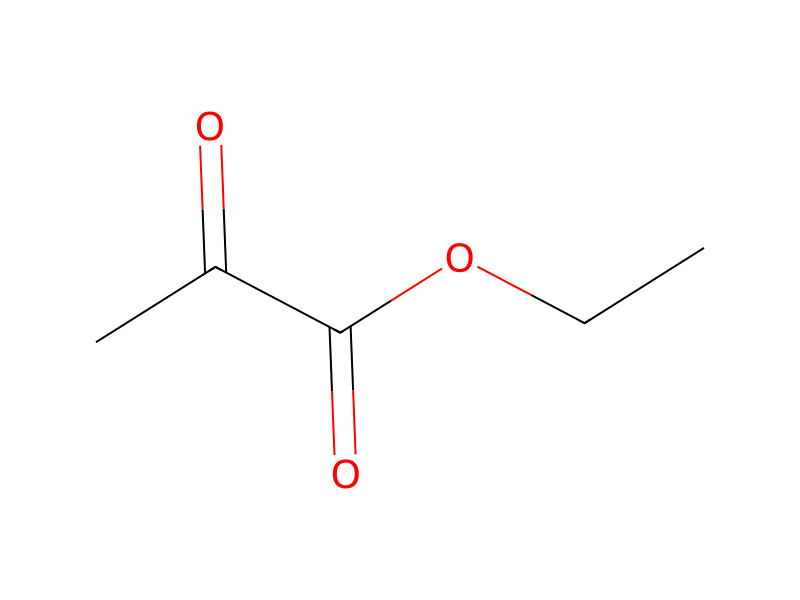
Ethyl pyruvate → HCID 5255543, compound
Reaction equation

[Cl:1][C:2]1[CH:7]=[CH:6][C:5]([NH:8][NH2:9])=[C:4]([CH3:10])[CH:3]=1.[C:11]([O:16][CH2:17][CH3:18])(=[O:15])[C:12]([CH3:14])=O.C([O-])(O)=O.[Na+]>C(O)(=O)C>[CH2:17]([O:16][C:11](=[O:15])[C:12](=[N:9][NH:8][C:5]1[CH:6]=[CH:7][C:2]([Cl:1])=[CH:3][C:4]=1[CH3:10])[CH3:14])[CH3:18]Participants
5
Reactant 3


Product 1

Reagents, catalysts & solvents 1

Conditions
- Temperature
- 35 °C
Procedure
To a stirred solution of 0.55 g (2.85 mmol) of (4-chloro-2-methyl-phenyl)-hydrazine, in acetic acid (5 ml), was added 0.34 g (2.91 mmol) of ethyl pyruvate. The mixture was stirred 2 hours at 35° C., poured onto an aqueous solution of sat. NaHCO3 and then extracted with ethyl acetate. The combined organic phases were dried over Na2SO4 and concentrated in vacuo, to afford 0.702 g (97%) of 2-[(4-chloro-2-methyl-phenyl)-hydrazono]-propionic acid ethyl ester as a light orange solid.
Workup
- extractionextracted with ethyl acetate
- dry with materialThe combined organic phases were dried over Na2SO4
- concentrationconcentrated in vacuo
Sources & evidence
- ORD record
- ord-a5e02e048df6430f97f7983e611c00cf
- Source dataset
- uspto-grants-2011_09
- Patent number
- US08026259B2
Reaction notes
Loading…