L-Lysine → epsilon-(Benzyloxycarbonyl)-L-lysine
Reaction equation

Cl[C:2]([O:4][CH2:5][C:6]1[CH:11]=[CH:10][CH:9]=[CH:8][CH:7]=1)=[O:3].N1C2C=CC=CC=2N=N1.CN(C1C=CC=CN=1)C.[OH-].[Na+].[NH2:32][C@H:33]([C:39]([OH:41])=[O:40])[CH2:34][CH2:35][CH2:36][CH2:37][NH2:38]>C1COCC1.O>[NH2:32][C@H:33]([C:39]([OH:41])=[O:40])[CH2:34][CH2:35][CH2:36][CH2:37][NH:38][C:2]([O:4][CH2:5][C:6]1[CH:11]=[CH:10][CH:9]=[CH:8][CH:7]=1)=[O:3]Participants
Reactant 5
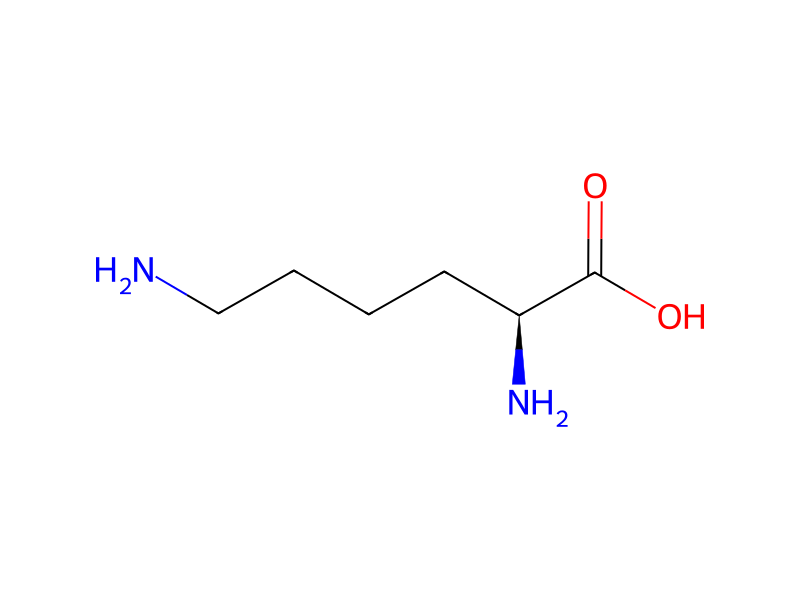


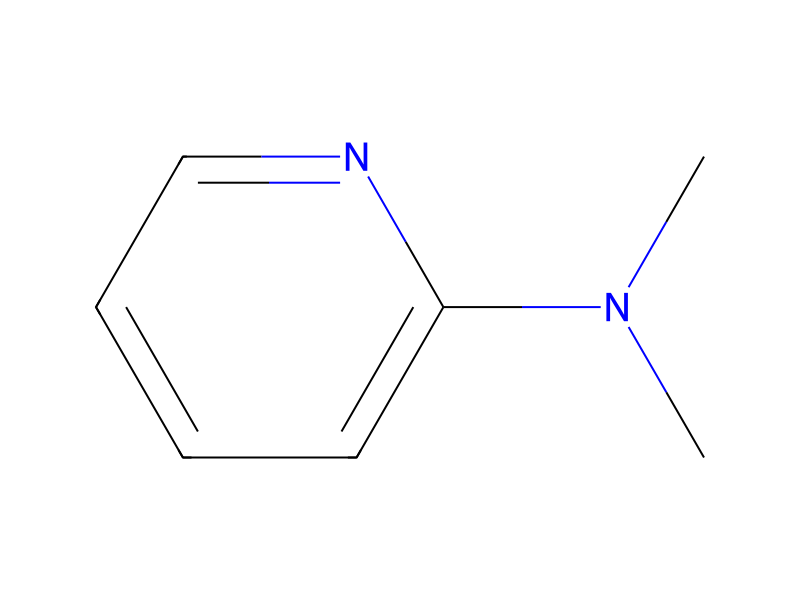

Product 1

Reagents, catalysts & solvents 2


Procedure
A solution of benzyl chloroformate (7.3 mL, 51.9 mmol) in THF (70 mL) was treated with benzotriazole (6.1 g, 51.2 mmol) and dimethylaminopyridine (83 mg, 0.68 mmol). The mixture was stirred at room temperature for 4 hours, while maintaining pH 10 with aqueous sodium hydroxide, and a thin suspension was obtained. This mixture was slowly poured, stirring at 0° C. and maintaining pH 12 with aqueous sodium hydroxide, into a solution of L-lysine (5.0 g, 34.2 mmol) in water (75 mL) at pH 12. After adding further 50 mL of THF and 50 mL of water, the reaction mixture was stirred overnight, then partly concentrated under vacuum and treated with hydrochloric acid to pH 5.6. The suspension was filtered and the residue washed 3 times with chloroform. The product (7.3 g, 76%) is the expected H-Lys(Z)-OH (1H-NMR, 13C-NMR, ESI-MS).
Workup
- customa thin suspension was obtained
- additionThis mixture was slowly poured
- stirringstirring at 0° C.
- stirringthe reaction mixture was stirred overnight
- concentrationpartly concentrated under vacuum
- additiontreated with hydrochloric acid to pH 5.6
- filtrationThe suspension was filtered
- washthe residue washed 3 times with chloroform
Sources & evidence
- ORD record
- ord-fda332b4a6ce40e4b0a4697564b3b909
- Source dataset
- uspto-grants-2011_09
- Patent number
- US08026372B2
Reaction notes
Loading…