Acetonitrile → HCID 87385317, compound
Reaction equation

CN[C:3]([N:5]([S:14]([CH3:17])(=[O:16])=[O:15])[N:6]([S:10]([CH3:13])(=[O:12])=[O:11])[CH2:7][CH2:8][Cl:9])=[O:4].[C:18](#N)[CH3:19].CNC(Cl)=[O:24]>C(N(CC)CC)C>[CH3:13][S:10]([N:6]([CH2:7][CH2:8][Cl:9])[N:5]([S:14]([CH3:17])(=[O:16])=[O:15])[C:3]([O:24][CH2:18][CH3:19])=[O:4])(=[O:12])=[O:11]Participants
Reactant 3

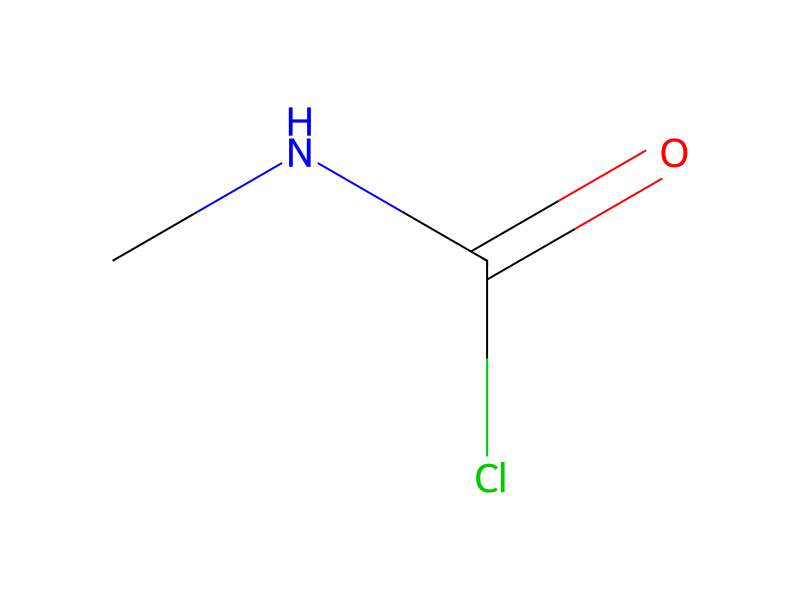

Product 1

Reagents, catalysts & solvents 1

Conditions
- Temperature
- 90 °C
Procedure
In the present invention two novel methods relate to syntheses of VNP40101M with higher yields. Method B directly uses the intermediate BMH, the starting material for preparation of VNP4090CE. As showed in FIG. 3, a one-pot reaction of BMH with methylcarbamic chloride (MCC) affords VNP40101M in a 60+% yield. In this method, the carbonyl coupling reaction of the substituted hydrazine and the chloro-replacement reaction of the alkyl mesylate take place concurrently. Triethylamine (TEA) is preferably used as a base for the reaction, and acetonitrile is usually used as solvent. The molar ratio of the reactant, BMH to MCC to TEA, is preferable in 1:2:2. The two concurrent reactions are usually heated at approximately 90° C. Other important aspects of the present invention include improvement over the prior art synthesis. In the prior art (FIG. 1), product from the mesylation reaction was not isolated and directly used for the chloro-replacement reaction to generate VNP4090CE in an approximately 20% yield. In the instant invention the mesylated product BMH is isolated as a pale solid in a 55+% yield by easy operations of precipitation and filtration. Thus the total yield of the process to VNP40101M can be increased to 30+%. By the performing this mesylation and two concurrent reactions, the instant invention, in addition to reducing the number of steps required for the synthesis and improving overall yield, also makes handling easier and therefore makes commercial large-scale production easier. Alternatively, the two concurrent reactions in method B were changed to two separation reactions by using an alkyl or aryl chloroformate ClC(O)OR to form a stable carbamade intermediate, followed by a conversion of the carbamade into the corresponding urea (VNP40101M). For example, the reaction of ethyl chloroformate ClC(O)OEt with BMH resulted in a stable intermediate 1,2-bis(methylsulfonyl)-1-(2-chloroethyl)-2-(ethyloxycarbonyl)-hydrazine (CEE), which were reacted with methylamine in the presence of a Lewis acid (preferable AlCl3) to form VNP40101M (FIG. 4). R in ClC(O)OR could be alkyl (e.g. methyl, ethyl, t-butyl, and etc) and aryl (e.g. phenyl, 4-nitrophenyl, and etc). The Lewis acid could be AlCl3, SnCl4, TiCl4, FeCl3, and etc.
Workup
- customart synthesis
- customIn the prior art (FIG. 1), product from the mesylation reaction
- customwas not isolated
- customIn the instant invention the mesylated product BMH is isolated as a pale solid in a 55+% yield
- customby easy operations of precipitation and filtration
- temperatureThus the total yield of the process to VNP40101M can be increased to 30+%
- additionBy the performing this mesylation and two concurrent reactions, the instant invention, in addition
- customrequired for the synthesis
- customAlternatively, the two concurrent reactions in method B were changed to two separation reactions
- customto form a stable carbamade intermediate
Sources & evidence
- ORD record
- ord-9cd3b510fd434b129c4e536de6247e68
- Source dataset
- uspto-grants-2011_09
- Patent number
- US08026395B1
Reaction notes
Loading…