Triethylamine → N-benzyl-2-bromo-N-propan-2-ylacetamide
Reaction equation

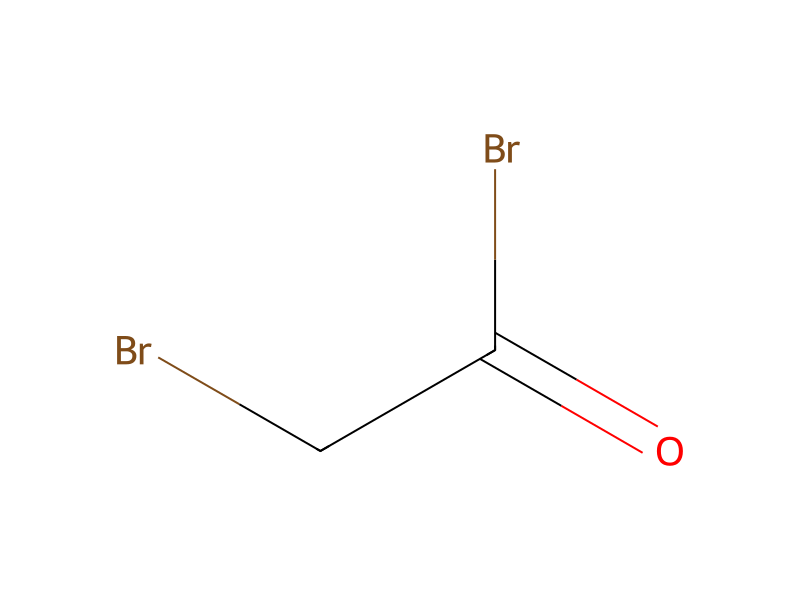
[CH:1]([NH:4][CH2:5][C:6]1[CH:11]=[CH:10][CH:9]=[CH:8][CH:7]=1)([CH3:3])[CH3:2].CCN(CC)CC.[Br:19][CH2:20][C:21](Br)=[O:22]>C(Cl)(Cl)Cl.C(Cl)Cl>[CH2:5]([N:4]([CH:1]([CH3:3])[CH3:2])[C:21](=[O:22])[CH2:20][Br:19])[C:6]1[CH:11]=[CH:10][CH:9]=[CH:8][CH:7]=1Participants
6
Reactant 3


Product 1

Reagents, catalysts & solvents 2


Conditions
- Temperature
- 0 °C
Procedure
To a solution of N-isopropylbenzylamine (40 mL, 240 mmol) in CHCl3 (300 mL) was added Et3N (36.8 mL). The reaction was cooled to 0° C. and bromoacetyl bromide (21.8 mL, 251 mmol) was added. The mixture was stirred at room temperature for 24 hours and was diluted with CH2Cl2. The organic solution was washed consecutively with 5% aqueous HCl (1×) and aqueous NaHCO3 (1×). The organic solution was dried (Na2SO4), filtered and concentrated. The residue was dissolved in 40% EtOAc in hexanes and was filtered through a silica gel pad to provide 52.2 g of N-benzyl-2-bromo-N-isopropyl-acetamide. 1H NMR (CD2Cl2) δ 7.20-7.40 (m, 5H), 4.53 (d, 2H), 4.22 (m) and 4.74 (m, total 1H), 4.01 (s, 1H), 3.72 (s, 1H), 1.20 (d, 3H), 1.12 (d, 3H).
Workup
- washThe organic solution was washed consecutively with 5% aqueous HCl (1×) and aqueous NaHCO3 (1×)
- dry with materialThe organic solution was dried (Na2SO4)
- filtrationfiltered
- concentrationconcentrated
- dissolutionThe residue was dissolved in 40% EtOAc in hexanes
- filtrationwas filtered through a silica gel pad
Sources & evidence
- ORD record
- ord-72c3b77c1ba24ac08b1497b6676179b2
- Source dataset
- uspto-grants-2007_09
- Patent number
- US07265104B2
Reaction notes
Loading…