Acetic Acid → 4-Bromofuran-2-carboxylic acid
Reaction equation

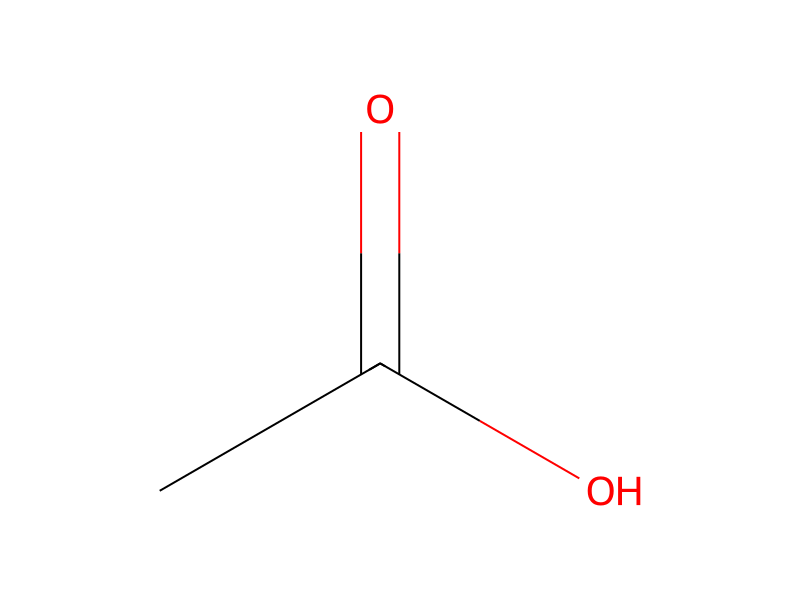
[Br:1][C:2]1[CH:3]=[C:4]([C:8]([OH:10])=[O:9])[O:5][C:6]=1Br.O.CC(O)=O>C1(C)C=CC=CC=1.[Zn]>[Br:1][C:2]1[CH:3]=[C:4]([C:8]([OH:10])=[O:9])[O:5][CH:6]=1Participants
Reactant 3

Product 1

Reagents, catalysts & solvents 2
Procedure
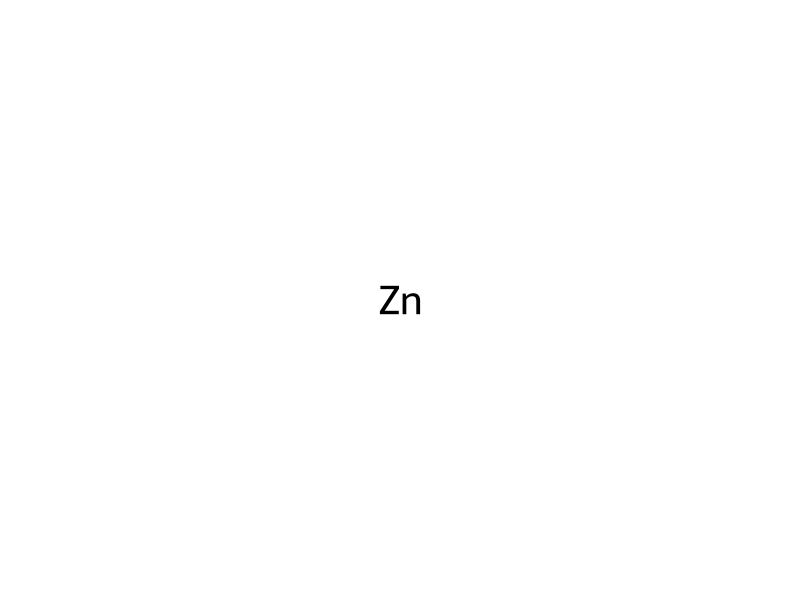
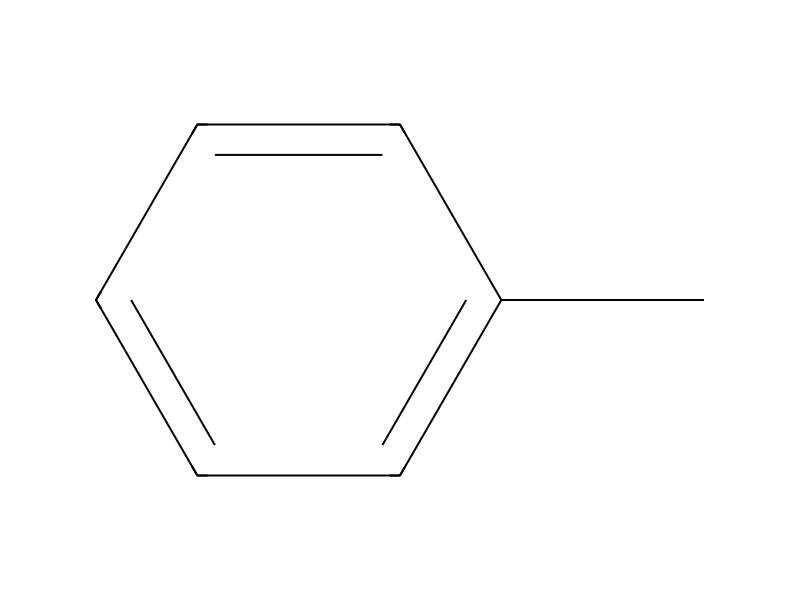
A 500 mL three-necked round-bottom flask fitted with an overhead mechanical stirrer, and reflux condenser was charged with 4,5-dibromofuran-2-carboxylic acid (34.3 g, 127 mmol), H2O (100 mL), and HOAc (25 mL). The third neck of the flask was stoppered and the suspension was heated to reflux with a temperature controlled heating mantle held at 125-130° C. Zn dust (15.0 g, 229 mmol) (previously ground in a mortar and pestle to break up lumps) was added portionwise over 50 minutes. Subsequent portions are added after most of the previously added portion has disappeared. After the first portions of the Zn were added, all of the 4,5-dibromofuran-2-carboxylic acid dissolved to give a pale brown solution. Near the end of the Zn addition a white solid began to appear in the reaction flask. Ten minutes after the conclusion of the zinc addition a thick white slurry had formed. HPLC analysis of the reaction slurry after 15 minutes indicated nearly complete consumption of the starting 4,5-dibromofuran-2-carboxylic acid and conversion to the desired product. After 40 minutes, heating was discontinued, and the white slurry was allowed to cool to ambient temperature. After cooling to ambient temperature the reaction slurry was diluted with cold H2O (100 mL), cooled in an ice bath, and then filtered. The solids were rinsed with cold H2O, dried on the filter, and the resulting damp solids were dissolved in warm acetone (1.6 L). The resulting solution was filtered to remove residual zinc dust, and then concentrated under reduced pressure to afford a white solid. The resulting solid was broken up with a spatula and pumped down under high vacuum to afford an off-white powder. 1H NMR analysis of the material (DMSO-d6) showed it to be quite pure but to contain H2O. The solids were suspended in toluene (˜1 L) and heated to reflux in a flask fitted with a condenser and a Dean-Stark trap. The suspension was heated at reflux for ˜1 hour at which time less than 1 mL of H2O had collected in the trap. The suspension was cooled, and concentrated under reduced pressure to afford 4-bromo furan-2-carboxylic acid as a-white powdery solid. 1H-NMR (400 MHz, DMSOd6): δ 7.96 (1H, d, J=0.8 Hz), 7.04 (1H, d, J=0.8 Hz).
Workup
- customA 500 mL three-necked round-bottom flask fitted with an overhead mechanical stirrer
- temperaturereflux condenser
- temperaturethe suspension was heated
- temperatureto reflux with a temperature
- temperaturecontrolled heating mantle
- customheld at 125-130° C
- additionwas added portionwise over 50 minutes
- additionSubsequent portions are added after most of the previously added portion
- customto give a pale brown solution
- customhad formed
- customconsumption of the starting 4,5-dibromofuran-2-carboxylic acid and conversion to the desired product
- waitAfter 40 minutes
- temperatureheating
- temperatureAfter cooling to ambient temperature the reaction slurry
- additionwas diluted with cold H2O (100 mL)
- temperaturecooled in an ice bath
- filtrationfiltered
- washThe solids were rinsed with cold H2O
- customdried on the filter
- dissolutionthe resulting damp solids were dissolved in warm acetone (1.6 L)
- filtrationThe resulting solution was filtered
- customto remove residual zinc dust
- concentrationconcentrated under reduced pressure
- customto afford a white solid
- customto afford an off-white powder
- temperatureheated
- temperatureto reflux in a flask
- customfitted with a condenser
- temperatureThe suspension was heated
- customhad collected in the trap
- temperatureThe suspension was cooled
- concentrationconcentrated under reduced pressure
Sources & evidence
- ORD record
- ord-b35f12d2016d4b1087292b5330d68bf2
- Source dataset
- uspto-grants-2007_09
- Patent number
- US07265131B2
Reaction notes
Loading…