Diisopropylamine → HCID 86664599, compound
Reaction equation

C([Li])[CH2:2][CH2:3][CH3:4].C(NC(C)C)(C)C.[Cl:13][C:14]1[CH:19]=[C:18]([Cl:20])[CH:17]=[CH:16][N:15]=1.C1C[O:24][CH2:23]C1>CCCCCC>[Cl:13][C:14]1[C:19]([CH:23]([OH:24])[CH:3]([CH3:2])[CH3:4])=[C:18]([Cl:20])[CH:17]=[CH:16][N:15]=1Participants
Reactant 4


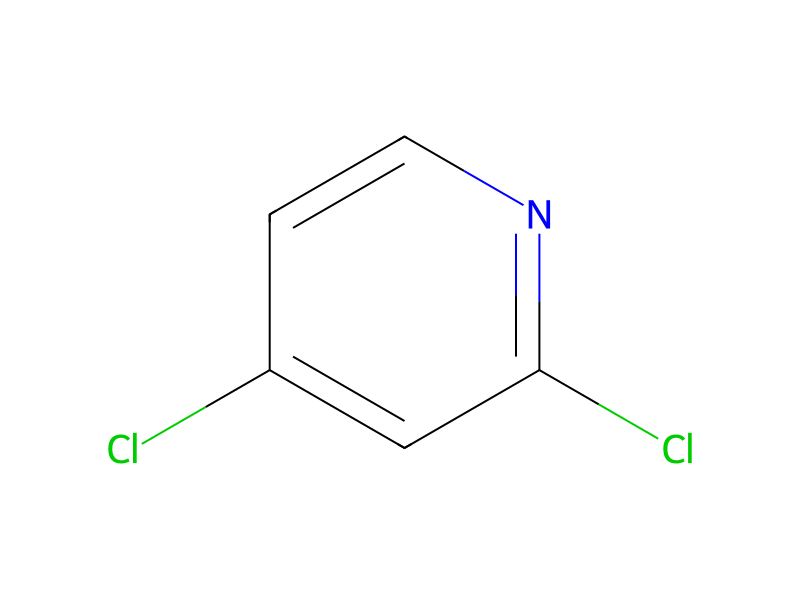

Product 1

Reagents, catalysts & solvents 1

Conditions
- Temperature
- 0 °C
Procedure
Normal-butyllithium (a 1.6 M solution in hexane, 8.13 mL) was dropwise added to a solution of N,N-diisopropylamine (1.99 mL) in THF (30 mL) at −78° C. under a nitrogen atmosphere, followed by increasing the temperature to 0° C. Then, the solution was cooled to −78° C., and a solution of 2,4-dichloropyridine (1.0 g) in THF (3 mL) wad dropwise added thereto at −78° C., followed by stirring for 1.5 hr. Then, a solution of isobutylaldehyde (1.85 mL) in THF (3 mL) was dropwise added to the reaction solution at −78° C., followed by stirring at the same temperature for 30 min. Then, the reaction solution was poured into ice water and was extracted with ethyl acetate. The organic layer was washed with saturated saline, and the organic layer after the washing was dried over anhydrous sodium sulfate. Then, the solvent was distilled away, and the residue was purified by neutral silica gel column chromatography (n-hexane/ethyl acetate) to obtain 1-(2,4-dichloropyridin-3-yl)-2-methylpropan-1-ol (1.48 g, 99%) as a colorless oily substance. A solution of DMSO (0.9 mL) in dichloromethane (5 mL) and a solution of 1-(2,4-dichloropyridin-3-yl)-2-methylpropan-1-ol (1.39 g) in dichloromethane (5 mL) were sequentially added to a solution of oxalyl chloride (0.8 mL) in dichloromethane (30 mL) at −78° C., followed by stirring for 30 min. Then, triethylamine (3.52 mL) was added to the reaction solution at 0° C., followed by stirring for 1 hr. The reaction solution was poured into ice water and was extracted with chloroform. The organic layer was washed with saturated saline. The organic layer after the washing was dried over anhydrous sodium sulfate, and then the solvent was distilled away. The residue was purified by neutral silica gel column chromatography (n-hexane/ethyl acetate) to obtain 1-(2,4-dichloropyridin-3-yl)-2-methylpropan-1-one (1.18 g, 86%) as a colorless oily substance. Hydrazine monohydrate (1.3 mL) was added to a solution of 1-(2,4-dichloropyridin-3-yl)-2-methylpropan-1-one (0.93 g) in THF (13 mL), followed by stirring at room temperature for 12 hr and then at 50° C. for 25 hr. The reaction solvent was distilled away under reduced pressure, and the residue was purified by neutral silica gel column chromatography (n-hexane/ethyl acetate) to obtain compound (4a) (0.55 g, 66%) as a colorless oily substance.
Workup
- temperatureThen, the solution was cooled to −78° C.
- customat −78° C.
- stirringby stirring at the same temperature for 30 min
- extractionwas extracted with ethyl acetate
- washThe organic layer was washed with saturated saline
- dry with materialthe organic layer after the washing was dried over anhydrous sodium sulfate
- distillationThen, the solvent was distilled away
- customthe residue was purified by neutral silica gel column chromatography (n-hexane/ethyl acetate)
Sources & evidence
- ORD record
- ord-82aa250ea1e24e7591cc19fc7809d478
- Source dataset
- uspto-grants-2016_03
- Patent number
- US09273045B2
Reaction notes
Loading…