4-Hydroxybenzyl Alcohol → HCID 60623767, compound
Reaction equation

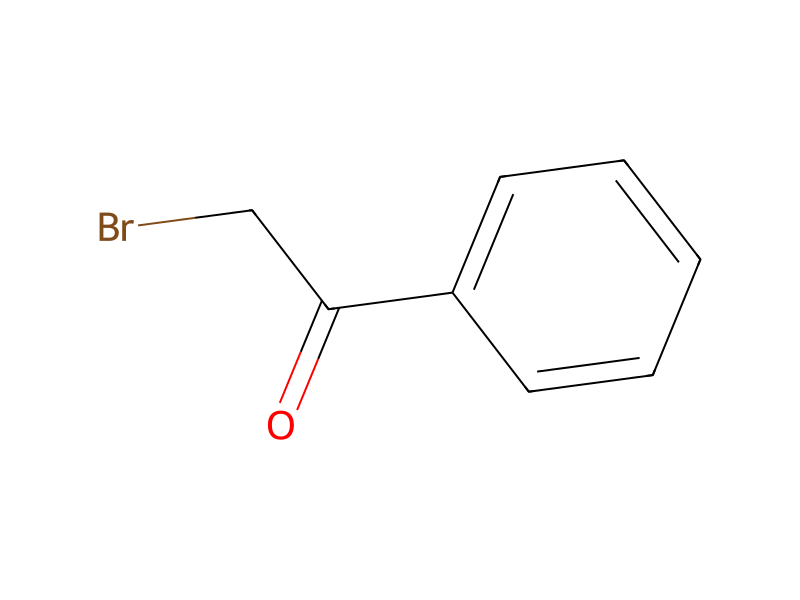
[OH:1][C:2]1[CH:9]=[CH:8][C:5]([CH2:6][OH:7])=[CH:4][CH:3]=1.C([O-])([O-])=O.[K+].[K+].Br[CH2:17][C:18]([C:20]1[CH:25]=[CH:24][CH:23]=[CH:22][CH:21]=1)=[O:19]>C(#N)C>[OH:7][CH2:6][C:5]1[CH:8]=[CH:9][C:2]([O:1][CH2:17][C:18]([C:20]2[CH:25]=[CH:24][CH:23]=[CH:22][CH:21]=2)=[O:19])=[CH:3][CH:4]=1Participants
Reactant 3


Product 1

Reagents, catalysts & solvents 1

Conditions
- Temperature
- 80 °C
Procedure
To a 100 mL RB flask fitted with magnetic stirrer was charged 20 mL of acetonitrile. To the stirred solvent was added 4-Hydroxy-benzylalcohol (6.74 g, 25.1 mmol) and K2CO3 (10.4 g, 75.3 mmol). Then it was stirred for 5 min. 2-bromo-1-phenylethanone (5 g, 25.1 mmol) was added. Then RM heated 80° C. for 2 h. After completion of the reaction (reaction monitored by TLC), the RM was concentrated in vacuum to remove the acetonitrile. To the residue was then added 10 mL of water and extracted with ethyl acetate (15 mL×2). The organic layer was washed with saturated brine solution (15 mL), dried over anhydrous Na2SO4 and evaporated to dryness gave the titled compound (5 g, yield: 82.2%); 1H NMR (300 MHz, CDCl3): δ 7.92-7.94 (d, 2H), 7.53-7.58 (t, 1H), 7.41-7.46 (t, 2H), 7.21-7.24 (d, 2H), 6.85-6.86 (d, 2H), 5.22 (s, 2H), 4.55 (s, 2H).
Workup
- customTo a 100 mL RB flask fitted with magnetic stirrer
- customAfter completion of the reaction (reaction monitored by TLC)
- concentrationthe RM was concentrated in vacuum
- customto remove the acetonitrile
- additionTo the residue was then added 10 mL of water
- extractionextracted with ethyl acetate (15 mL×2)
- washThe organic layer was washed with saturated brine solution (15 mL)
- dry with materialdried over anhydrous Na2SO4
- customevaporated to dryness
Sources & evidence
- ORD record
- ord-cc9b50939f2d45c1b88320fe6b340297
- Source dataset
- uspto-grants-2016_03
- Patent number
- US09278915B2
Reaction notes
Loading…