Triethylamine → HCID 178476984, compound
Reaction equation

[NH2:1][C@H:2]([CH2:4]O)[CH3:3].C(N(CC)CC)C.[CH2:13]([O:15][P:16](Cl)([O:18][CH2:19][CH3:20])=[O:17])[CH3:14].ClCCl.CO.[NH4+].[OH-].C(Cl)(Cl)Cl.CO.[NH4+].[OH-].[O-][Mn](=O)(=O)=O.[K+].CS(Cl)(=O)=O.[OH-].[K+]>ClCCl>[CH2:13]([O:15][P:16]([N@:1]1[CH2:4][C@@H:2]1[CH3:3])(=[O:17])[O:18][CH2:19][CH3:20])[CH3:14]Participants
Reactant 8





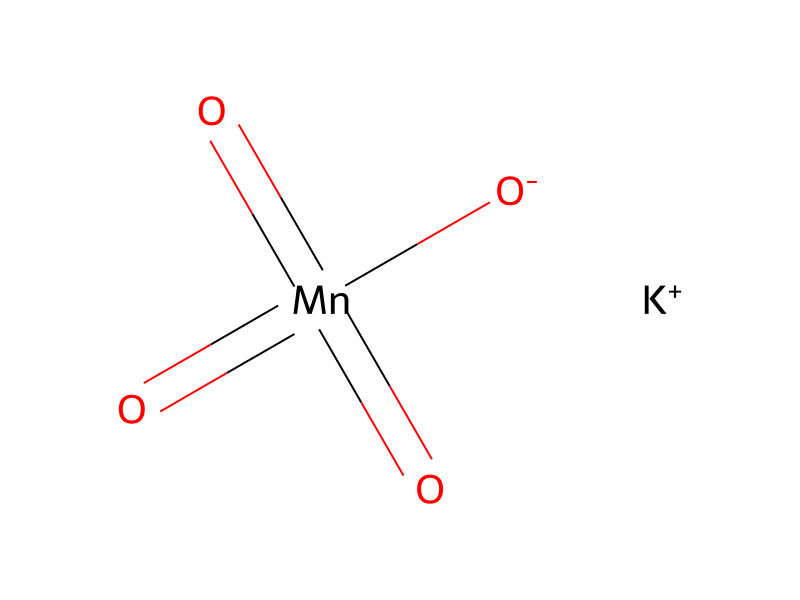


Product 1

Reagents, catalysts & solvents 1

Conditions
- Temperature
- 41 °C
Procedure
A 12 L 3-neck flask fitted with an overhead mechanical stirrer and 1 L pressure equalizing addition funnel was charged with L-alaninol (250.0 g, 3.33 mol), triethylamine (578 mL, 4.16 mol, 1.25 equiv) and dichloromethane (2.5 L). The stirred solution was cooled to +2° C. and diethoxyphosphoryl chloride (531 mL, 3.661 mol, 1.10 equiv) was added over 1.5 hour while maintaining an internal temperature <+8° C. The reaction mixture was stirred an additional 1 hour at which point the reaction was complete by TLC analysis (silica gel plate, 93:6:1 dichloromethane/MeOH/NH4OH and 6/3/1 CHCl3/MeOH/NH4OH; KMnO4 stain). Additional triethylamine (510 mL, 3.65 mol, 1.10 equiv) was added to the reaction mixture and methanesulfonyl chloride (297 mL, 3.82 mol, 1.15 equiv) was added drop-wise over 1.5 hours while maintaining an internal temperature <+10° C. The resulting reaction mixture was stirred for 1.5 hours at which time TLC analysis (see above methods) indicated the reaction was complete. Potassium hydroxide solution (3 M solution, 4.40 L, 13 mol, 4.0 equiv) was slowly added to the stirred reaction mixture while maintaining an internal temperature <+16° C. The reaction was stirred for 6 hours, after which time the aqueous layer was separated. Saturated NaHCO3 solution (700 mL) was added and the biphasic mixture was heated to 40-42° C. Distillation was started and a first fraction of 1.8 L of dichloromethane was collected. When the batch temperature reached 50° C., a second fraction was collected until the batch temperature was 65° C. The mixture was heated at 65° C. for another 1 hour and then cooled to ambient temperature. Dichloromethane (1.8 L) was added and the mixture stirred for 10 minutes before separation. The organic layer was concentrated under reduced pressure and heptane (250 mL) was added to the concentrate. The resulting mixture was concentrated under reduced pressure. The resulting 4b was obtained as a light yellow liquid (518.5 g, 80.6% yield, 98.90% GC purity). A colorless sample was prepared by short path distillation at 66-67° C., 0.9 mm Hg. Optical rotation c=1.01, ethanol, 22.5° C., +28.8°. 1H NMR (300 MHz, CDCl3) δ 4.15 (dq, J=8.0, 7.1 Hz, 4H), 2.64-2.45 (m, 1H), 2.33 (ddd, J=17.9, 5.9, 1.3 Hz, 1H), 1.91-1.81 (m, 1H), 1.34 (dt, J=7.1, 0.9 Hz, 6H), 1.28 (dd, J=5.4, 1.4 Hz, 3H).
Workup
- customA 12 L 3-neck flask fitted with an overhead mechanical stirrer
- additionaddition funnel
- temperatureThe stirred solution was cooled to +2° C.
- temperaturewhile maintaining an internal temperature <+8° C
- additionwas added drop-wise over 1.5 hours
- temperaturewhile maintaining an internal temperature <+10° C
- customThe resulting reaction mixture
- stirringwas stirred for 1.5 hours at which time TLC analysis (see above methods)
- temperaturewhile maintaining an internal temperature <+16° C
- stirringThe reaction was stirred for 6 hours
- customafter which time the aqueous layer was separated
- additionSaturated NaHCO3 solution (700 mL) was added
- distillationDistillation
- customa first fraction of 1.8 L of dichloromethane was collected
- customreached 50° C.
- customa second fraction was collected until the batch temperature
- customwas 65° C
- temperatureThe mixture was heated at 65° C. for another 1 hour
- temperaturecooled to ambient temperature
- additionDichloromethane (1.8 L) was added
- stirringthe mixture stirred for 10 minutes before separation
- concentrationThe organic layer was concentrated under reduced pressure and heptane (250 mL)
- additionwas added to the concentrate
- concentrationThe resulting mixture was concentrated under reduced pressure
Sources & evidence
- ORD record
- ord-f09da6130fe74d49bce0a79ebefcf37e
- Source dataset
- uspto-grants-2016_03
- Patent number
- US09278904B2
Reaction notes
Loading…