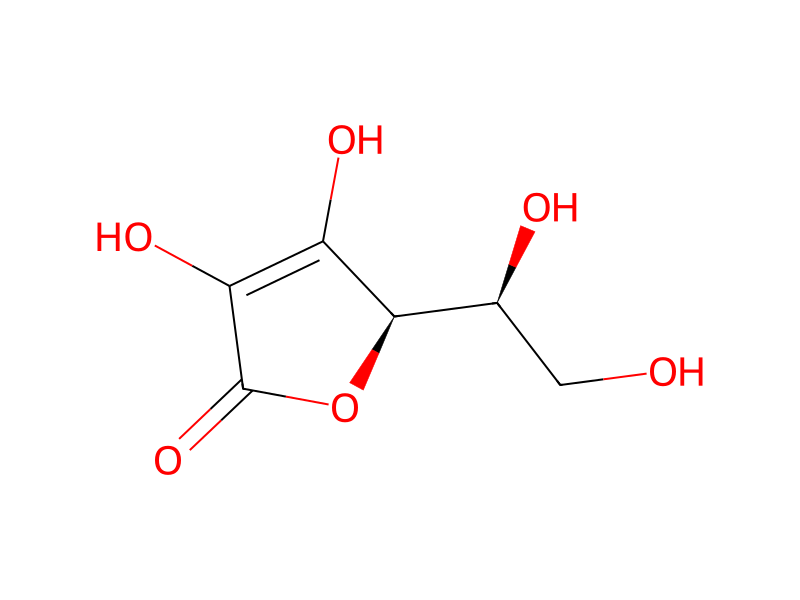
L-Ascorbic Acid → 2-Hydroxypropyl methacrylate
Reaction equation

N(N=[N+]=[N-])[C@H:2](C(N[C@H](C(N=[N+]=[N-])=O)CCCNC(N)=O)=O)C(C)C.N(N=[N+]=[N-])[C@H](C(N[C@H](C(N=[N+]=[N-])=O)CCCCN)=O)CC1C=CC=CC=1.[O:51]=[C:52]1[O:58][C@H:57]([C@H:59]([CH2:61]O)[OH:60])[C:55](O)=[C:53]1O>CN(C=O)C>[CH3:61][CH:59]([OH:60])[CH2:57][O:58][C:52]([C:53]([CH3:55])=[CH2:2])=[O:51]Participants
5
Reactant 3


Product 1

Reagents, catalysts & solvents 1

Procedure
The copolymer alkyne-P(HPMA-DTX-Gem)-alkyne and N3-Val-Cit-N3 or N3-Phe-Lys-N3 will be dissolved in degassed solution of L-ascorbic acid (0.5×) in DMF. Under nitrogen atmosphere, CuBr (0.5×) solution in DMF will be added. The reaction mixture will be kept stirring for 48 h at room temperature. The polymer will be precipitated into acetone and purified by dialysis against 10 mM EDTA solution, then in water to remove copper salts, and then freeze-dried.
Workup
- customThe polymer will be precipitated into acetone
- custompurified by dialysis against 10 mM EDTA solution
- customin water to remove copper salts
- customfreeze-dried
Sources & evidence
- ORD record
- ord-fc8c6cb40dc44cdb9432fe56e3708b82
- Source dataset
- uspto-grants-2016_03
- Patent number
- US09289510B2
Reaction notes
Loading…