Sodium Hydroxide → (R)-1-ethyl-2-[2-(3-fluorophenyl)ethyl]pyrrolidine
Reaction equation

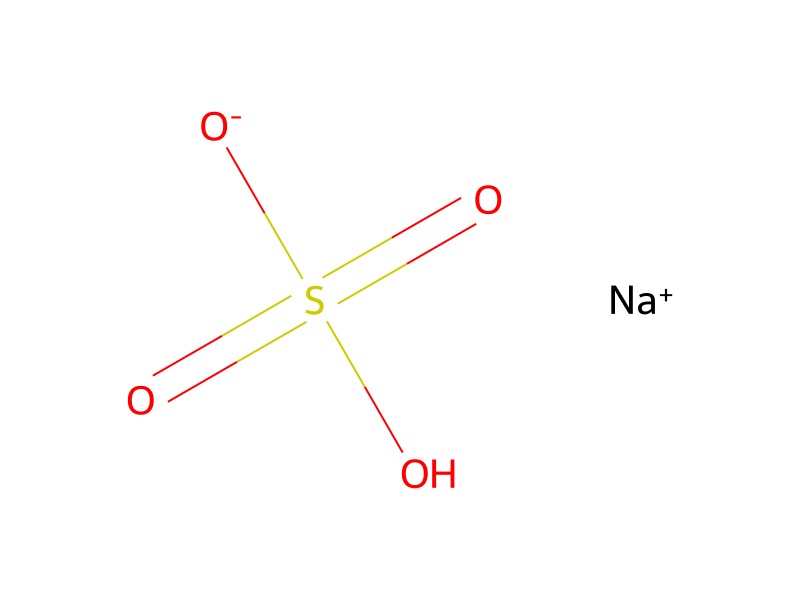
[F:1][C:2]1[CH:3]=[C:4]([CH2:8][CH2:9][C@@H:10]2[CH2:14][CH2:13][CH2:12][N:11]2[C:15](=O)[CH3:16])[CH:5]=[CH:6][CH:7]=1.[H-].[Al+3].[Li+].[H-].[H-].[H-].[OH-].[Na+].S(=O)(=O)(O)[O-].[Na+]>C1COCC1.O>[CH2:15]([N:11]1[CH2:12][CH2:13][CH2:14][C@H:10]1[CH2:9][CH2:8][C:4]1[CH:5]=[CH:6][CH:7]=[C:2]([F:1])[CH:3]=1)[CH3:16]Participants
7
Reactant 4



Product 1

Reagents, catalysts & solvents 2


Procedure
A solution of 1-{(R)-2-[2-(3-fluorophenyl)ethyl]pyrrolidin-1-yl}ethanone (Intermediate 232, 0.48 g) in THF (20 mL) was cooled to 0° C. and treated with a solution of lithium aluminum hydride (2M in THF, 3.6 mL) under an atmosphere of nitrogen. The resultant mixture was allowed to warm to room temperature before heating to 60° C. overnight. The mixture was cooled to 0° C. and treated with water (0.35 ml), 4N sodium hydroxide solution (0.35 ml) and further water (0.9 ml). Sodium bisulphate powder was added to the suspension and the slurry was filtered through Celite and the filtrate was evaporated to dryness to give (R)-1-ethyl-2-[2-(3-fluoro-phenyl)ethyl]pyrrolidine (0.41 g) as an oil.
Workup
- temperaturebefore heating to 60° C. overnight
- temperatureThe mixture was cooled to 0° C.
- filtrationthe slurry was filtered through Celite
- customthe filtrate was evaporated to dryness
Sources & evidence
- ORD record
- ord-27b36a7653544f2b841fe4873afeded9
- Source dataset
- uspto-grants-2016_03
- Patent number
- US09290472B2
Reaction notes
Loading…