Dimethylformamide → 3-Morpholinoquinoxaline-6-carbaldehyde
Reaction equation

Br[C:2]1[CH:11]=[C:10]2[C:5]([N:6]=[CH:7][C:8]([N:12]3[CH2:17][CH2:16][O:15][CH2:14][CH2:13]3)=[N:9]2)=[CH:4][CH:3]=1.[SiH](CC)(CC)CC.CN([CH:28]=[O:29])C>>[O:15]1[CH2:16][CH2:17][N:12]([C:8]2[CH:7]=[N:6][C:5]3[C:10]([N:9]=2)=[CH:11][C:2]([CH:28]=[O:29])=[CH:3][CH:4]=3)[CH2:13][CH2:14]1Participants
4

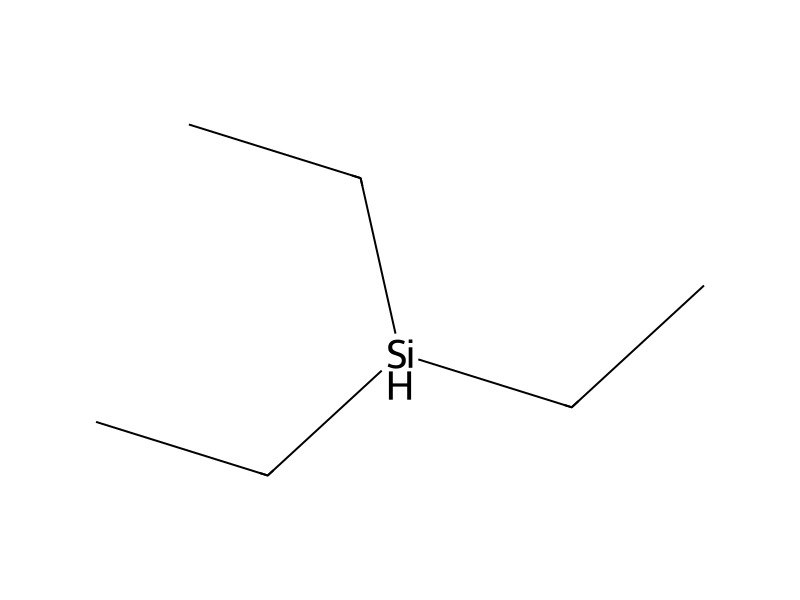


Conditions
- Temperature
- 90 °C
Procedure
To a solution of 4-(7-bromoquinoxalin-2-yl)morpholine (59 g, 0.2 mol, 1.0 eq.) in DMF (500 mL) was added TEA (139 mL, 1.0 mol, 5.0 eq.), Et3SiH (127 mL, 0.8 mol, 4.0 eq) and Pd(dppf)Cl2CH2Cl2 (8.16 g, 0.01 mol, 0.05 eq.). The resulting mixture was stirred at 90° C. for 12 h in an autoclave under CO (1 MPa), then cooled and concentrated. The resulting residue was purified by flash column chromatography (EA/PE=1/1) to afford 3-morpholinoquinoxaline-6-carbaldehyde as a yellow solid (40 g, 82.3%).
Workup
- temperaturecooled
- concentrationconcentrated
- customThe resulting residue was purified by flash column chromatography (EA/PE=1/1)
Sources & evidence
- ORD record
- ord-d3f9f73119b04233ba77312fd2f6788f
- Source dataset
- uspto-grants-2016_03
- Patent number
- US09295671B2
Reaction notes
Loading…