P-Cresol → Methyl bicyclo(2.2.1)heptane-1-carboxylate
Reaction equation

[Cl-].C([NH+](CCCCCCCC)CCCCCCCC)CCCCCCC.C(N(CC)CC)C.C1C(O)=CC=C(C)C=1.ClCCl.[CH:45]12[CH2:51][CH:48]([CH2:49][CH2:50]1)[CH:47]=[CH:46]2.[CH:52]([O:54][CH3:55])=[O:53]>[Ru].[Co]>[C:45]12([C:52]([O:54][CH3:55])=[O:53])[CH2:51][CH:48]([CH2:49][CH2:50]1)[CH2:47][CH2:46]2Participants


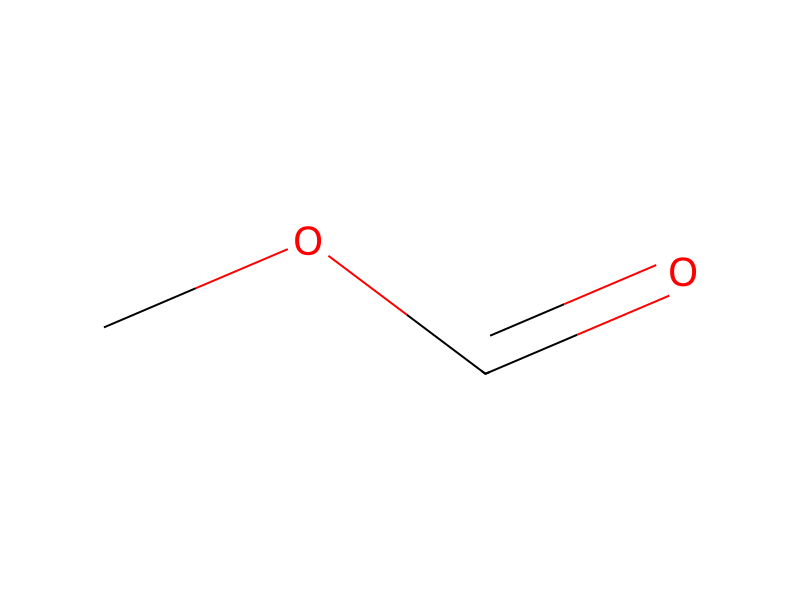



Conditions
- Temperature
- 120 °C
Procedure
In a pressure reactor made of stainless steel and having an internal volume of 50 ml, 0.025 mmol of [Ru(CO)3Cl2]2 as a ruthenium compound, 0.025 mmol of Co2(CO)8 as a cobalt compound, 0.25 mmol of trioctylammonium chloride as a halide salt, 2.0 mmol of triethylamine as a basic compound, 0.25 mmol of p-cresol as a phenolic compound, and 0.25 mmol of dichloromethane as an organic halide were introduced and mixed at room temperature, and thus a catalyst system was obtained. 5.0 mmol of norbornene and 5.0 mL of methyl formate were added to this catalyst system, subsequently the reactor was purged with nitrogen gas at 0.5 MPa, and the system was maintained for 15 hours at 120° C. Thereafter, the reactor was cooled to room temperature, and the pressure was released. A portion of the remaining organic phase was withdrawn, and the components of the reaction mixture were analyzed by using gas chromatography. According to the analysis results, the amount of methyl norbornane monocarboxylate produced by the reaction was 8.60 mmol (yield in terms of norbornene 86.0%).
Workup
- additionwere introduced
- additionmixed at room temperature
- customthus a catalyst system was obtained
- customsubsequently the reactor was purged with nitrogen gas at 0.5 MPa
- temperatureThereafter, the reactor was cooled to room temperature
- customA portion of the remaining organic phase was withdrawn
- customresults
Sources & evidence
- ORD record
- ord-7080161d20784271b184c595aba9b68a
- Source dataset
- uspto-grants-2016_03
- Patent number
- US09295981B2
Reaction notes
Loading…