Pyrrolidine → HCID 67999253, compound
Reaction equation

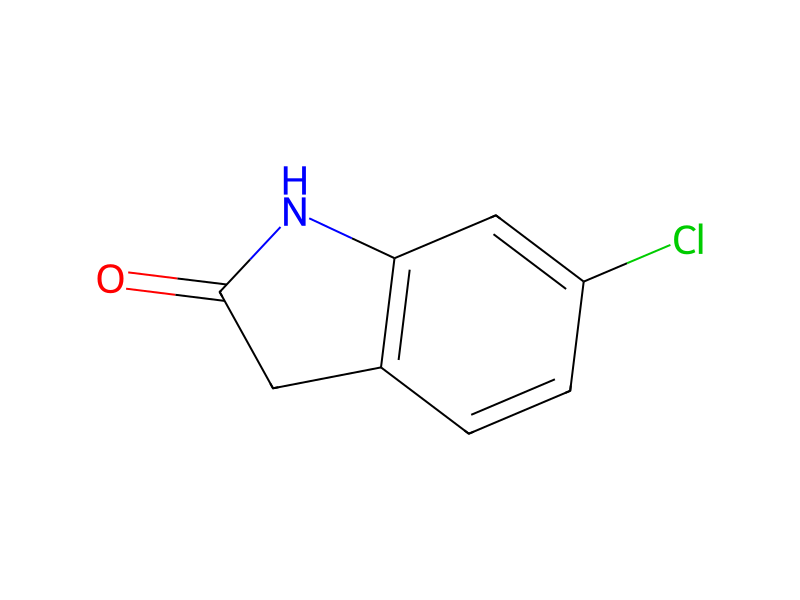
[Cl:1][C:2]1[CH:3]=[C:4]([C:8](=O)[CH2:9][CH2:10][CH:11]=[CH2:12])[CH:5]=[CH:6][CH:7]=1.[Cl:14][C:15]1[CH:23]=[C:22]2[C:18]([CH2:19][C:20](=[O:24])[NH:21]2)=[CH:17][CH:16]=1.N1CCCC1>C1(C)C=CC=CC=1>[Cl:14][C:15]1[CH:23]=[C:22]2[C:18]([C:19](=[C:8]([C:4]3[CH:5]=[CH:6][CH:7]=[C:2]([Cl:1])[CH:3]=3)[CH2:9][CH2:10][CH:11]=[CH2:12])[C:20](=[O:24])[NH:21]2)=[CH:17][CH:16]=1Participants
5
Reactant 3


Product 1

Reagents, catalysts & solvents 1

Procedure
To a mixture of 1-(3-chlorophenyl)pent-4-en-1-one (Example 62, Step A) (14.86 g, 76 mmol) and 6-chloroindolin-2-one (12.79 g, 76 mmol) in toluene (50 mL) at room temperature was added pyrrolidine (6.31 mL, 76 mmol). The slurry was heated at reflux with a Dean Stark trap for 6 h. The reaction mixture was cooled to room temperature and concentrated under reduced pressure. The residue was purified by flash chromatography on silica gel (eluent: 10 to 20% EtOAc in hexanes) to give the title compound.
Workup
- temperatureThe slurry was heated
- temperatureat reflux with a Dean Stark trap for 6 h
- concentrationconcentrated under reduced pressure
- customThe residue was purified by flash chromatography on silica gel (eluent: 10 to 20% EtOAc in hexanes)
Sources & evidence
- ORD record
- ord-5dcb198493114d989d3d1971933ded54
- Source dataset
- uspto-grants-2016_03
- Patent number
- US09296736B2
Reaction notes
Loading…