2-Chlorophenol → HCID 131720718, compound
Reaction equation

C[C:2]1[CH:8]=[C:7]([OH:9])[CH:6]=[CH:5][C:3]=1[OH:4].[C:10](=O)([O-])[O:11][C:12]1[CH:17]=[CH:16][CH:15]=[CH:14][C:13]=1Cl.Cl[C:22]1[CH:27]=CC=C[C:23]=1O>C1([B-](C2C=CC=CC=2)(C2C=CC=CC=2)C2C=CC=CC=2)C=CC=CC=1.C([N+](CCCC)(CCCC)CCCC)CCC.OC1C=CC(C(C2C=CC(O)=CC=2)(C)C)=CC=1>[CH3:23][C:22]([C:7]1[CH:6]=[CH:5][C:3]([OH:4])=[CH:2][CH:8]=1)([C:15]1[CH:14]=[CH:13][C:12]([OH:11])=[CH:17][CH:16]=1)[CH3:27].[CH3:10][O:9][C:7]1[CH:8]=[CH:2][C:3]([OH:4])=[CH:5][CH:6]=1Participants
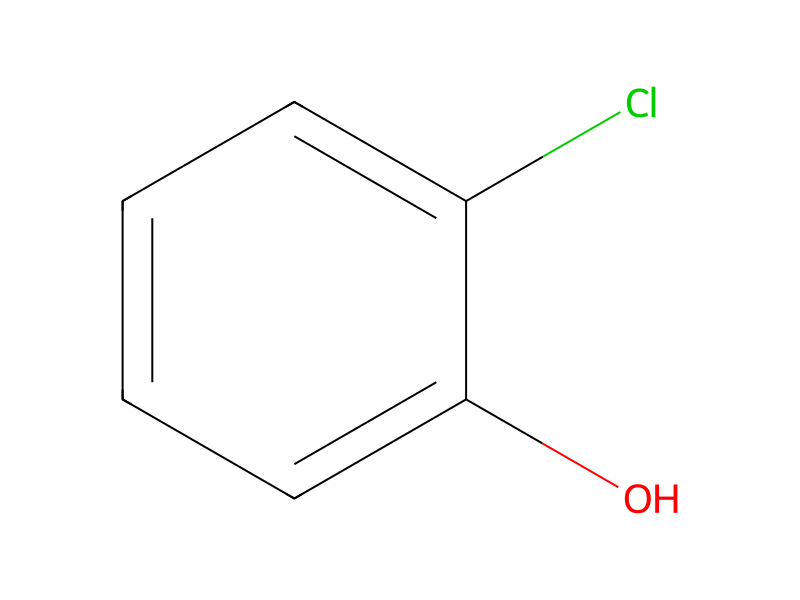
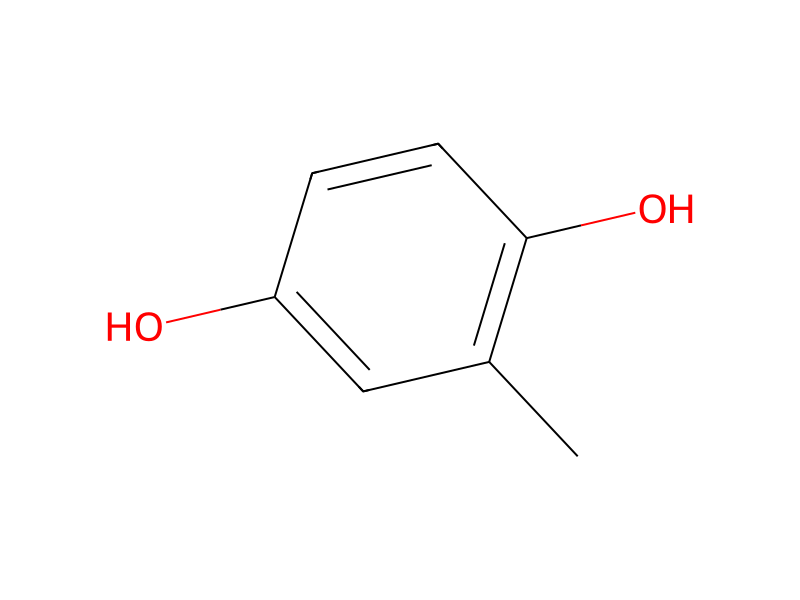


Procedure
Methylhydroquinone (1.95 moles, 242.1 g), bisphenol-A (0.05 moles, 11.41 g), chlorophenyl carbonate (2.06 moles, 582.8 g) and tetrabutylammonium tetraphenylborate (1.6 mmol, 0.899 g) were added to a 1L 3-neck flask and melted at 165° C. with overhead stirring. 89 wt % chlorophenol (3.52 mole, 365 mL) was collected by distillation at about 220° C. followed by a slight vacuum at 230° C. The molten prepolymer was quickly poured onto a foil-lined pyrex dish to obtain a solid (370 g). Subsequent polymerization took place in a 2CV Helicone reactor (500 mL capacity). The prepolymer (200 g) was added at 300° C. and stirred slowly until molten. Once molten, vacuum was applied and the system heated to 330° C. (stirrer setting=7.5). After about 10 minutes, the vacuum reached about 2.0 mm Hg. The polymer was extruded after about 20 minutes to obtain about 120 g of brittle light pink strands (flexible in clear areas and brittle in cloudy areas).
Workup
- customfollowed by a slight vacuum at 230° C
- additionThe molten prepolymer was quickly poured onto a foil-lined pyrex dish
Sources & evidence
- ORD record
- ord-e63eb0cccad94c528a8d694ad34bbcba
- Source dataset
- uspto-grants-1998_06
- Patent number
- US05767225
Reaction notes
Loading…