4-Bromobenzaldehyde → Methyl 2-[2-(4-bromophenyl)ethenyl]-6-chlorobenzoate
Reaction equation

[Br-].[Cl:2][C:3]1[C:4]([C:29]([O:31][CH3:32])=[O:30])=[C:5]([CH:26]=[CH:27][CH:28]=1)[CH2:6][P+](C1C=CC=CC=1)(C1C=CC=CC=1)C1C=CC=CC=1.[Br:33][C:34]1[CH:41]=[CH:40][C:37]([CH:38]=O)=[CH:36][CH:35]=1.C1CN2C(=NCCC2)C1>C(#N)C>[Br:33][C:34]1[CH:41]=[CH:40][C:37]([CH:38]=[CH:6][C:5]2[C:4]([C:29]([O:31][CH3:32])=[O:30])=[C:3]([Cl:2])[CH:28]=[CH:27][CH:26]=2)=[CH:36][CH:35]=1Participants
5
Reactant 3
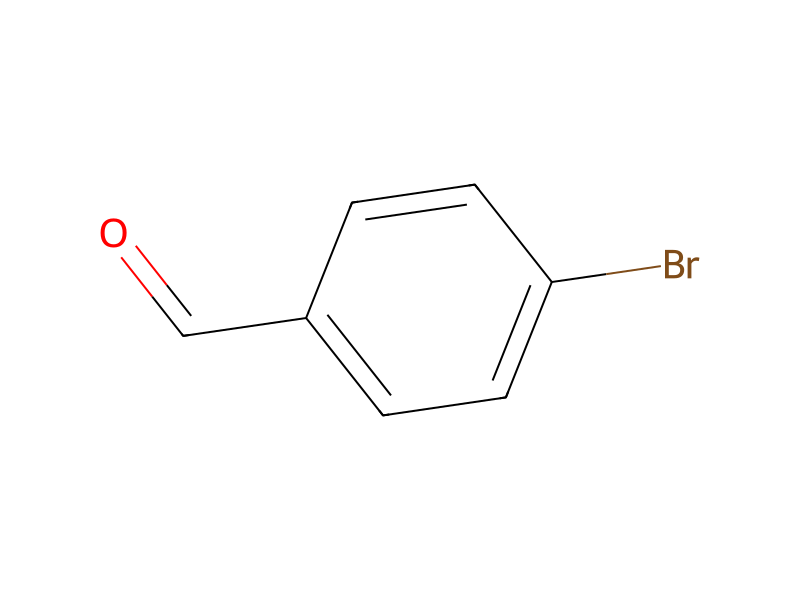


Product 1

Reagents, catalysts & solvents 1

Procedure
To a mixture of. 44.6 g (84.9 mmol) of 3-chloro-2-methoxycarbonylbenzyltriphenylphosphonium bromide and 16.7 g (90.4 mmol) of 4-bromobenzaldehyde was added 150 ml of acetonitrile, and then, 14.8 g (119 mmol) of 1,5-diazabicyclo[4,3,0]-5-nonene was added dropwise to the mixture. Thereafter, the mixture was refluxed for 3 hours.
Workup
- additionTo a mixture of
- temperatureThereafter, the mixture was refluxed for 3 hours
Sources & evidence
- ORD record
- ord-0b0642579b3745d587fec8dc9cb3d9a9
- Source dataset
- uspto-grants-2007_12
- Patent number
- US07309718B2
Reaction notes
Loading…