Water → Methyl 3-cyano-1H-indole-7-carboxylate
Reaction equation

P(Cl)(Cl)(Cl)=O.[NH:6]1[C:14]2[C:9](=[CH:10][CH:11]=[CH:12][C:13]=2[C:15]([O:17][CH3:18])=[O:16])[CH:8]=[CH:7]1.[Cl-].O[NH3+].O.[CH3:23][N:24](C)C=O>>[C:23]([C:8]1[C:9]2[C:14](=[C:13]([C:15]([O:17][CH3:18])=[O:16])[CH:12]=[CH:11][CH:10]=2)[NH:6][CH:7]=1)#[N:24]Participants
6


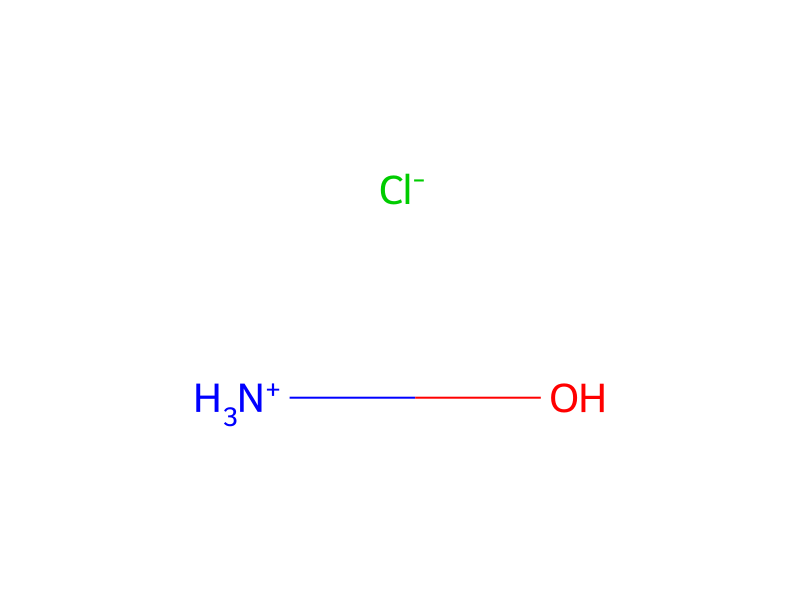



Conditions
- Temperature
- 120 °C
Procedure
9.1 g of phosphoryl chloride are added to 30 ml of dimethylformamide with ice cooling at a reaction temperature of 20-30°. A solution of 8 g of methyl indole-7-carboxylate in dimethylformamide is added dropwise, during which the temperature rises to 40°. After one hour at 125°, the solution is added dropwise while still hot to a solution of 6.3 g of hydroxylammonium chloride in 40 ml of dimethylformamide, and the mixture is stirred at 120° C. for a further 15 minutes. The mixture is poured into water, extracted with ethyl acetate, filtered through neutral aluminium oxide and evaporated, giving 4.5 g of methyl 3-cyanoindole-7-carboxylate having a melting range of 212-213.5° (48.9% of theory).
Workup
- customrises to 40°
- extractionextracted with ethyl acetate
- filtrationfiltered through neutral aluminium oxide
- customevaporated
Sources & evidence
- ORD record
- ord-41d48ff739d745ba89edce09b8e47614
- Source dataset
- uspto-grants-2007_12
- Patent number
- US07312342B2
Reaction notes
Loading…