Carbon Dioxide → 2-(3-Methyl-1,2,4-oxadiazol-5-yl)acetic acid
Reaction equation

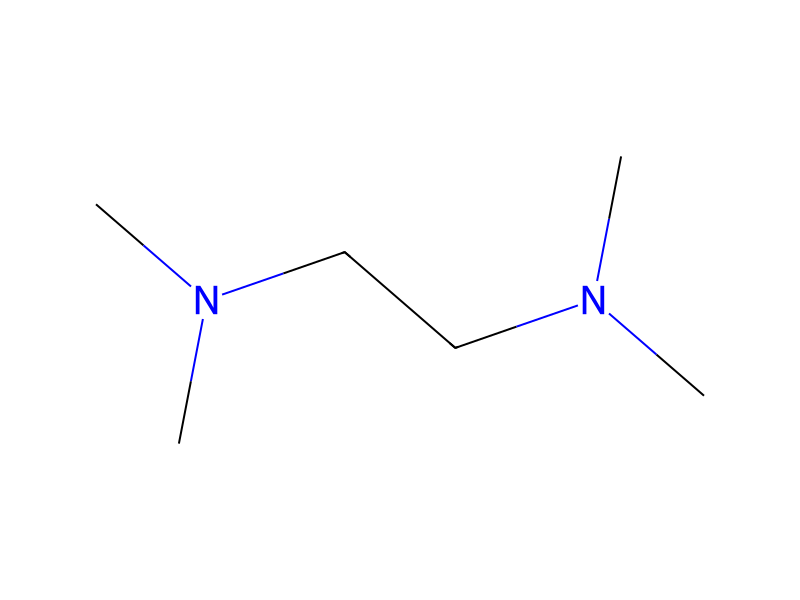
[CH3:1][C:2]1[N:6]=[C:5]([CH3:7])[O:4][N:3]=1.CN(C)CCN(C)C.C([Li])CCC.[C:21](=[O:23])=[O:22].Cl>C1(C)C=CC=CC=1.CCCCCC.O.C(OCC)C>[CH3:1][C:2]1[N:6]=[C:5]([CH2:7][C:21]([OH:23])=[O:22])[O:4][N:3]=1Participants
Reactant 5




Product 1

Reagents, catalysts & solvents 4




Conditions
- Temperature
- -75 °C
Procedure
A solution of 4.0 g (40.8 mmol) of 3,5-dimethyl-1,2,4-oxadiazole and of 6.0 ml of N,N,N',N'-tetramethylethylenediamine (TMEDA) in 100 ml of dry toluene was prepared in a 250 ml three-necked glass vessel equipped with a thermometer, a gas inlet tube through which dry nitrogen was introduced continuously and a pressure equalized dropping funnel. The magnetically stirred solution was cooled to -75° C. with an acetone-carbon dioxide bath and by means of the dropping funnel, a solution of approximately 40 mmol of n-butyllithium in 20 ml of n-hexane was added slowly to keep the reaction mixture below -65° C. Afterwards the reaction mixture was stirred for another 60 minutes at -55° to -60° C. Subsequently, the reaction mixture was transferred with a bent ground glass tube to a second vessel containing powdered carbon dioxide covered with a layer of dry diethyl ether and after standing a few hours, the carbon dioxide had practically disappeared from the mixture. 100 ml of water were added, followed by addition of 1 N hydrochloric acid with stirring until a pH of 8 was attained. The layers were separated and the organic layer was discarded and the aqueous layer was shaken twice with 25 ml of diethyl ether. The pH of the aqueous layer was brought to 2.0 with 1 N hydrochloric acid and seven extractions with about 25 ml portions of ethyl acetate at pH 2.0 resulted in almost complete removal of the desired product from the aqueous layer. The extracts were combined, dried over anhydrous magnesium sulfate, and filtered and the filtrate was concentrated in vacuo to a small volume until a crystalline white precipitate appeared. Thin-layer chromatography showed that the supernatant liquid still contained a considerable amount of the desired product and no by-products and the solvent was then completely removed in vacuo. The practically colorless residue was dried to constant weight to obtain 4.2 g (72% yield) of the product with a purity of at least 96% estimated by TLC and PMR spectrum. Recrystallization of the product was effected by dissolution in a minimum volume of chloroform, followed by slow addition of petroleum ether (b.p. 80°-110° C.) until a turbidity appear to obtain 3.6 g of 3-methyl-1,2,4-oxadiazol-5-yl-acetic acid with a melting point of about 95° C. (slow decarboxylation sets in at about 90° C.).
Workup
- customequipped with a thermometer, a gas inlet tube through which dry nitrogen
- additionwas introduced continuously
- customthe reaction mixture below -65° C
- customSubsequently, the reaction mixture was transferred with a bent ground glass tube to a second vessel
- additioncontaining
- waitafter standing a few hours
- stirringwith stirring until a pH of 8
- customThe layers were separated
- stirringthe aqueous layer was shaken twice with 25 ml of diethyl ether
- extractionThe pH of the aqueous layer was brought to 2.0 with 1 N hydrochloric acid and seven extractions with about 25 ml portions of ethyl acetate at pH 2.0
Sources & evidence
- ORD record
- ord-81edfe5cec9c4a6cac2284c7e3ffed55
- Source dataset
- uspto-grants-1979_07
- Patent number
- US04160829
Reaction notes
Loading…