Ethylmorpholine → L-Pyroglutamyl-4-aminobutyric acid tert. butyl ester
Reaction equation
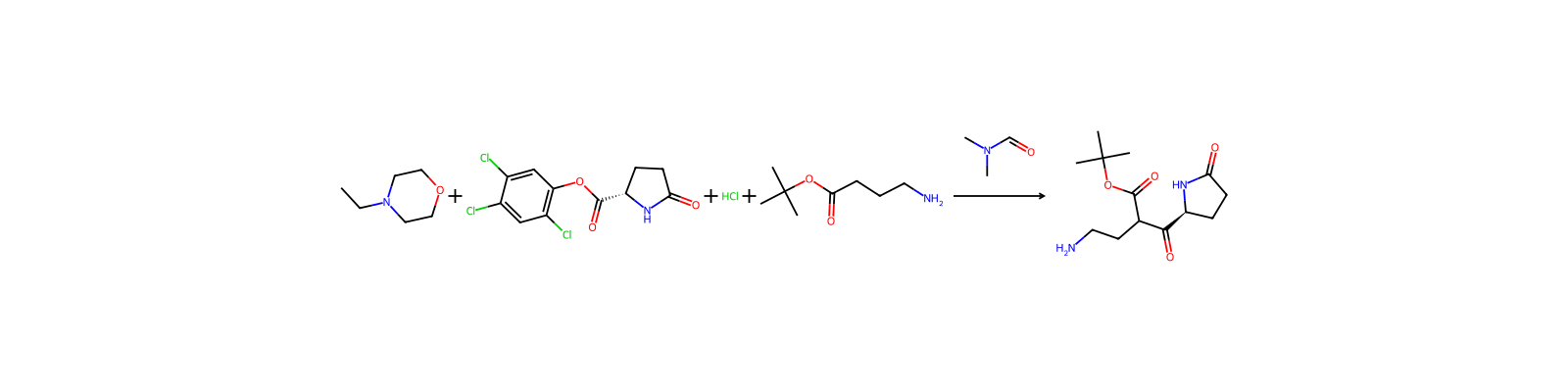
C(N1CCOCC1)C.ClC1C=C(Cl)C(Cl)=CC=1O[C:19](=[O:26])[C@@H:20]1[CH2:24][CH2:23][C:22](=[O:25])[NH:21]1.Cl.[C:28]([O:32][C:33](=[O:38])[CH2:34][CH2:35][CH2:36][NH2:37])([CH3:31])([CH3:30])[CH3:29]>CN(C)C=O>[C:28]([O:32][C:33](=[O:38])[CH:34]([C:19](=[O:26])[C@@H:20]1[CH2:24][CH2:23][C:22](=[O:25])[NH:21]1)[CH2:35][CH2:36][NH2:37])([CH3:31])([CH3:29])[CH3:30]Participants
5



Procedure
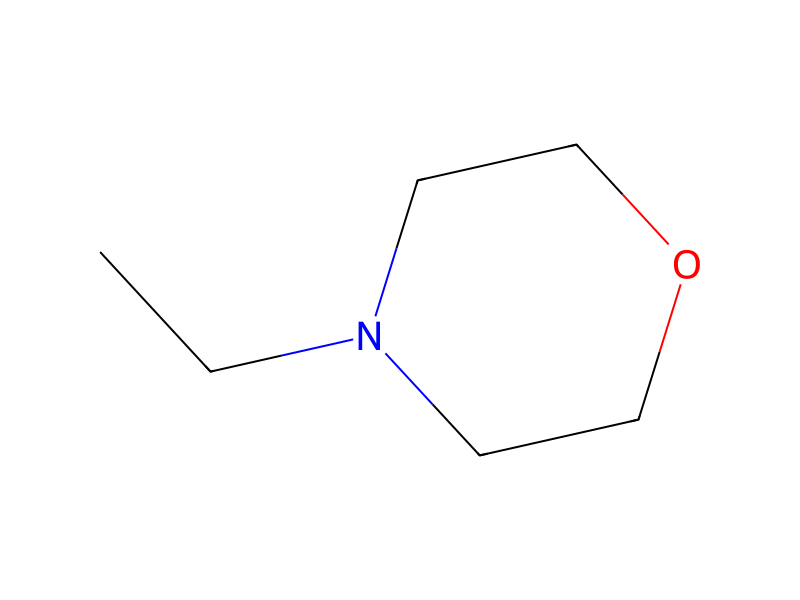
1.3 ml of N-ethylmorpholine and 3.08 g of L-pyroglutamic acid 2,4,5-trichlorophenyl ester were added to a solution of 1.95 g (10 mmols) of 4-aminobutyric acid tert. butyl ester hydrochloride in 20 ml of dimethylformamide. The solution was left overnight at room temperature. It was concentrated, the residue was dissolved in a mixture of ethyle acetate and water, and the ethyl acetate solution was shaken with sodium bicarbonate solution, KHSO4 -solution and NaCl-solution, dried with Na2SO4 and concentrated. The residue was triturated with petroleum ether.
Workup
- concentrationIt was concentrated
- dissolutionthe residue was dissolved in a mixture of ethyle acetate and water
- dry with materialdried with Na2SO4
- concentrationconcentrated
- customThe residue was triturated with petroleum ether
Sources & evidence
- ORD record
- ord-3efe0805a99f47fb833d80e4b5e3d2d6
- Source dataset
- uspto-grants-1977_10
- Patent number
- US04053588
Reaction notes
Loading…