Triethylamine → HCID 14479949, compound
Reaction equation

Br[CH:2]([CH3:6])[C:3](Cl)=[O:4].Cl.[NH2:8][CH2:9][C:10]([C:12]1[CH:17]=[CH:16][CH:15]=[CH:14][CH:13]=1)=[O:11].C(N(CC)CC)C.[CH3:25][C:26]([C:29]1[CH:34]=[C:33]([SH:35])[CH:32]=[C:31]([C:36]([CH3:39])([CH3:38])[CH3:37])[C:30]=1[OH:40])([CH3:28])[CH3:27]>C(Cl)Cl>[CH3:28][C:26]([C:29]1[CH:34]=[C:33]([S:35][CH:2]([CH3:6])[C:3]([NH:8][CH2:9][C:10](=[O:11])[C:12]2[CH:17]=[CH:16][CH:15]=[CH:14][CH:13]=2)=[O:4])[CH:32]=[C:31]([C:36]([CH3:39])([CH3:38])[CH3:37])[C:30]=1[OH:40])([CH3:25])[CH3:27]Participants
6





Procedure
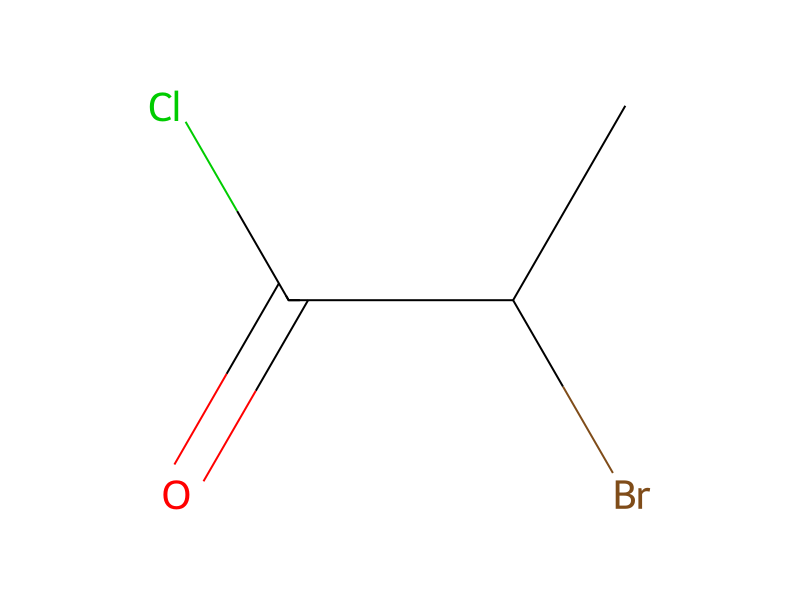
2-Bromopropionyl chloride (5 mmole) is added to a cold (5° C.) solution of 2-aminoacetophenone hydrochloride (5 mmole) in methylene chloride followed by 14 ml of triethylamine in methylene chloride. The mixture is stirred at room temperature. After about 1 hour, the product of Example 2 is added and the solution heated to reflux. The mixture is allowed to cool to room temperature. The reaction mixture is treated as in Example 3 to produce 2-[[3,5-bis(1,1-dimethylethyl)-4-hydroxyphenyl]thio]-N-(2-oxo-2-phenylethyl)propanamide.
Workup
- temperaturethe solution heated to reflux
- temperatureto cool to room temperature
- additionThe reaction mixture is treated as in Example 3
Sources & evidence
- ORD record
- ord-688bb3affea8437e9eee2540d4852d66
- Source dataset
- uspto-grants-1991_11
- Patent number
- US05066679
Reaction notes
Loading…