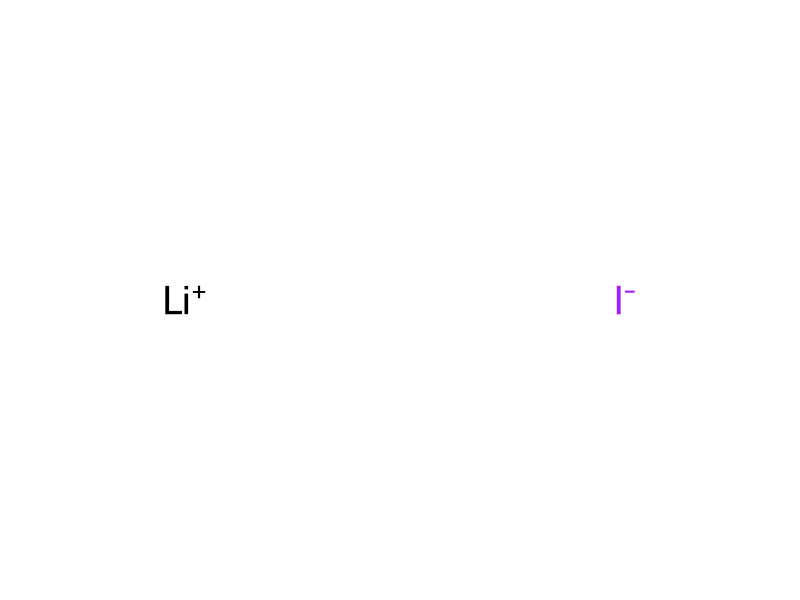
Lithium iodide → HCID 19965117, compound
Reaction equation

Br[C:2]1[CH:3]=[C:4]([C:14]2[S:15][C:16]([C:20]([O:22][CH2:23][CH3:24])=[O:21])=[C:17]([CH3:19])[N:18]=2)[CH:5]=[CH:6][C:7]=1[O:8][CH2:9][C:10]([CH3:13])([CH3:12])[CH3:11].[I-:25].[Li+]>CN1CCCC1=O>[I:25][C:2]1[CH:3]=[C:4]([C:14]2[S:15][C:16]([C:20]([O:22][CH2:23][CH3:24])=[O:21])=[C:17]([CH3:19])[N:18]=2)[CH:5]=[CH:6][C:7]=1[O:8][CH2:9][C:10]([CH3:13])([CH3:12])[CH3:11]Participants
Reactant 2

Product 1

Reagents, catalysts & solvents 1

Conditions
- Temperature
- 150 °C
Procedure
120 mg of Ethyl 2-(3-bromo-4-neopentyloxyphenyl)-4-methyl-5-thiazolecarboxylate, 100 mg of cuprous iodide and 80 mg of lithium iodide were suspended in 2 ml of N-methyl pyrrolidone, and the suspension was heated at 150° C. for 4 hours with stirring. After completion of the reaction, the product was extracted with ethyl acetate, and the organic layer was concentrated to give a crude crystal. The resulting crystal was purified by silica gel chromatography to give 95 mg of ethyl 2-(3-iodo-4-neopentyloxyphenyl)-4-methyl-5-thiazolecarboxylate. The product was hydrolyzed by a conventional process, followed by recrystallization from hexane-ether to give 63 mg of 2-(3-iodo-4-neopentyloxyphenyl)-4-methyl-5-thiazolecarboxylic acid (yield: 58%).
Workup
- customAfter completion of the reaction
- extractionthe product was extracted with ethyl acetate
- concentrationthe organic layer was concentrated
- customto give a crude crystal
- customThe resulting crystal was purified by silica gel chromatography
Sources & evidence
- ORD record
- ord-05fd2d05f7ac4c02b051bc32894f2879
- Source dataset
- uspto-grants-1997_03
- Patent number
- US05614520
Reaction notes
Loading…