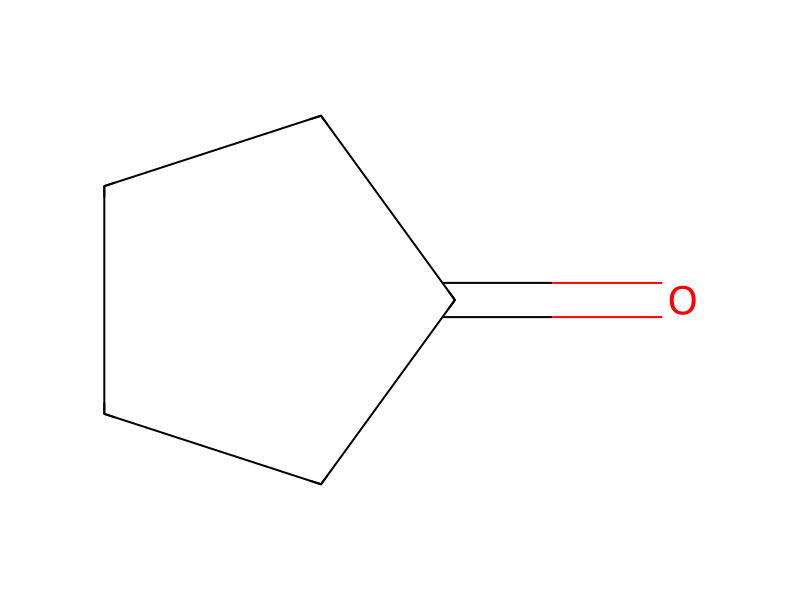
Cyclopentanone → HCID 13851033, compound
Reaction equation

[C:1]1(=[O:6])[CH2:5][CH2:4][CH2:3][CH2:2]1.[CH2:7]([O:14][CH:15]([CH3:18])[CH2:16]Cl)[C:8]1[CH:13]=[CH:12][CH:11]=[CH:10][CH:9]=1.[H-].[Na+]>O1CCCC1>[CH2:7]([O:14][CH:15]([CH3:18])[CH2:16][CH:2]1[CH2:3][CH2:4][CH2:5][C:1]1=[O:6])[C:8]1[CH:13]=[CH:12][CH:11]=[CH:10][CH:9]=1Participants
5
Reactant 3


Product 1

Reagents, catalysts & solvents 1

Procedure
5,7-dihydroxyoctanoic acid delta-lactone was prepared in several steps from cyclopentanone and 2-benzyloxy-1-chloropropane. Thus, alkylation of cyclopentanone was effected by treatment with sodium hydride in tetrahydrofuran (THF) solution to generate the alpha-anion, followed by the dropwise addition of a THF solution of 2-benzyloxy-1-chloropropane. Reaction workup yielded 2-(2-benzyloxy-1-propyl) cyclopentanone. This ketone was treated with peroxy trifluoroacetic acid under Baeyer-Villiger conditions to give the 7-benzyl ether of 5,7-dihydroxyoctanoic acid gamma-lactone. The benzyl group was removed by catalytic hydrogenation, yielding 5,7-dihydroxyoctanoic acid delta-lactone.
Workup
- customReaction workup
Sources & evidence
- ORD record
- ord-b4e7938a73874529aecb2330ddb06776
- Source dataset
- uspto-grants-1987_05
- Patent number
- US04665057
Reaction notes
Loading…