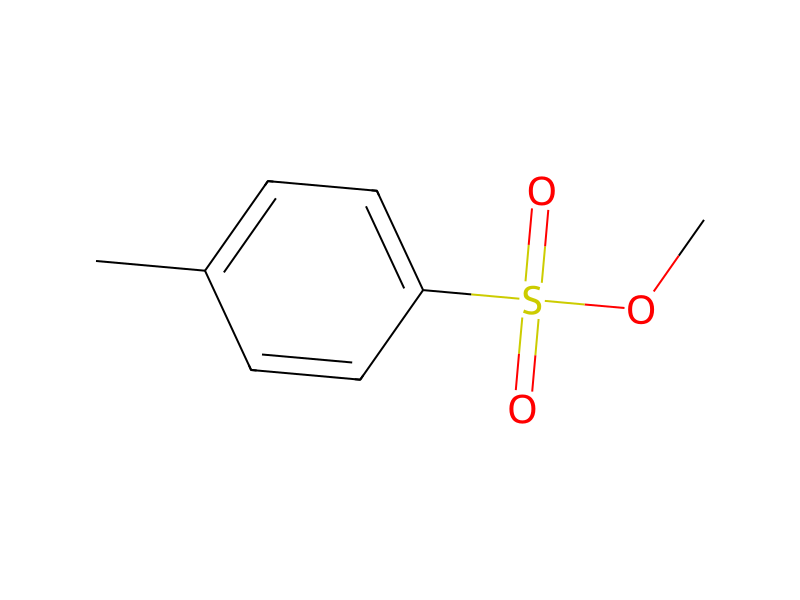
Methyl p-toluenesulfonate → 2,5-Dimethyl-3,6-diphenyl-2,5-dihydropyrrolo[3,4-c]pyrrole-1,4-dione
Reaction equation

O=[C:2]1[C:6]2[C:7]([C:11]3[CH:16]=[CH:15][CH:14]=[CH:13][CH:12]=3)=[N:8][C:9](=[O:10])[C:5]=2[C:4]([C:17]2[CH:22]=[CH:21][CH:20]=[CH:19][CH:18]=2)=[N:3]1.[C:23](=[O:26])([O-])[O-].[K+].[K+].[C:29]1(C)C=CC(S(OC)(=O)=O)=CC=1.[N+](C1C=CC=CC=1)([O-])=O>>[O:10]=[C:9]1[C:5]2=[C:4]([C:17]3[CH:18]=[CH:19][CH:20]=[CH:21][CH:22]=3)[N:3]([CH3:2])[C:23](=[O:26])[C:6]2=[C:7]([C:11]2[CH:16]=[CH:15][CH:14]=[CH:13][CH:12]=2)[N:8]1[CH3:29]Participants
5




Conditions
- Temperature
- 20 °C
Procedure
14.5 Parts of 1,4-diketo-3,6-diphenylpyrrolo-[3,4-c]-pyrrole, 15 parts of anhydrous potassium carbonate, 40 parts of methyl p-toluenesulfonate and 170 parts of dry nitrobenzene are heated at 200°-205° C. for one hour, with stirring. After cooling to 20° C., the 1,4-diketo-2,5-dimethyl-3,6-diphenylpyrrolo-[3,4-c]-pyrrole obtained is filtered off, washed with toluene, then methanol and thereafter with hot water and dried. 10.85 parts of orange crystals of the compound of the formula (IX) are obtained (melting point 236°-238° C.). ##STR13##
Sources & evidence
- ORD record
- ord-2da64ae9f4614353996865b5ac2fb8f7
- Source dataset
- uspto-grants-1987_05
- Patent number
- US04666455
Reaction notes
Loading…