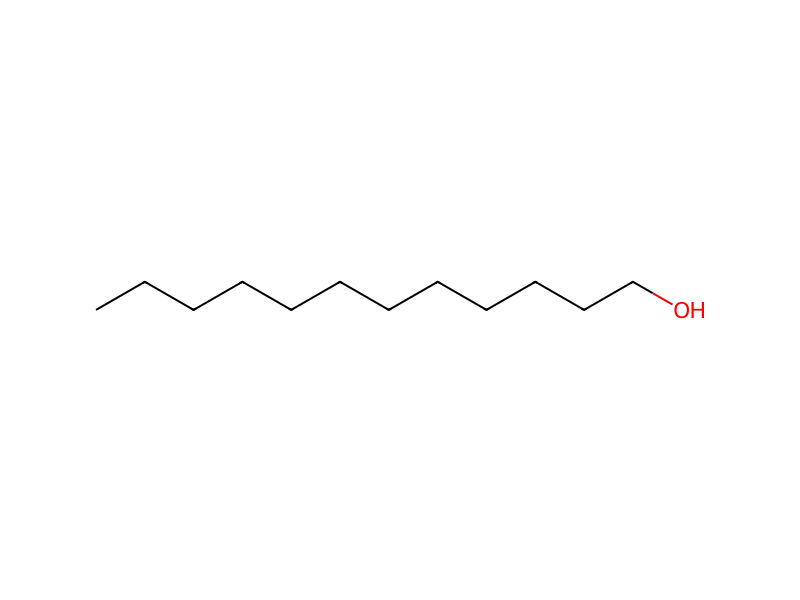
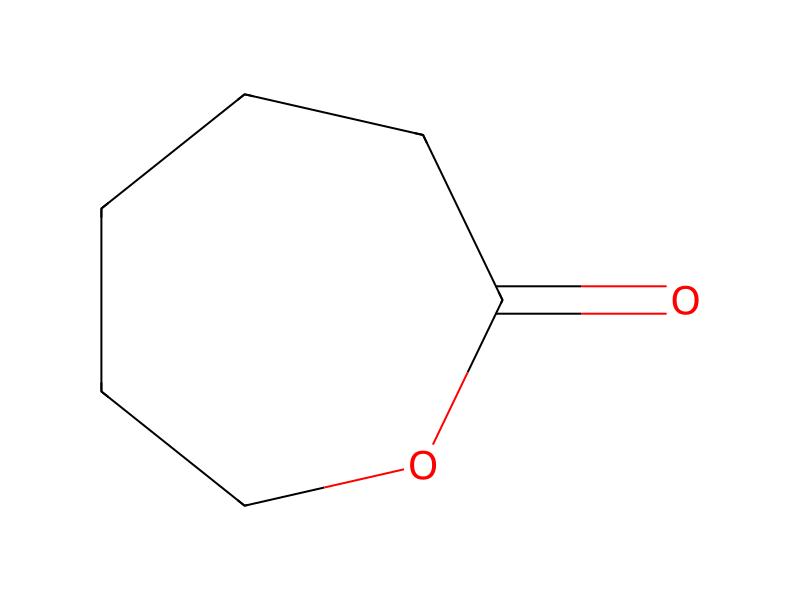
1-Dodecanol → Poliglecaprone
Reaction equation

[C:1]1(=[O:8])[O:7][CH2:6][CH2:5][CH2:4][CH2:3][CH2:2]1.[CH2:9]1[O:16][C:14](=[O:15])[CH2:13][O:12][C:10]1=[O:11].C(O)CCCCCCCCCCC.CCCCC(C([O-])=O)CC.CCCCC(C([O-])=O)CC.[Sn+2]>>[C:1]1(=[O:8])[O:7][CH2:6][CH2:5][CH2:4][CH2:3][CH2:2]1.[CH2:9]1[O:16][C:14](=[O:15])[CH2:13][O:12][C:10]1=[O:11]Participants
5



Conditions
- Temperature
- 180 °C
Procedure
A flame dried, 250 ml, round bottom, single neck flask is charged with 90 g (0.789 mole) of ε-caprolactone, 10 g (0.0862 mole) of glycolide, 7.96 ml (40 millimole/mole of total monomer) of distilled 1-dodecanol, and 0.121 ml of stannous octoate (0.33 molar solution in toluene). The reaction flask is purged with nitrogen three times before venting with nitrogen. The reaction mixture is heated to 180° C. and maintained there for 4.5 hours. The copolymer is isolated, characterized, and tested for absorption. The results are reported in Table 1.
Workup
- customA flame dried
- customThe reaction flask is purged with nitrogen three times
- temperaturemaintained there for 4.5 hours
- customThe copolymer is isolated
- customtested for absorption
Sources & evidence
- ORD record
- ord-cbd6eea78b464d60a1fc39b04ef0fcb6
- Source dataset
- uspto-grants-1991_02
- Patent number
- US04994074
Reaction notes
Loading…