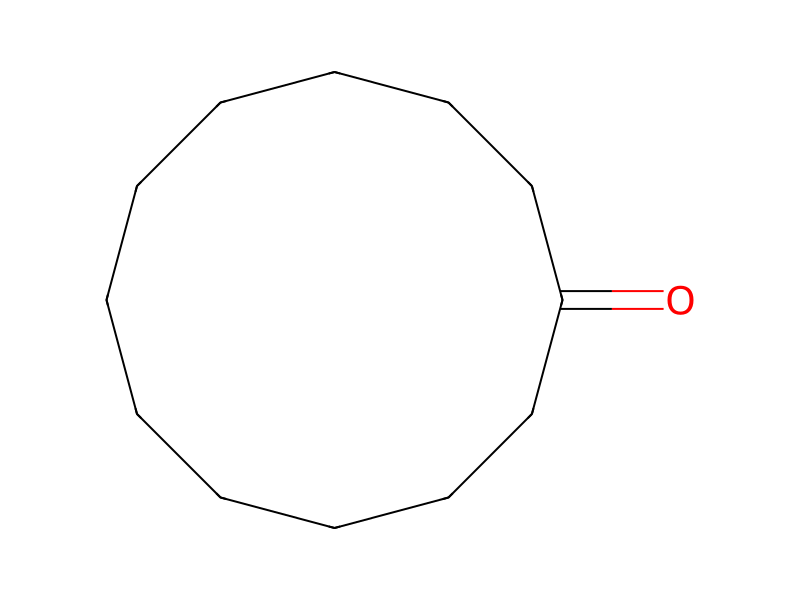
13-Oxabicyclo[10.1.0]tridecane → Cyclododecanone
Reaction equation

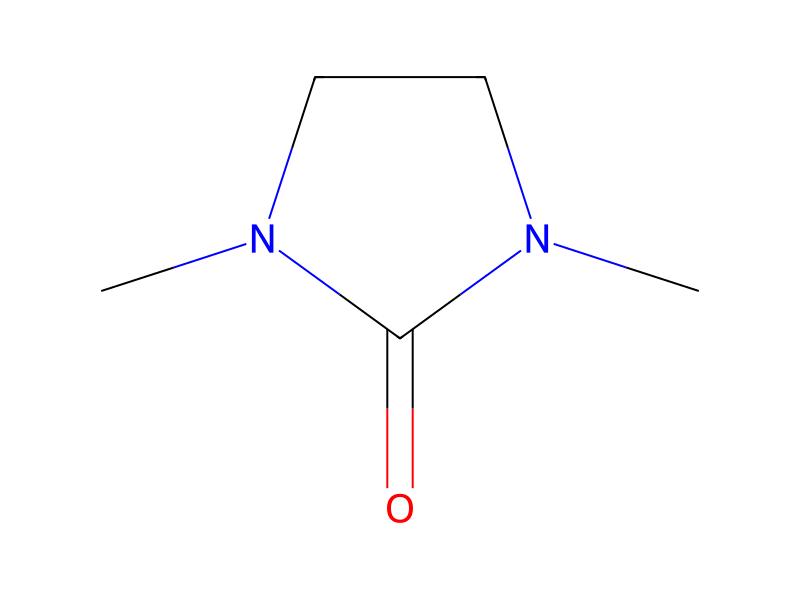
[O:1]1[CH:3]2[CH2:4][CH2:5][CH2:6][CH2:7][CH2:8][CH2:9][CH2:10][CH2:11][CH2:12][CH2:13][CH:2]12>CN1CCCC1=O.CN1C(=O)N(C)CC1.[Cl-].[Li+]>[C:2]1(=[O:1])[CH2:13][CH2:12][CH2:11][CH2:10][CH2:9][CH2:8][CH2:7][CH2:6][CH2:5][CH2:4][CH2:3]1Participants
5
Reactant 1

Product 1
Reagents, catalysts & solvents 3


Procedure
For example, German Patent DE3744094 discloses a technique where an epoxycyclododecane is isomerized by using N-methylpyrrolidone or N,N′-dimethylethyleneurea as a solvent and using lithium chloride as a catalyst and thereby a cyclododecanone is obtained in a yield of 94%.
Sources & evidence
- ORD record
- ord-1fb537af28774adc941b5f3d5d94fdeb
- Source dataset
- uspto-grants-2005_03
- Patent number
- US06861563B2
Reaction notes
Loading…