Ethylene Glycol → 6-Phenylhexan-1-amine
Reaction equation

[O-]P([O-])([O-])=O.[K+].[K+].[K+].[CH2:9]([NH2:15])[CH2:10][CH2:11][CH2:12][CH2:13][CH3:14].I[C:17]1[CH:22]=[CH:21][CH:20]=[CH:19][CH:18]=1.C(O)CO>[Cu]I.CCCCCC.C(OCC)(=O)C.CC(O)C>[C:17]1([CH2:14][CH2:13][CH2:12][CH2:11][CH2:10][CH2:9][NH2:15])[CH:22]=[CH:21][CH:20]=[CH:19][CH:18]=1Participants
8
Reactant 4


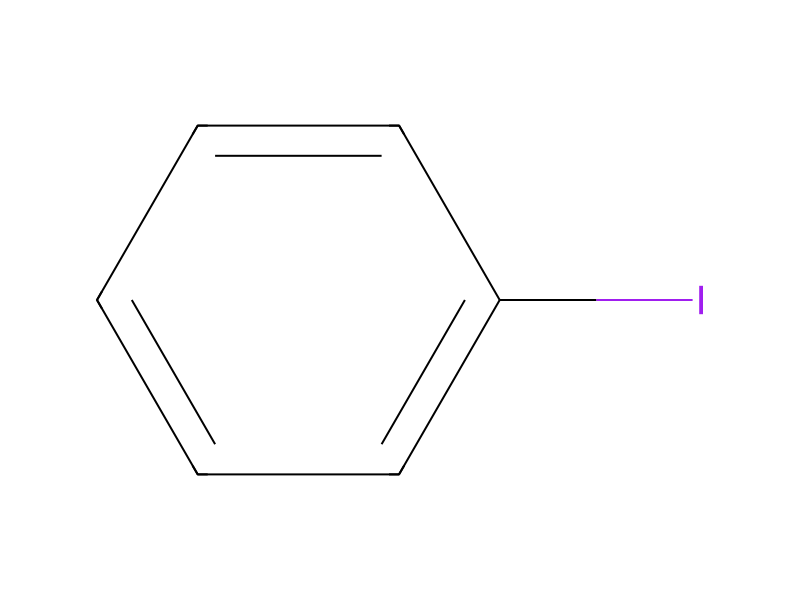

Product 1

Reagents, catalysts & solvents 3



Procedure
The general procedure under argon or air was followed using copper(I) iodide (10 mg, 0.05 mmol or 2.0 mg, 0.01 mmol), K3PO4 (425 mg, 2.00 mmol), hexylamine (159 μL, 1.20 mmol), iodobenzene (112 μL, 1.00 mmol), ethylene glycol (111 μL, 2.00 mmol) and 2-propanol (1.0 mL). Column chromatography using a solvent mixture (hexane/ethyl acetate=20/1, Rf=0.5) afforded N-(phenyl)hexylamine (152 mg, 86% isolated yield) as colorless liquid. The spectral data (1H NMR) matched with the literature references and GC analysis indicated >95% purity. See Bomann, M. D.; Guch, I. C.; DiMare, M. J. Org. Chem. 1995, 60, 5995-5996.
Sources & evidence
- ORD record
- ord-976ba30bcf374ede9d0a350025195a6e
- Source dataset
- uspto-grants-2005_03
- Patent number
- US06867298B2
Reaction notes
Loading…