Bromine → 3-Bromo-7-chloroimidazo[1,2-a]pyridine
Reaction equation

[Cl:1][C:2]1[CH:7]=[CH:6][N:5]2[CH:8]=[CH:9][N:10]=[C:4]2[CH:3]=1.C([O-])(=O)C.[Na+].[Br:16]Br.C(=O)([O-])O.[Na+]>[Br-].[K+].CO>[Br:16][C:8]1[N:5]2[CH:6]=[CH:7][C:2]([Cl:1])=[CH:3][C:4]2=[N:10][CH:9]=1Participants
7





Conditions
- Temperature
- 0 °C
Procedure
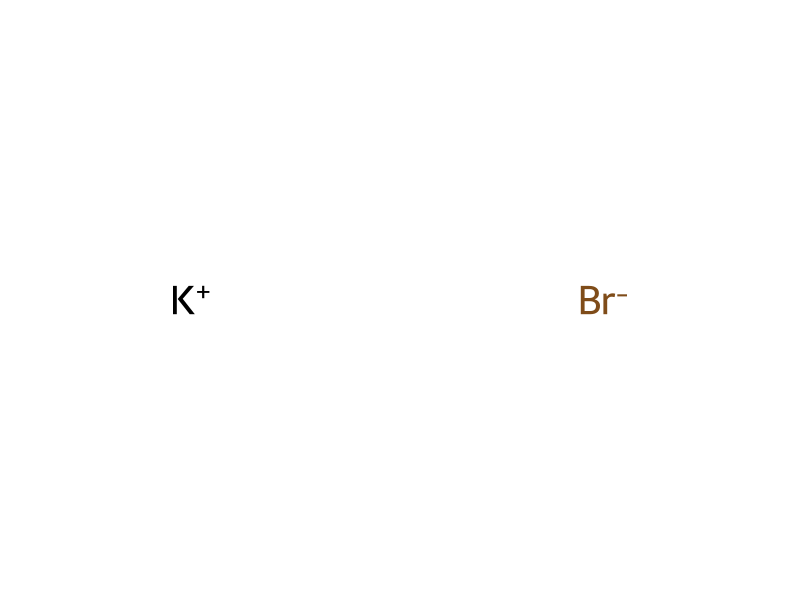
7-Chloroimidazo[1,2-α]pyridine (3.0 g, 19.7 mmol) and sodium acetate (1.94 g, 23.6 mmol) were dissolved in a saturated solution of potassium bromide in methanol (25 ml) and cooled to 0° C. before adding bromine (3.3 g, 20.7 mmol) dropwise over 5 min. The mixture was allowed to stir for 15 min before pouring onto saturated sodium hydrogencarbonate solution (200 ml). The resulting solid was collected by filtration and dried under high vacuum to give 3-bromo-7-chloroimidazo[1,2-α]pyridine (3.64 g, 80%) as a white solid. 1H NMR (360 MHz, CDCl3) δH 6.92 (1H, dd, J 2 and 7), 7.61 (1H, s), 7.63 (1H, d, J 2), 8.05 (1H, d, J 7).
Workup
- filtrationThe resulting solid was collected by filtration
- customdried under high vacuum
Sources & evidence
- ORD record
- ord-1f6bcddbd64b489a8c24ac9b26f2897d
- Source dataset
- uspto-grants-2005_03
- Patent number
- US06872731B2
Reaction notes
Loading…