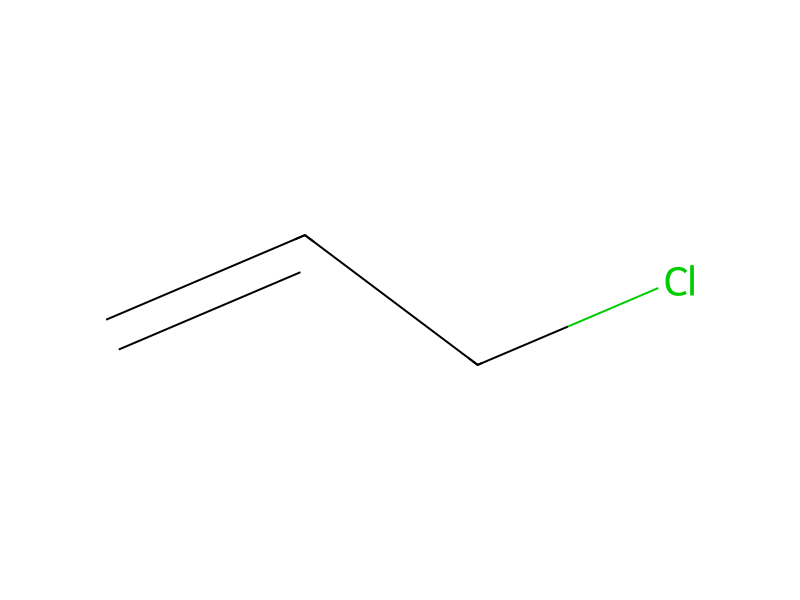
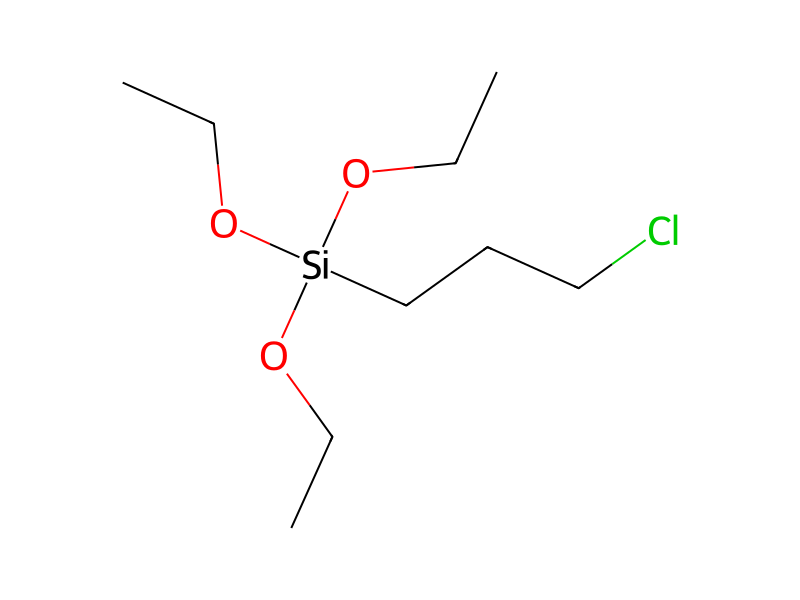
Allyl chloride → 3-(Trimethoxysilyl)propyl chloride
Reaction equation

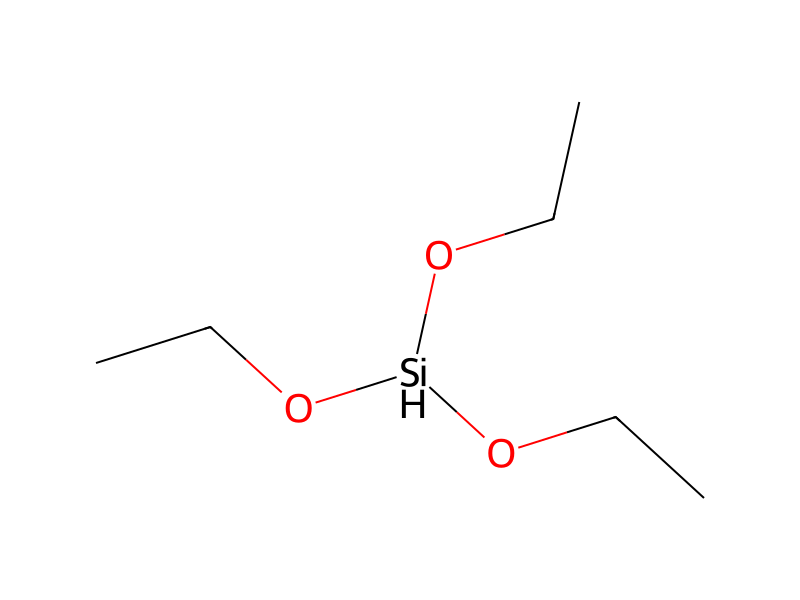
C(Cl)C=C.C(O[SiH](OCC)OCC)C.[Cl:15][CH2:16][CH2:17][CH2:18][Si:19]([O:26][CH2:27]C)([O:23][CH2:24]C)[O:20][CH2:21]C.CO[SiH](OC)OC>>[Cl:15][CH2:16][CH2:17][CH2:18][Si:19]([O:26][CH3:27])([O:20][CH3:21])[O:23][CH3:24]Participants


Procedure
A potentially more economical route is the direct hydrosilation reaction of triethoxysilane and allyl chloride. Platinum is the most widely used hydrosilation catalyst and its use for the hydrosilation reaction of allyl chloride and triethoxysilane has been reported. According to U.S. Pat. No. 3,795,656, a 70% yield was obtained for the Pt-catalyzed hydrosilation reaction of allyl chloride and triethoxysilane. Belyakova et al., Obshch. Khim 1974, 44, 2439-2442, describes the Pt-catalyzed hydrosilation reaction of silanes with allyl chloride and reports a 14% yield for chloropropyltriethoxysilane. As disclosed in Japanese Patent No. 11,199,588, the Pt-catalyzed hydrosilation reaction of trimethoxysilane and allyl chloride resulted in a 70% yield of chloropropyltrimethoxysilane.
Sources & evidence
- ORD record
- ord-82ddf3d75de9436bbf91c2982b28985a
- Source dataset
- uspto-grants-2005_03
- Patent number
- US06872845B2
Reaction notes
Loading…