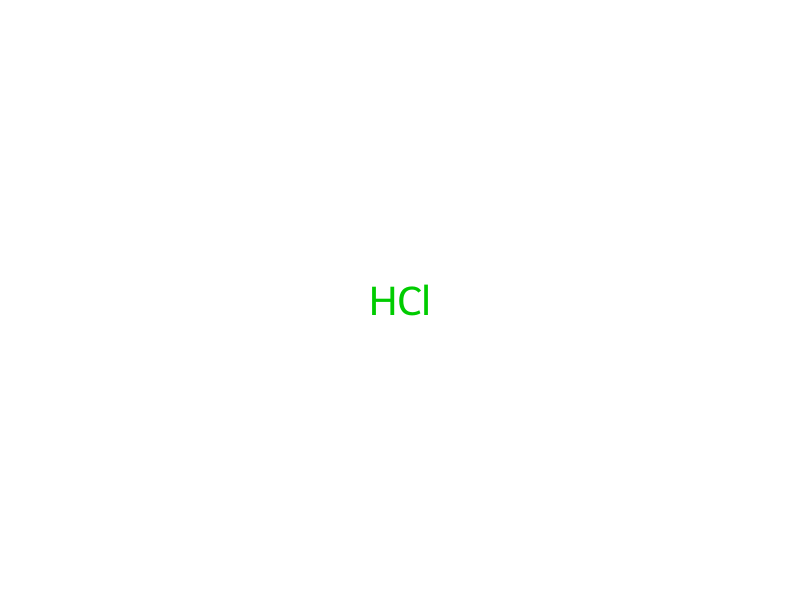
Hydrochloric Acid → HCID 178442263, compound
Reaction equation

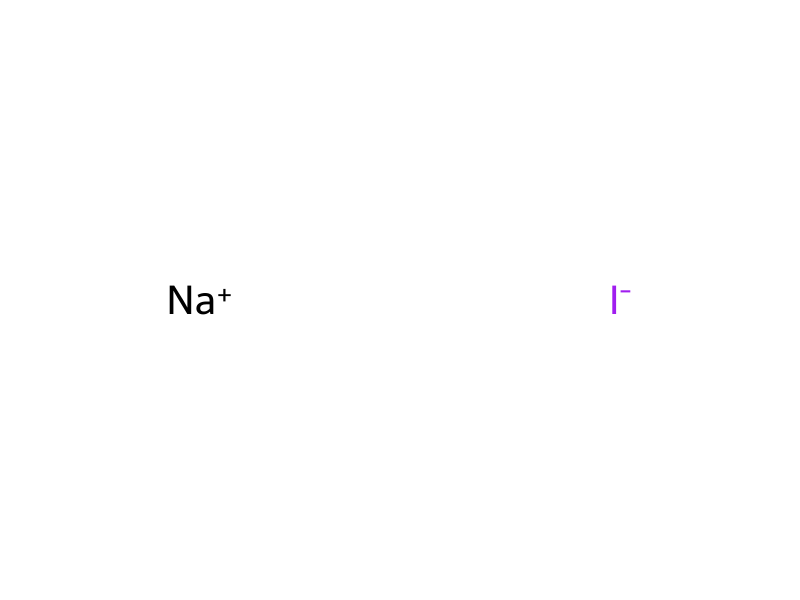
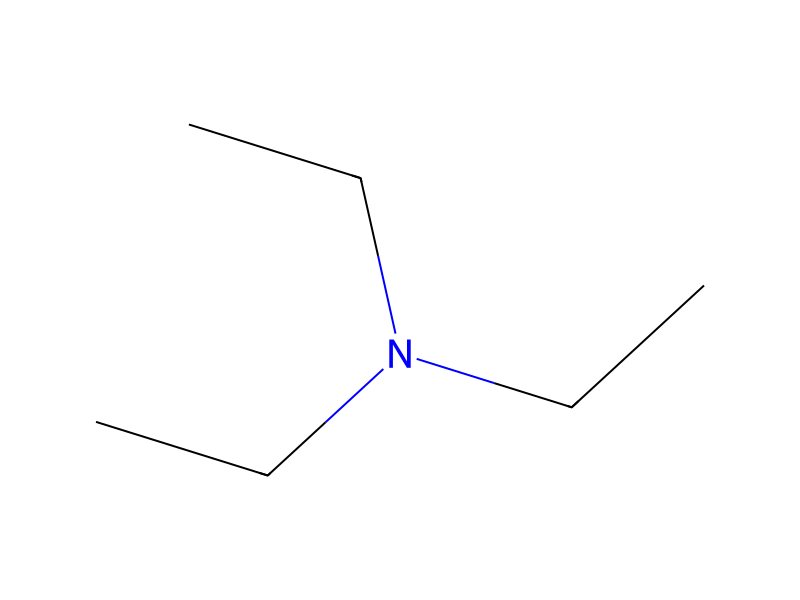
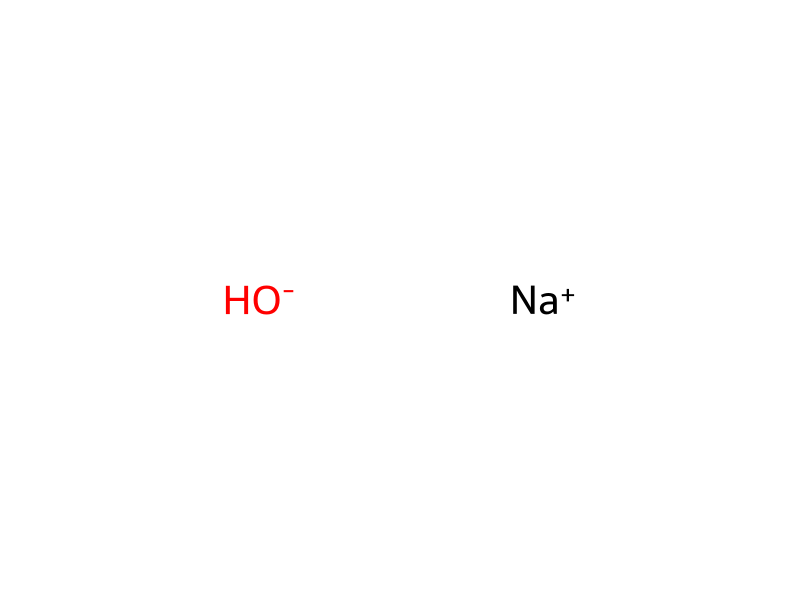
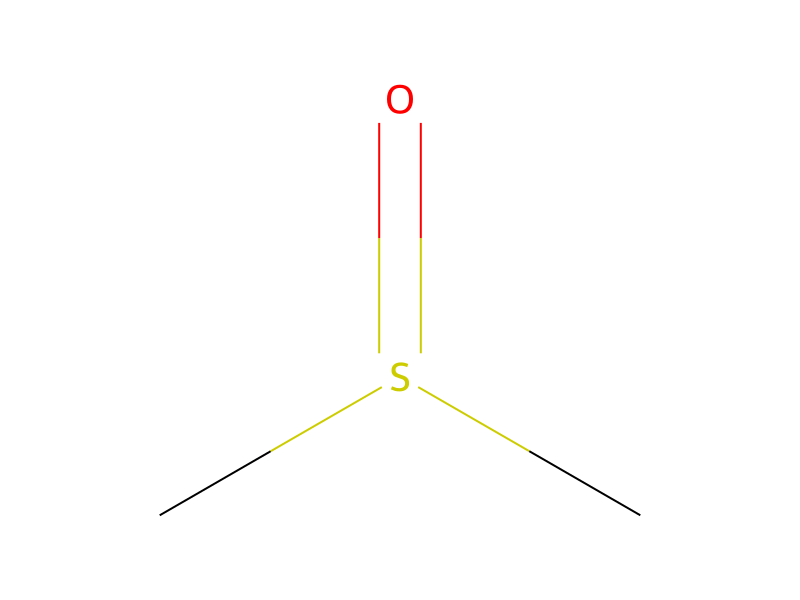
[OH:1][C:2]1[C:3](=[O:13])[C:4]2[C:9]([C:10](=[O:12])[CH:11]=1)=[CH:8][CH:7]=[CH:6][CH:5]=2.Br[CH2:15][CH:16]=[C:17]([CH3:19])[CH3:18].[I-].[Na+].C(N(CC)CC)C.[OH-].[Na+].Cl>O.CS(C)=O>[CH3:18][C:17]([CH3:19])=[CH:16][CH2:15][C:11]1[C:10](=[O:12])[C:9]2[CH:8]=[CH:7][CH:6]=[CH:5][C:4]=2[C:3](=[O:13])[C:2]=1[OH:1]Participants
Reactant 6


Product 1

Reagents, catalysts & solvents 2
Procedure
Into a dried 2,000 ml round bottomed flask was added 2-hydroxy-1,4-napthoquinone (69.7 g, 0.40 mol), 1-bromo-3-methyl-2-butene (66 g, 0.44 mol), sodium iodide (60 g, 0.4 mol), triethylamine (58.55 ml, 0.42 mol) and dimethylsulfoxide (DMSO), 500 ml. The mixture was stirred vigorously at room temperature under Argon atmosphere for 1 hour, then heated with a heating mantle to 45° C. After 3-6 hours, at 45° C. with vigorous stirring, the mixture was cooled down in an ice bath, and 800 ml of water was added to stop the reaction. The mixture is then transferred into a 2,000 ml separatory funnel and extracted three times with methylene chloride (500 ml, 300 ml and 200 ml). The organic phases were pooled and washed successively with water (800 ml), 5% aqueous sodium bicarbonate (2×800 ml)* and 1% aqueous sodium chloride (800 ml), then dried with sodium sulfate (50 g). After filtration, the filtrate was evaporated to dryness by Rotovap. The residue was dissolved in toluene (1,000 ml) with heating in a 50° C. water bath, and any insoluble material existing was filtered off. The warm toluene solution was extracted three times with freshly prepared, warm 2N sodium hydroxide (800 ml, 300 ml and 200 ml). The aqueous phases were pooled and neutralized by addition of hydrochloric acid (220 ml) with vigorous manual stirring, then extracted three times with toluene (500 ml, 300 ml and 300 ml). The organic phase were pooled and any black solid existing in the organic phases was removed by filtration. The combined organic phase was washed successively with 1% aqueous sodium chloride (800 ml), 5% aqueous sodium bicarbonate (500 ml) and 1% aqueous sodium chloride (800 ml), and then dried with sodium sulfate (50 g). After filtration, the filtrate was evaporated to dryness by Rotovap, then isopropanol (300 ml) was added for co-evaporation to completely remove residual toluene. The residue was dissolved in isopropanol (300 ml) with heating in an 80° C. water bath and then was cooled to 4° C. slowly. Pure lapachol was obtained after filtering, washing with cold isopropanol (4° C., 50-100 ml) and drying under vacuum.
Workup
- temperatureheated with a heating mantle to 45° C
- waitAfter 3-6 hours
- temperatureat 45° C. with vigorous stirring, the mixture was cooled down in an ice bath
- customthe reaction
- customThe mixture is then transferred into a 2,000 ml separatory funnel
- extractionextracted three times with methylene chloride (500 ml, 300 ml and 200 ml)
- washwashed successively with water (800 ml), 5% aqueous sodium bicarbonate (2×800 ml)* and 1% aqueous sodium chloride (800 ml)
- dry with materialdried with sodium sulfate (50 g)
- filtrationAfter filtration
- customthe filtrate was evaporated to dryness by Rotovap
- dissolutionThe residue was dissolved in toluene (1,000 ml)
- temperaturewith heating in a 50° C. water bath
- filtrationany insoluble material existing was filtered off
- extractionThe warm toluene solution was extracted three times
- customwith freshly prepared
- extractionextracted three times with toluene (500 ml, 300 ml and 300 ml)
- customwas removed by filtration
- washThe combined organic phase was washed successively with 1% aqueous sodium chloride (800 ml), 5% aqueous sodium bicarbonate (500 ml) and 1% aqueous sodium chloride (800 ml)
- dry with materialdried with sodium sulfate (50 g)
- filtrationAfter filtration
- customthe filtrate was evaporated to dryness by Rotovap
- additionisopropanol (300 ml) was added for co-evaporation to completely remove residual toluene
- dissolutionThe residue was dissolved in isopropanol (300 ml)
- temperaturewith heating in an 80° C. water bath
- temperaturewas cooled to 4° C. slowly
Sources & evidence
- ORD record
- ord-e0917fe6ff884368842ea6e58b37b5f0
- Source dataset
- uspto-grants-2002_10
- Patent number
- US06458974B1
Reaction notes
Loading…