Pyridine → 5-(2,3-Dihydro-indole-1-sulfonyl)-1,3-dihydro-indol-2-one
Reaction equation

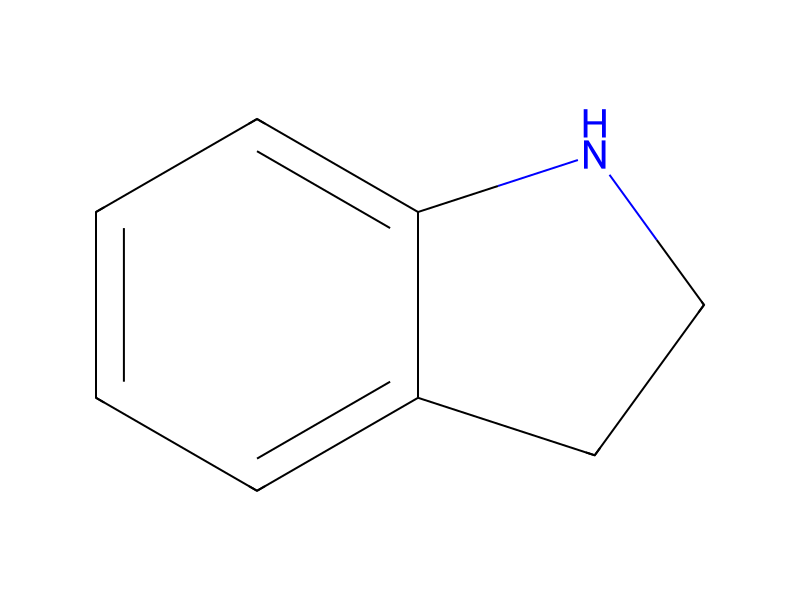
Cl[S:2]([C:5]1[CH:6]=[C:7]2[C:11](=[CH:12][CH:13]=1)[NH:10][C:9](=[O:14])[CH2:8]2)(=[O:4])=[O:3].[NH:15]1[C:23]2[C:18](=[CH:19][CH:20]=[CH:21][CH:22]=2)[CH2:17][CH2:16]1.N1C=CC=CC=1>C1COCC1>[N:15]1([S:2]([C:5]2[CH:6]=[C:7]3[C:11](=[CH:12][CH:13]=2)[NH:10][C:9](=[O:14])[CH2:8]3)(=[O:4])=[O:3])[C:23]2[C:18](=[CH:19][CH:20]=[CH:21][CH:22]=2)[CH2:17][CH2:16]1Participants
5




Procedure
To a mixture of 5-chlorosulfonyl-2-oxindole (5 g, 21.6 mmol) and indoline (2.9 mL, 26 mmol) in THF (20 mL) was added pyridine (3.4 g, 43 mmol). After stirring at room temperature for one day, the precipitate was collected by filtration, washed with water in ethanol (20%), dried, washed with 60 mL of hot ethanol and dried under vacuum to give 7.5 g (over 100%) of 5-(2,3-dihydro-indole-1-sulfonyl)-1,3-dihydro-indol-2-one as a pink solid.
Workup
- filtrationthe precipitate was collected by filtration
- washwashed with water in ethanol (20%)
- customdried
- washwashed with 60 mL of hot ethanol
- customdried under vacuum
Sources & evidence
- ORD record
- ord-ac38ce781802475c80728f9b37471584
- Source dataset
- uspto-grants-2002_10
- Patent number
- US06465507B2
Reaction notes
Loading…