Triethoxysilane → (3,3-Diethoxypropyl)triethoxysilane
Reaction equation

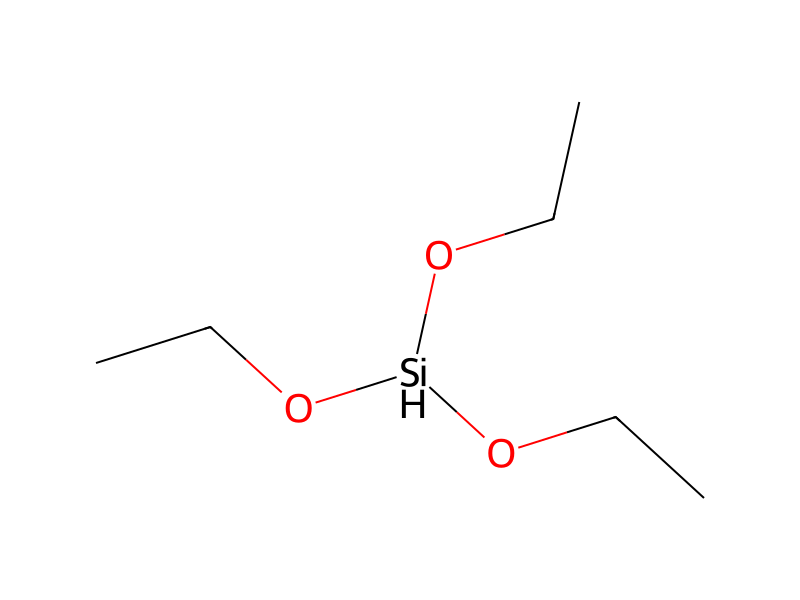
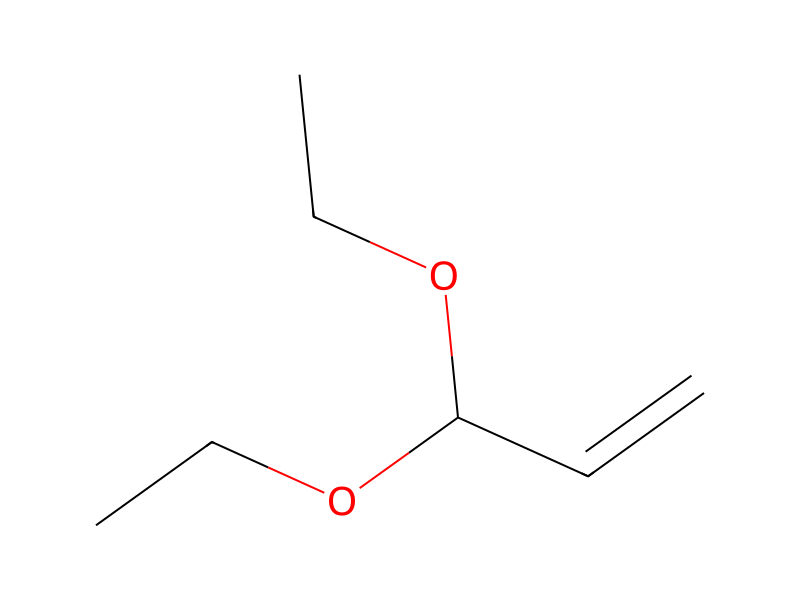
[CH2:1]([O:3][CH:4]([O:7][CH2:8][CH3:9])[CH:5]=[CH2:6])[CH3:2].[CH2:10]([O:12][SiH:13]([O:17][CH2:18][CH3:19])[O:14][CH2:15][CH3:16])[CH3:11]>>[CH2:1]([O:3][CH:4]([O:7][CH2:8][CH3:9])[CH2:5][CH2:6][Si:13]([O:17][CH2:18][CH3:19])([O:14][CH2:15][CH3:16])[O:12][CH2:10][CH3:11])[CH3:2]Participants
3

Procedure
A round-bottomed flask is introduced with 2 g (1.1 equivalent) of 3,3-diethoxy-1-propene produced in Example 1, and 2 ml (1 equivalent) of triethoxysilane commercially available from Aldrich, Co. Then, hydrogen hexachloroplatinate (H2PtCl6), a metal catalyst, is added in the amount of 1 ppm to the solution. After that, the resulting mixture is allowed to react at 100° C. under atmospheric pressure for 48 hours. Next, the resulting material is fractionally distilled under a vacuum, thereby giving 4.2 g of colorless 3,3-diethoxyprophyltriethoxysilane. The product is dissolved in CDCl3 and measured for 1NMR and infrared-absorbing spectrum. Results are shown in FIGS. 1 and 2.
Workup
- customto react at 100° C. under atmospheric pressure for 48 hours
- distillationNext, the resulting material is fractionally distilled under a vacuum
- customgiving 4.2 g of colorless 3,3-diethoxyprophyltriethoxysilane
- dissolutionThe product is dissolved in CDCl3
- custominfrared-absorbing spectrum
- customResults
Sources & evidence
- ORD record
- ord-a7a811987f904834a8d6283c014b0636
- Source dataset
- uspto-grants-2002_10
- Patent number
- US06465671B1
Reaction notes
Loading…