1,2-Dibromoethane → Methyl 1-(pyridin-3-yl)cyclopropane-1-carboxylate
Reaction equation

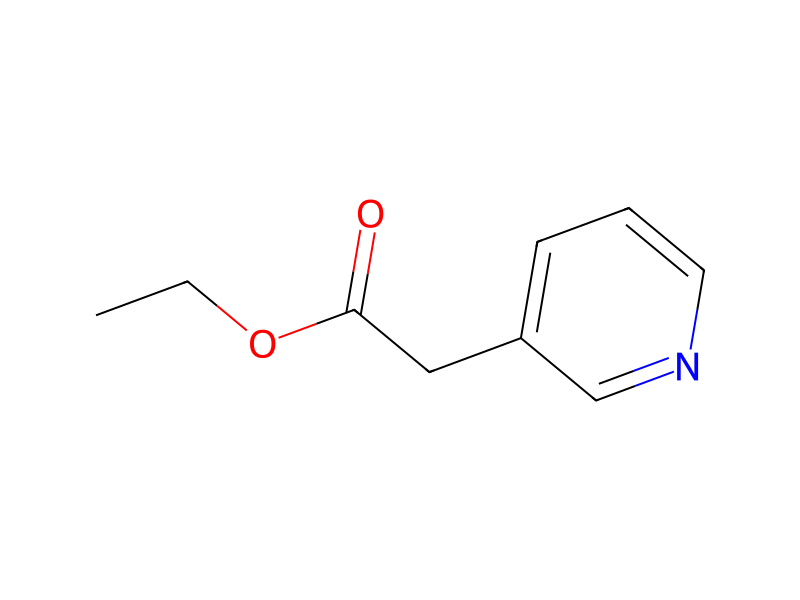
[Li+].[CH3:2][CH:3]([N-]C(C)C)C.[N:9]1[CH:14]=[CH:13][CH:12]=[C:11]([CH2:15][C:16]([O:18][CH2:19]C)=[O:17])[CH:10]=1.BrCCBr>C1COCC1.CN(P(N(C)C)(N(C)C)=O)C>[CH3:19][O:18][C:16]([C:15]1([C:11]2[CH:10]=[N:9][CH:14]=[CH:13][CH:12]=2)[CH2:3][CH2:2]1)=[O:17]Participants





Conditions
- Temperature
- -78 °C
Procedure
To a cooled (−78° C.) solution of LDA (2.0M, 272 mL) in 500 mL anhydrous THF and 200 ml HMPA (dried with molecular sieves) was added gradually a solution of ethyl 3-pyridylacetate 7-1 (75.0 g, 454 mmol) in 50 mL THF. The mixture was stirred for 50 min at −78° C. and treated with neat 1,2-dibromoethane (117 mL, 1363 mmol) in one portion. The reaction mixture was stirred overnight while being allowed to warm to room temperature. The reaction mixture was quenched with saturated NH4Cl and extracted three times with EtOAc. The combined organic layers were washed three times with H2O and then brine. After solvent removal, the residue was purified using silica gel chromatography (100% hexanes to EtOAc/hexane=7/3) to obtain the desired product 7-2 as an oil.
Workup
- stirringThe reaction mixture was stirred overnight
- temperatureto warm to room temperature
- customThe reaction mixture was quenched with saturated NH4Cl
- extractionextracted three times with EtOAc
- washThe combined organic layers were washed three times with H2O
- customAfter solvent removal
- customthe residue was purified
Sources & evidence
- ORD record
- ord-992f0598794e4f309ca424bc1043f986
- Source dataset
- uspto-grants-2002_10
- Patent number
- US06472403B2
Reaction notes
Loading…