HomeMCPSkillsWorkbenchOpenChem
HomeWorkbenchNotificationsMe
llms.txt · skill.md · MCP GuidePrivacy Policy · Terms of Service · Supportv1.8.4
  1. Home
  2. /Compound

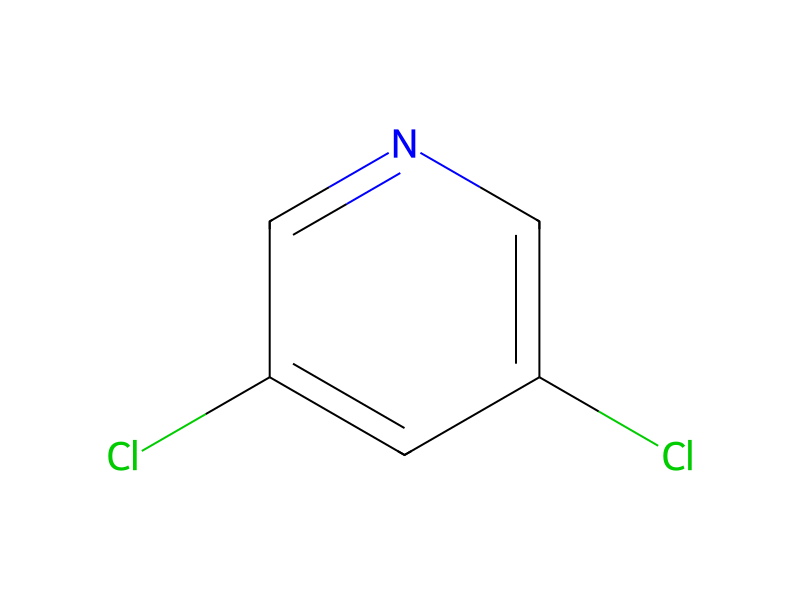
3,5-Dichloropyridine

HCID 17153
New reaction
Print
Basic informationNames & identifiersPropertiesSafety & regulationChemistry & industryRelated reactionsCompound notes
Substructure searchFind similar structures

Basic information

CAS
2457-47-8
Standard SMILES
Clc1cncc(Cl)c1
InChIKey
WPGHPGAUFIJVJF-UHFFFAOYSA-N
Molecular formula
C5H3Cl2N
Average molar mass
147.99 g/mol
Monoisotopic mass
146.9642545

Names & identifiers

Preferred name
3,5-Dichloropyridine
IUPAC
3,5-dichloropyridine
English name
3,5-Dichloropyridine
Molecular formula
C5H3Cl2N
Molecular weight
147.99

Names & synonyms

3,5-DICHLOROPYRIDINEPyridine, 3,5-dichloro-CCRIS 1719EINECS 219-537-9D9K92ASQ4DNSC 60546BRN 0001973NSC-605465-20-05-00417 (Beilstein Handbook Reference)DTXSID60179307Pyridine, 3,5dichloroRefChem:91493
Show more names
3,5-CHLOROPYRIDINE3,5-dichloro-pyridin3.5-Dichloropryidine3,5-DichloripyridineDichloropyridine,98%3,5-Dichloroypyridine3,5-Dichloropyridine,97%
DTXCID50101798219-537-9InChI=1/C5H3Cl2N/c6-4-1-5(7)3-8-2-4/h1-3WPGHPGAUFIJVJF-UHFFFAOYSA-N2457-47-8Etoricoxib Impurity 50MFCD00006376WLN: T6NJ CG EG

Database identifiers

CAS
2457-47-8
PubChem CID
17153
DTXSID
DTXSID60179307
UNII
D9K92ASQ4D
EC Number
219-537-9
Nikkaji
J51.305I

Properties

Computed structural properties

XLogP
2.6
Topological polar surface area
12.9 Ų
Hydrogen bond donors
0
Hydrogen bond acceptors
1
Rotatable bonds
0
Heavy atoms
8
Formal charge
0
Complexity
68.8

Experimental & physicochemical properties

Chemical ClassesNitrogen Compounds -> Pyridines
SpringerMaterials PropertiesNuclear quadrupole resonance spectroscopy
LogP2.56
Vapor Pressure0.77 [mmHg]
Physical DescriptionWhite crystalline powder with an unpleasant odor; [Alfa Aesar MSDS]

Physicochemical properties

Melting point
65 · 65-67 °C (lit.)
Boiling point
178 °C · 178 °C
Density
1.39 · 1.39
Flash point
110 °C · >110°C
storage temp.
Inert atmosphere,Room Temperature
solubility
Chloroform, Ethyl Acetate
form
Solid
pka

Safety & regulation

Safety information is for reference only and does not replace the supplier’s Safety Data Sheet (SDS), applicable regulations, or professional assessment.

GHS classification

GHS Classification · 4 items

Danger

H302 (97.8%): Harmful if swallowed [Warning Acute toxicity, oral]

P261, P264, P264+P265, P270, P271, P280, P301+P317, P302+P352, P304+P340, P305+P351+P338, P305+P354+P338, P317, P319, P321, P330, P332+P317, P337+P317, P362+P364, P403+P233, P405, and P501 (click each P-code to see the statement)

Aggregated GHS information provided per 45 reports by companies from 5 notifications to the ECHA C&L Inventory. Each notification may be associated with multiple companies.

Hazard information

Hazards SummaryCauses somnolence and fatty liver degeneration in intraperitoneal lethal-dose studies of mice (LD50 = 1,180 mg/kg); [RTECS] A skin and strong eye irritant; Harmful by ingestion and skin absorption; [Alfa Aesar MSDS] See 3-Chloropyridine.
Hazard Classes and CategoriesAcute Tox. 4 (97.8%)

Toxicology

Adverse EffectsNeurotoxin - Other CNS neurotoxin

Safety data

PPE
dust mask type N95 (US), Eyeshields, Faceshields, Gloves
wgk
3
rtecs
US8575000
ridadr
UN2811
hs_code
2933399090
risk_code
22-37/38-41-36/37/38
Signal word
Danger

Chemistry & industry

Applications

Uses3,5-Dichloropyridine (cas# 2457-47-8) is a compound useful in organic synthesis.
Upstream & downstream products

Downstream products

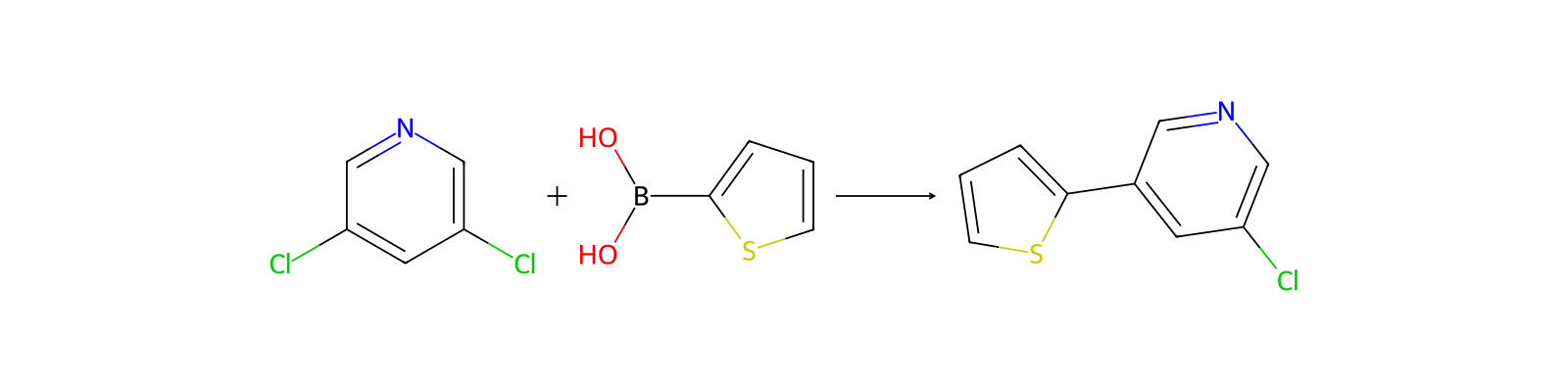
3,5-Dichloro-4-formyl pyridine3 5-Dichloropyridine 1-oxide 983,5-Dimethoxypyridine5-Chloro-3-pyridinamineEthanol, 2-[(5-chloro-3-pyridinyl)oxy]-

Related reactions

88 records
New reaction record
HRID 920As reactant
HRID 2775As reactant
HRID 4786As reactant
HRID 41508As reactant
HRID 54594As reactant
HRID 93451As reactant
HRID 137122As reactant
HRID 175722As reactant
PreviousPage 1 of 11

Compound notes

On this pageBasic informationNames & identifiersPropertiesSafety & regulationChemistry & industryRelated reactionsCompound notes
0.32 · 0.32±0.10(Predicted)
color
White to Off-White
BRN
1973 · 1973
InChI
InChI=1S/C5H3Cl2N/c6-4-1-5(7)3-8-2-4/h1-3H
InChIKey
WPGHPGAUFIJVJF-UHFFFAOYSA-N
SMILES
C1=NC=C(Cl)C=C1Cl
CAS DataBase Reference
2457 · 2457-47-8(CAS DataBase Reference)
FDA UNII
9 K92ASQ4D · D9K92ASQ4D
NIST Chemistry Reference
3 · Pyridine, 3,5-dichloro-(2457-47-8)
Comptox DTXSID
60179307 · DTXSID60179307
UNSPSC Code
12352100 · 12352100
NACRES
22 · NA.22
Symbol(GHS)
5 · GHS05,GHS07
Signal word
Danger
Hazard statements
302 · H302-H315-H318-H335
Precautionary statements
280 · P280-P301+P312+P330-P302+P352-P305+P351+P338+P310
target organs
Respiratory system
PPE
95 · dust mask type N95 (US), Eyeshields, Faceshields, Gloves
Hazard Codes
Xn,Xi
Risk Statements
22 · 22-37/38-41-36/37/38
Safety Statements
26 · 26-39-36
RIDADR
2811 · UN2811
WGK Germany
3 · 3
RTECS
8575000 · US8575000
Hazard Note
Irritant
HazardClass
6.1 · 6.1
HS Code
2933399090 · 2933399090
Storage Class
11 · 11 - Combustible Solids
Hazard Classifications
4 OralEye · Acute Tox. 4 OralEye Dam. 1Skin Irrit. 2STOT SE 3
Symbol(GHS)
GHS05,GHS07
hazard_code
Xn,Xi
hazard_note
Irritant
safety_code
26-39-36
hazard_class
6.1
Storage Class
11 - Combustible Solids
target organs
Respiratory system
Hazard statements
H302-H315-H318-H335
Hazard Classifications
Acute Tox. 4 OralEye Dam. 1Skin Irrit. 2STOT SE 3
Precautionary statements
P280-P301+P312+P330-P302+P352-P305+P351+P338+P310