HomeMCPWorkbenchSkills
HomeWorkbenchNotificationsMe
llms.txt · MCP GuidePrivacy Policy · Terms of Service · Supportv1.8.3
  1. Home
  2. /Compound

2-Propylvaleryl chloride

HCID 76240
New reaction
Print
Basic informationNames & identifiersPropertiesSafety & regulationChemistry & industryRelated reactionsCompound notes
Substructure searchFind similar structures

Basic information

CAS
2936-08-5
Standard SMILES
CCCC(CCC)C(=O)Cl
InChIKey
PITHYUDHKJKJNQ-UHFFFAOYSA-N
Molecular formula
C8H15ClO
Average molar mass
162.66 g/mol
Monoisotopic mass
162.08114278

Names & identifiers

Preferred name
2-Propylvaleryl chloride
IUPAC
2-propylpentanoyl chloride
English name
2,2-Di-n-propylacetyl chloride
Molecular formula
C8H15ClO
Molecular weight
162.66

Names & synonyms

2-Propylvaleryl chloride2-Propylpentanoyl chloride2936-08-5Pentanoyl chloride, 2-propyl-SQT2TYW2PRPITHYUDHKJKJNQ-UHFFFAOYSA-DTXSID40183583EINECS 220-914-5VALERYL CHLORIDE, 2-PROPYL-RefChem:483294DTXCID80106074220-914-5
Show more names
Propylvaleroylchloride2-N-PropylvalerylchlorideHeptane-4-carbonylchlorideDI-N-PROPYLACETYL CHLORIDE2-PropylvalerylChloride>2-N-Propylpentanoylchloride
InChI=1/C8H15ClO/c1-3-5-7(6-4-2)8(9)10/h7H,3-6H2,1-2H32,2-di-n-Propylacetyl chlorideValproyl Chloride2,2-DI-N-PROPYLACETYLCHLORIDEDipropylacetyl Chloride2-Propylvaleroyl ChlorideMFCD000514462-n-Propyl-n-valeroyl chloride

Database identifiers

CAS
2936-08-5
PubChem CID
76240
DTXSID
DTXSID40183583
UNII
SQT2TYW2PR
EC Number
220-914-5
Nikkaji
J150.904G

Properties

Computed structural properties

XLogP
3.7
Topological polar surface area
17.1 Ų
Hydrogen bond donors
0
Hydrogen bond acceptors
1
Rotatable bonds
5
Heavy atoms
10
Formal charge
0
Complexity
95.4

Physicochemical properties

Boiling point
68 · 68-70°C 10mm
Density
0 · 0,95 g/cm3
refractive index
1.431 · 1.4310-1.4330
Flash point
68 · 68-70°C/10mm
storage temp.
RT, stored under nitrogen
form
clear liquid
color
Colorless to Light yellow
Water Solubility
Reacts with water.
Sensitive
Moisture Sensitive
BRN
1098856 · 1098856
InChI
1S/C8H15ClO/c1-3-5-7(6-4-2)8(9)10/h7H,3-6H2,1-2H3
InChIKey
PITHYUDHKJKJNQ-UHFFFAOYSA-N
SMILES
CCCC(CCC)C(Cl)=O
CAS DataBase Reference
2936 · 2936-08-5(CAS DataBase Reference)
FDA UNII
2 TYW2PR · SQT2TYW2PR
Comptox DTXSID

Safety & regulation

Safety information is for reference only and does not replace the supplier’s Safety Data Sheet (SDS), applicable regulations, or professional assessment.

GHS classification

GHS Classification · 4 items

Danger

H290 (16.7%): May be corrosive to metals [Warning Corrosive to Metals]

P234, P260, P264, P264+P265, P270, P280, P301+P317, P301+P330+P331, P302+P361+P354, P304+P340, P305+P354+P338, P316, P317, P321, P330, P363, P390, P405, P406, and P501 (click each P-code to see the statement)

Aggregated GHS information provided per 6 reports by companies from 3 notifications to the ECHA C&L Inventory. Each notification may be associated with multiple companies.

Hazard information

Hazard Classes and CategoriesMet. Corr. 1 (16.7%)

Safety data

wgk
WGK 3
ridadr
3265
hs_code
2915900090
risk_code
34-22
Signal word
Danger
Symbol(GHS)
GHS05
hazard_code
C,Xn
hazard_note
Corrosive
safety_code
26-36/37/39-45
hazard_class
8
Storage Class
11 - Combustible Solids
packing_group
II
Hazard statements
H318-H227-H290-H314
Hazard Classifications
Acute Tox. 4 Oral
Precautionary statements

Chemistry & industry

Applications

Uses2,2-Di-n-propylacetyl chloride is used to produce 1,2-bis-(2-propyl-valerylamino)-ethan.

Related reactions

60 records
New reaction record
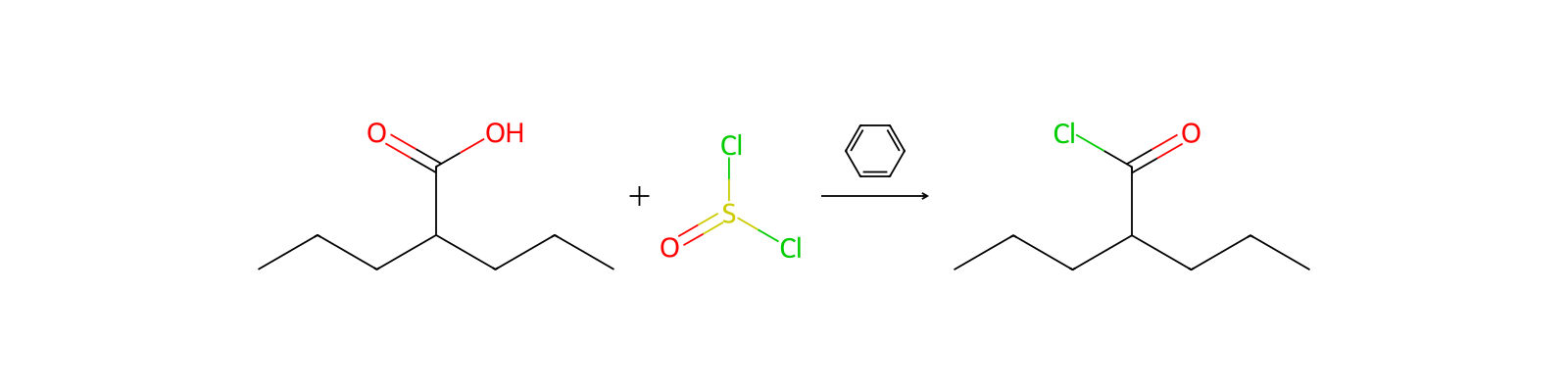
HRID 35510 reaction equation
HRID 35510As reactant
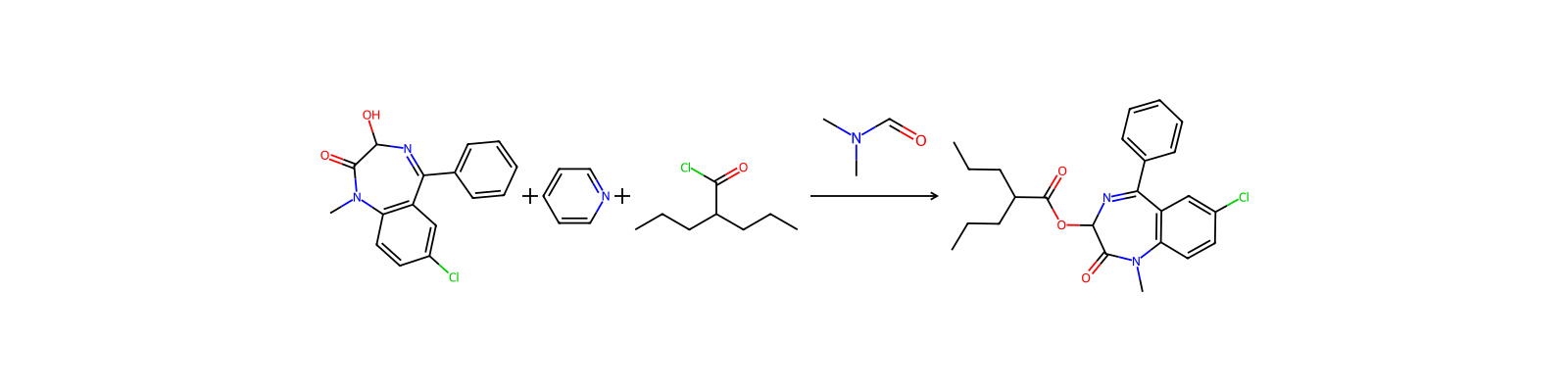
HRID 83977 reaction equation
HRID 83977As reactant
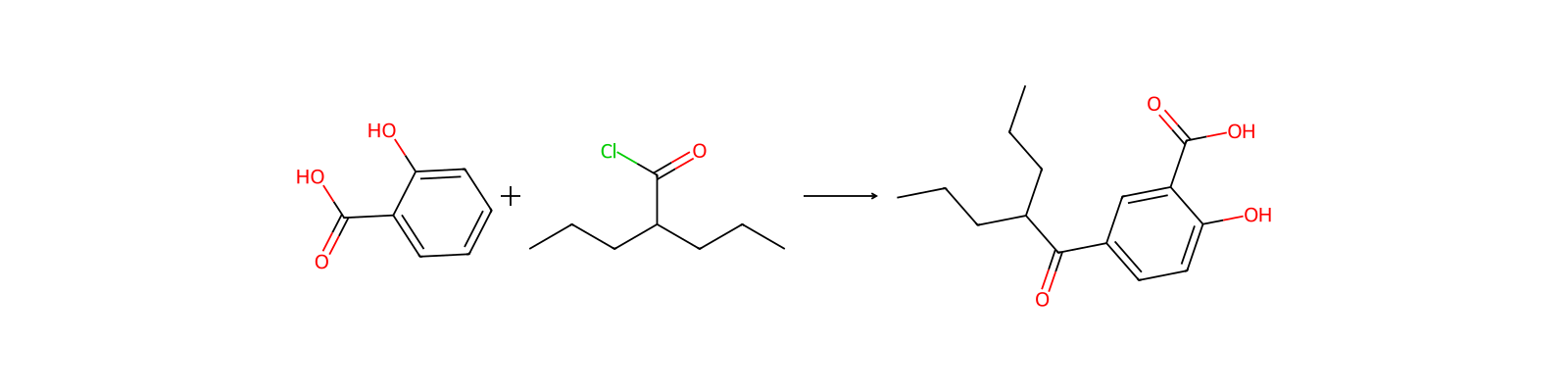
HRID 92522 reaction equation
HRID 92522As reactant
HRID 129356 reaction equation
HRID 129356As reactant
HRID 178376 reaction equation
HRID 178376As reactant
HRID 260201 reaction equation
HRID 260201As product
HRID 260202 reaction equation
HRID 260202As reactant
HRID 443793 reaction equation
HRID 443793As reactant
PreviousPage 1 of 8

Compound notes

On this pageBasic informationNames & identifiersPropertiesSafety & regulationChemistry & industryRelated reactionsCompound notes
40183583 · DTXSID40183583
UNSPSC Code
12352200 · 12352200
NACRES
21 · NA.21
Symbol(GHS)
5 · GHS05
Signal word
Danger
Hazard statements
318 · H318-H227-H290-H314
Precautionary statements
260 h-P301+P330+P331-P303+P361+P353-P305+P351+P338-P501a-P210-P234-P260-P264-P280-P301+P330+P331+P310-P303+P361+P353+P310+P363-P304+P340+P310-P305+P351+P338+P310-P370+P378-P390-P403+P235-P405-P406-P501 · P260h-P301+P330+P331-P303+P361+P353-P305+P351+P338-P501a-P210-P234-P260-P264-P280-P301+P330+P331+P310-P303+P361+P353+P310+P363-P304+P340+P310-P305+P351+P338+P310-P370+P378-P390-P403+P235-P405-P406-P501
Hazard Codes
C,Xn
Risk Statements
34 · 34-22
Safety Statements
26 · 26-36/37/39-45
RIDADR
3265 · 3265
WGK Germany
3 · WGK 3
Hazard Note
Corrosive
HazardClass
8 · 8
PackingGroup
II
HS Code
2915900090 · 2915900090
Storage Class
11 · 11 - Combustible Solids
Hazard Classifications
4 Oral · Acute Tox. 4 Oral
P260h-P301+P330+P331-P303+P361+P353-P305+P351+P338-P501a-P210-P234-P260-P264-P280-P301+P330+P331+P310-P303+P361+P353+P310+P363-P304+P340+P310-P305+P351+P338+P310-P370+P378-P390-P403+P235-P405-P406-P501