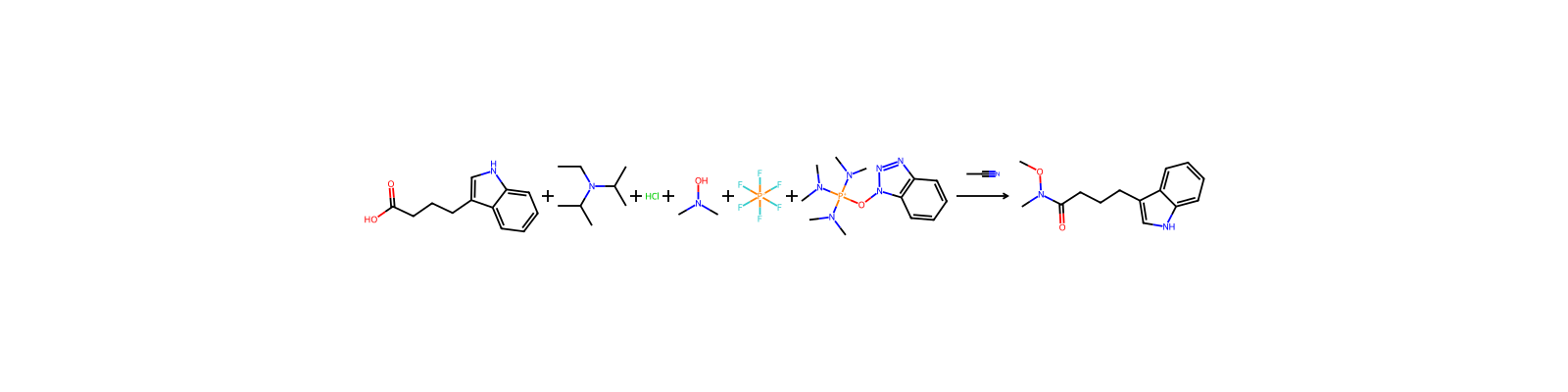
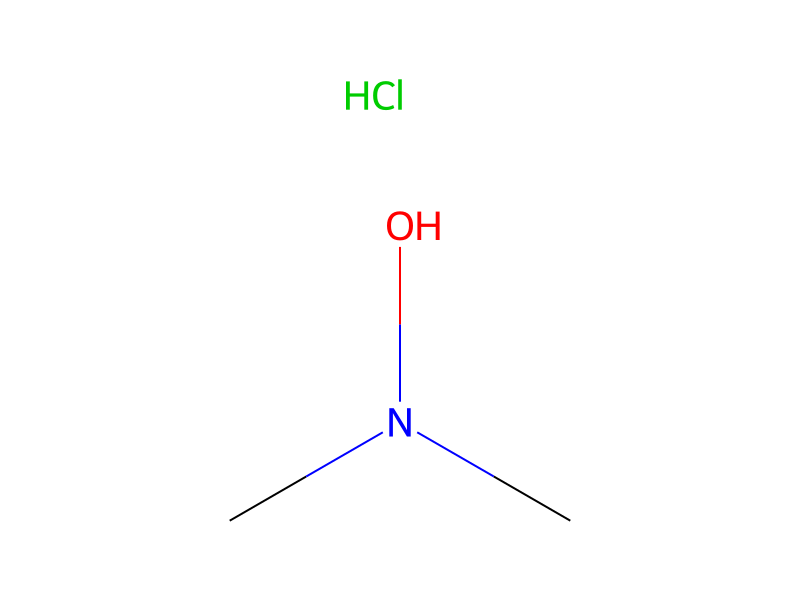
N,N-dimethylhydroxylamine hydrochloride
Daten werden ergänzt – lade die Seite später neu, um den aktuellen Stand zu sehen
Grundinformationen
- CAS
16645-06-0- Standard-SMILES
CN(C)O.Cl- InChIKey
HWWVAHCWJLGKLW-UHFFFAOYSA-N- Summenformel
- C2H7NO.ClH
- Durchschnittliche Molmasse
- 97,54 g/mol
- Monoisotopische Masse
- 97,02944156
Namen und Bezeichner
- Bevorzugter Name
- N,N-dimethylhydroxylamine hydrochloride
- IUPAC
- N,N-dimethylhydroxylamine;hydrochloride
- Englischer Name
- N,N-Dimethylhydroxylamine hydrochloride
- Summenformel
- C2H8ClNO
- Molmasse
- 97.54
Namen und Synonyme
N,N-Dimethylhydroxylamine hydrochlorideRefChem:83013316645-06-0N-Hydroxy-N,N-dimethylamine hydrochlorideMFCD00012600N,N-dimethylhydroxylamine;hydrochloriden,n-dimethylhydroxylaminehydrochlorideN,N-dimethylhydroxylamine HClMethanamine, N-hydroxy-N-methyl-, hydrochloride (9CI)dimethylhydroxylamine hydrochlorideEINECS 240-691-8dimethylhydroxylamine HCl
Weitere Namen anzeigen
DIMETHYLHYDROXYLAMINEHYDROCHLORIDEN,N-Dimethylhydroxylamine hydrochloride 99%N,N-Dimethylhydroxylamine hydrochloride 99%Methanamine,N-hydroxy-N-methyl-, hydrochloride (9CI)
Dimethyl hydroxylamine HClSCHEMBL9537Dimethylhydroxylamine HCl saltDimethylhydroxyamine hydrochlorideDTXSID30168107dimethylhydroxylarnine hydrochloridedimethyl hydroxylamine hydrochloridedimethyl-hydroxylamine hydrochloride
Datenbank-Bezeichner
- CAS
16645-06-0- PubChem CID
- 27969
- DTXSID
DTXSID30168107- EC Number
- 240-691-8
Eigenschaften
Berechnete StruktureigenschaftenWird ergänzt
- Polarare Oberfläche (TPSA)
- 23,5 Ų
- H-Brücken-Donoren
- 2
- H-Brücken-Akzeptoren
- 2
- Frei drehbare Bindungen
- 0
- Schwere Atome
- 5
- Formalladung
- 0
- Komplexität
- 13,5
Experimentelle und physikochemische Eigenschaften
Chemical ClassesNitrogen Compounds -> Hydroxylamines
Vapor Pressure21.2 [mmHg]
Physical DescriptionLight yellow hygroscopic crystals; [Sigma-Aldrich MSDS]
Physikochemische Eigenschaften
- Schmelzpunkt
- 107 · 107-109 °C (lit.)
- Aggregatzustand
- solid
- BRN
- 3905683 · 3905683
- InChI
- InChI=1S/C2H7NO.ClH/c1-3(2)4;/h4H,1-2H3;1H
- InChIKey
- HWWVAHCWJLGKLW-UHFFFAOYSA-N
- SMILES
- N(O)(C)C.Cl
Sicherheit und Regulatorisches
Sicherheitsangaben dienen nur zur Orientierung und ersetzen weder das Sicherheitsdatenblatt (SDB) des Lieferanten noch geltende Vorschriften oder eine fachliche Bewertung.
GHS-Klassifizierung
GHS Classification
Warning
H315 (100%): Causes skin irritation [Warning Skin corrosion/irritation]
P264, P264+P265, P280, P302+P352, P305+P351+P338, P321, P332+P317, P337+P317, and P362+P364 (click each P-code to see the statement)
Aggregated GHS information provided per 39 reports by companies from 1 notifications to the ECHA C&L Inventory. Each notification may be associated with multiple companies.
Gefahrenhinweise
Regulatory InformationChemical: Methanamine, N-hydroxy-N-methyl-, hydrochloride
Hazards SummaryAn irritant; [Sigma-Aldrich MSDS]
Hazard Classes and CategoriesSkin Irrit. 2 (100%)
Sicherheitsdaten
- F
- 3
- wgk
- 3
- risk_code
- 36/38
- hazard_code
- Xi
- safety_code
- 26-36
- Speicherklasse
- 11 - Combustible Solids
- Hazard Classifications
- Eye Irrit. 2Skin Irrit. 2
Chemie und Industrie
Anwendungen
VerwendenN,N-Dimethylhydroxylamine hydrochloride was used in the synthesis of 4,4-dimethyl-2,5,5-triphenyl-l.3-dioxa-4-azonia-2-bora-5-boratacyclopentane. It was also used as a polymer-chain terminator.
Darstellung
synthetische(a) Preparation of N,N-Dimethyl~(a-phenylethyl)amine Oxide. To a flask containing 11.0 g (0.074 mole) of N,N-dimethyl(a-phenylethyl)amine is added dropwise 18.3 g (0.19 mole) of 35% aqueous hydrogen peroxide, and the mixture is stirred for 11 hr at room temperature. The excess hydrogen peroxide is decomposed by stirring the mixture with 8 sqcm2 clean platinum foil until the evolution of oxygen ceases. Most of the water is removed by distillation at 35 mm Hg, at a bath temperature of 45-55°C. The material that condenses in the dry-ice trichloroethylene trap is saved for recovery in Procedure (b). The residual syrup is diluted with 25 ml of absolute ethanol, and the process is repeated twice while a capillary nitrogen ebulliator is used. The resulting amine oxide is a viscous syrup and has a slight odor of styrene. (b) Decomposition of N,N-Dimethyl-(a-phenylethyl)amine Oxide to Ν,Ν-Dimethylhydroxylamine. A 100 ml round bottom flask equipped with a capillary nitrogen inlet, and containing the preceding amine oxide is connected by a large-diameter tube to a condenser set for distillation with two receivers. Each receiver is cooled in a mixture of dry ice and trichloroethylene. The system is evacuated to 5 mm, and the flask is immersed in an oil bath at 85°C. The bath temperature is raised slowly to 115°C over a 35-min period, in which time most of the material distilled over. The bath temperature is finally raised to 150°C, in order to complete the (decomposition) distillation process. The residue remaining averages 0.35 g. The distillate in the dry-ice trap here and from Procedure (a) are combined, pentane is added as a solvent, and the mixture is washed with dilute hydrochloric acid. The acid solution is extracted with pentane, the latter washed with water until neutral. The product is obtained from the combined aqueous layers containing hydrochloric acid by concentration under reduced pressure, to give a crystalline residue. The latter, upon drying in a vacuum desiccator over P2O5 averages 6.73 g (94% yield), m.p. 101-101°C (sealed capillary). Recrys-tallization several times from a mixture of absolute ethanol and ether gives white, hygroscopic needles, m.p. 106.5-109°C (sealed capillary).
Zugehörige Reaktionen
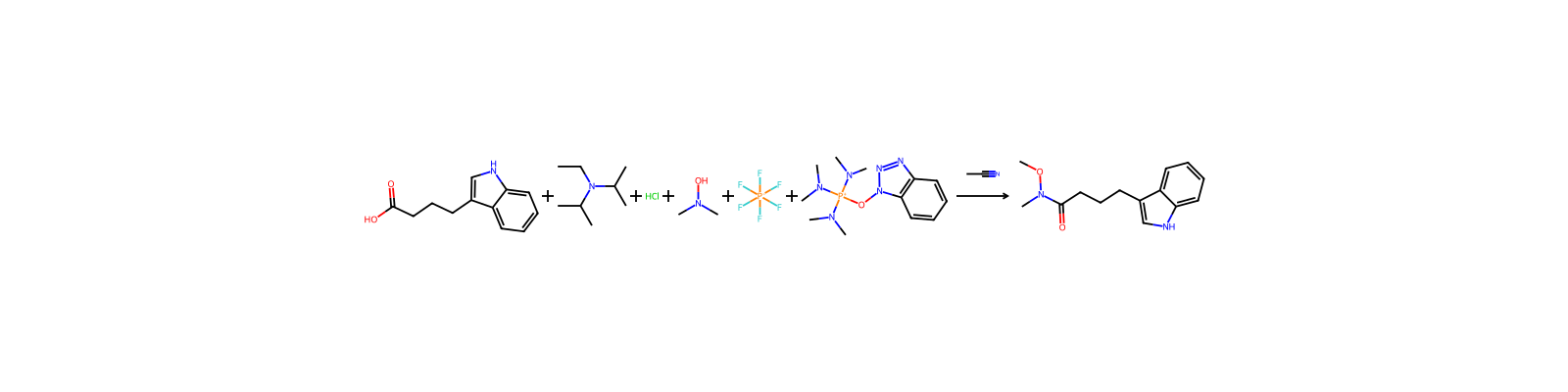
43


Notizen zur Verbindung
Wird geladen…