
cis-Stilben
cis-Stilbene
Daten werden ergänzt – lade die Seite später neu, um den aktuellen Stand zu sehen

Grundinformationen
- CAS
645-49-8- Standard-SMILES
C(=C/c1ccccc1)/c1ccccc1- InChIKey
PJANXHGTPQOBST-QXMHVHEDSA-N- Summenformel
- C14H12
- Durchschnittliche Molmasse
- 180,24 g/mol
- Monoisotopische Masse
- 180,09390038
Überblick
Cis-stilbene is an oily yellow liquid. Freezing point 5 °C. Insoluble in water. Soluble in ethanol. Unstable relative to the trans isomer, which is a solid with a melting point of 122-124 °C.
Namen und Bezeichner
- Bevorzugter Name
- cis-Stilbene
- IUPAC
- (Z)-stilbene
- Lokaler Name
- cis-Stilben
- Englischer Name
- cis-Stilbene
- Summenformel
- C14H12
- Molmasse
- 180.25
Namen und Synonyme
cis-Stilbene(Z)-1,2-Diphenylethene(Z)-Stilbene645-49-8cis-1,2-DiphenylethyleneIsostilbenecis-DiphenyletheneStilbene, (Z)-Z-stilbene[(Z)-2-Phenylethenyl]benzene(Z)-1,2-DiphenylethyleneCCRIS 5932
Weitere Namen anzeigen
cis-1,2-DiphenyletheneStilbebeNsc66424CIS-BIBENZALCIS-STILBEBEDibenzal(cis)
DTXSID5026049Benzene, 1,1'-(1,2-ethenediyl)bis-, (Z)-HSDB 4270Stilbene, cis-EINECS 211-445-7NSC 66424TTG5048Y3KBenzene, 1,1'-(1Z)-1,2-ethenediylbis-
Datenbank-Bezeichner
- CAS
645-49-8- PubChem CID
- 5356785
- DTXSID
DTXSID5026049- ChEMBL
CHEMBL393702- ChEBI
CHEBI:36008- UNII
- TTG5048Y3K
- EC Number
- 211-445-7
- Nikkaji
- J7.069F
Eigenschaften
Berechnete StruktureigenschaftenWird ergänzt
- XLogP
- 4,8
- Polarare Oberfläche (TPSA)
- 0 Ų
- H-Brücken-Donoren
- 0
- H-Brücken-Akzeptoren
- 0
- Frei drehbare Bindungen
- 2
- Schwere Atome
- 14
- Formalladung
- 0
- Komplexität
- 148
Experimentelle und physikochemische Eigenschaften
Chemical ClassesOther Classes -> Aromatic Hydrocarbons
SpringerMaterials Properties13C nuclear magnetic resonance spectrum
Color/Form
LIQUID
YELLOW OIL
SolubilityCOMPLETELY SOL IN COLD ABSOLUTE ALCOHOL
Boiling Point
293 °F at 13 mmHg (NTP, 1992)
135 DEG @ 10 MM HG
Melting Point
41 to 43 °F (NTP, 1992)
1 °C
Vapor Pressure0.00686 [mmHg]
Refractive IndexINDEX OF REFRACTION: 1.6188 @ 25 °C/D; MAX ABSORPTION (95% ETHANOL): 278 NM (E= 10,200)
Physical Description
Cis-stilbene is an oily yellow liquid. Freezing point 5 °C. Insoluble in water. Soluble in ethanol. Unstable relative to the trans isomer, which is a solid with a melting point of 122-124 °C.
Sicherheit und Regulatorisches
Sicherheitsangaben dienen nur zur Orientierung und ersetzen weder das Sicherheitsdatenblatt (SDB) des Lieferanten noch geltende Vorschriften oder eine fachliche Bewertung.
GHS-Klassifizierung
GHS Classification
Warning
H315 (88.4%): Causes skin irritation [Warning Skin corrosion/irritation]
P264, P264+P265, P280, P302+P352, P305+P351+P338, P321, P332+P317, P337+P317, and P362+P364 (click each P-code to see the statement)
Aggregated GHS information provided per 43 reports by companies from 3 notifications to the ECHA C&L Inventory. Each notification may be associated with multiple companies.
Gefahrenhinweise
Regulatory Information
Chemical: Benzene, 1,1'-(1,2-ethenediyl)bis-, (Z)-
Benzene, 1,1'-(1Z)-1,2-ethenediylbis-: Does not have an individual approval but may be used under an appropriate group standard
Fire HazardsFlash point data for this chemical are not available, however it is probably combustible. (NTP, 1992)
Hazards SummaryEffects after intraperitoneal injection of rats include liver changes; TDLo = 361 mg/kg; [RTECS] An irritant; [MSDSonline] See trans-1,2-Diphenylethylene.
Reactive GroupHydrocarbons, Aromatic
Reactivity ProfileCIS-STILBENE may react vigorously with strong oxidizing agents. May react exothermically with reducing agents to release gaseous hydrogen.
Air and Water ReactionsSensitive to prolonged exposure to air and light [Lancaster]. Insoluble in water.
Hazard Classes and CategoriesSkin Irrit. 2 (88.4%)
Chemie und Industrie
Pharmakologische Informationen
Metabolism/Metabolites
CIS-STILBENE IS CONVERTED VIA THE CIS-EPOXIDE BY RABBIT-LIVER MICROSOMES INTO THREO-1,2-DIPHENYL-1,2-ETHANEDIOL, & TRANS-STILBENE VIA THE TRANS-EPOXIDE INTO THE CORRESPONDING MESO-ISOMER. A SOL FRACTION FROM RABBIT LIVER CATALYZED INTERCONVERSION OF THESE ISOMERIC DIOLS VIA BENZOIN FORMATION.
CIS-STILBENE IS OXYGENATED BY RABBIT-LIVER MICROSOMES TO CIS-STILBENE OXIDE... OBSERVED ONLY AFTER VERY SHORT INCUBATION TIMES. RATIO OF OXYGENASE TO HYDRATASE ACTIVITIES DECR RAPIDLY WITH TIME SO THAT THREO-STILBENE GLYCOL IS MAJOR...PRODUCT.
INCUBATION OF CIS-STILBENE WITH RABBIT LIVER MICROSOMES IN PRESENCE OF NADPH YIELDED THREO-STILBENE GLYCOL & A TRACE OF MESOSTILBENE GLYCOL.
Verwendung und Herstellung
Uses
Used as a research chemical; [HSDB]
RESEARCH CHEMICAL
U.S. Exports
(1977) No Data
(1979) No Data
U.S. Imports
(1977) No Data
(1979) No Data
U.S. Production
(1977) NOT COMMERCIALLY PRODUCED IN US
(1979) NOT COMMERCIALLY PRODUCED IN US
Methods of Manufacturing
...CIS-FORM BY COPPER-CHROMITE DECARBOXYLATION OF ALPHA-PHENYLCINNAMIC ACID: BUCKLES, WHEELER, ORG SYN COLL VOL IV, 857 (1963). SYNTH OF CIS...FORMS BY WITTIG REACTION & BY DECARBOXYLATION OF PHENYLCINNAMIC ACIDS: WHEELER, BATLLE DE PABON, J ORG CHEM 30, 1473 (1965).
Anwendungen
Verwendencis-Stilbene: stilbene and its natural derivatives such as resveratrol and vitisins inhibits Staphylococcus aureus hemolytic activity and biofilm formation without affecting its bacterial growth
Zugehörige Reaktionen
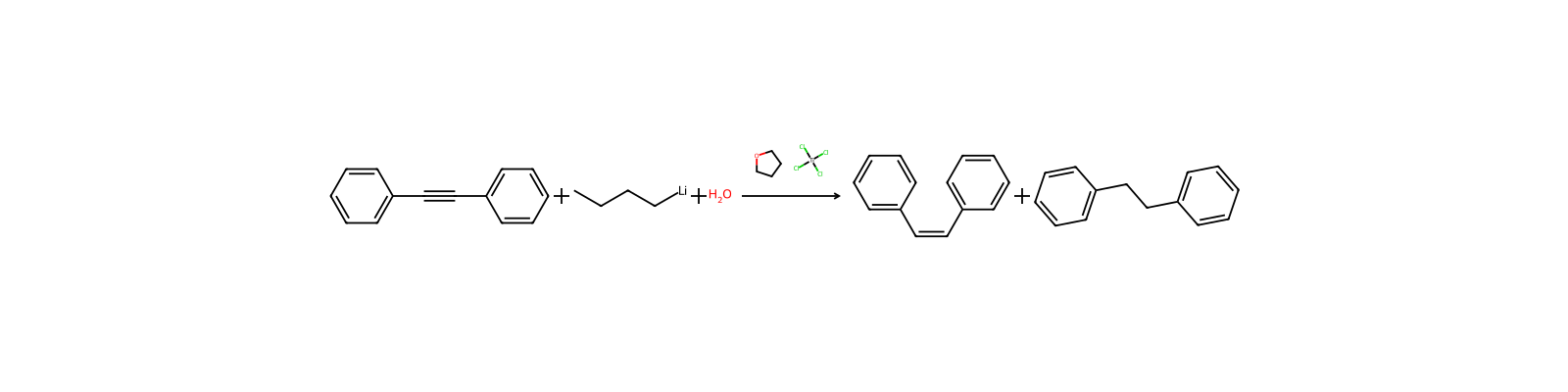
17


Notizen zur Verbindung
Wird geladen…