StartseiteMCPWorkbenchSkills
StartseiteWorkbenchBenachrichtigungenMein Bereich
llms.txt · MCP-AnleitungDatenschutz · Nutzungsbedingungen · Supportv1.8.0
  1. Startseite
  2. /Verbindung

Diethylcarbamoylchlorid

Diethylcarbamoyl chloride

HCID 6916
Neue NotizNeue ReaktionAnfrage stellen
Druckvorschau

Daten werden ergänzt – lade die Seite später neu, um den aktuellen Stand zu sehen

GrundinformationenÜberblickNamen und BezeichnerEigenschaftenSicherheit und RegulatorischesChemie und IndustrieZugehörige ReaktionenNotizen zur Verbindung
TeilstruktursucheÄhnliche Strukturen suchen

Grundinformationen

CAS
88-10-8
Standard-SMILES
CCN(CC)C(=O)Cl
InChIKey
OFCCYDUUBNUJIB-UHFFFAOYSA-N
Summenformel
C5H10ClNO
Durchschnittliche Molmasse
135,59 g/mol
Monoisotopische Masse
135,04509162

Überblick

structure

Namen und Bezeichner

Bevorzugter Name
Diethylcarbamoyl chloride
IUPAC
N,N-diethylcarbamoyl chloride
Lokaler Name
Diethylcarbamoylchlorid
Englischer Name
Diethylcarbamyl chloride
Summenformel
C5H10ClNO
Molmasse
135.59

Namen und Synonyme

DIETHYLCARBAMOYL CHLORIDE88-10-8Diethylcarbamyl chlorideN,N-Diethylcarbamoyl chlorideCarbamic chloride, diethyl-Diethylcarbamic chlorideDiethylchloroformamideCarbamoyl chloride, diethyl-N,N-DiethylchloroformamideCarbamidoyl chloride, diethyl-DTXSID0052598Diethylamid kyseliny chlormravenci
Weitere Namen anzeigen
DECCC5H10ClNON, 97.0%(GC&TN, 97.0%(GC&T)Diethylcarbamyl chlodiethyl-carbamicchlorid
5RIV1U6H5WCarbamic chloride, N,N-diethyl-NSC-223067DTXCID1031171RefChem:133482201-798-5N,N-Diethylcarbamyl chlorideN,N-diethylcarbamic chloride

Datenbank-Bezeichner

CAS
88-10-8
PubChem CID
6916
DTXSID
DTXSID0052598
ChEMBL
CHEMBL3559788
UNII
5RIV1U6H5W
EC Number
201-798-5
Nikkaji
J33.934B

Eigenschaften

Berechnete StruktureigenschaftenWird ergänzt

XLogP
1,4
Polarare Oberfläche (TPSA)
20,3 Ų
H-Brücken-Donoren
0
H-Brücken-Akzeptoren
1
Frei drehbare Bindungen
2
Schwere Atome
8
Formalladung
0
Komplexität
80,5

Experimentelle und physikochemische Eigenschaften

Chemical Classes · 2 Einträge

Toxic Gases & Vapors -> Acid Halides

Flammable agents - 2nd degree

SpringerMaterials PropertiesNuclear quadrupole resonance spectroscopy
Color/FormLiquid
SolubilitySOL IN WATER
Flash Point · 2 Einträge

163 - 172 °C

325-342 °F (OPEN CUP)

Boiling Point186 °C
DecompositionWHEN HEATED TO DECOMP, EMITS HIGHLY TOXIC FUMES OF /HYDROGEN CHLORIDE AND NITROGEN OXIDES/.
Melting Point-32 °C
Vapor Density4.1 (Air= 1)
Vapor Pressure0.72 [mmHg]

Sicherheit und Regulatorisches

Sicherheitsangaben dienen nur zur Orientierung und ersetzen weder das Sicherheitsdatenblatt (SDB) des Lieferanten noch geltende Vorschriften oder eine fachliche Bewertung.

GHS-Klassifizierung

GHS Classification · 6 Einträge

Warning

H302: Harmful if swallowed [Warning Acute toxicity, oral]

P203, P261, P264, P264+P265, P270, P271, P280, P301+P317, P302+P352, P304+P340, P305+P351+P338, P317, P318, P319, P321, P330, P332+P317, P337+P317, P362+P364, P403+P233, P405, and P501 (click each P-code to see the statement)

Warning

H302 (100%): Harmful if swallowed [Warning Acute toxicity, oral]

P203, P261, P264, P264+P265, P270, P271, P280, P301+P317, P302+P352, P304+P340, P305+P351+P338, P317, P318, P319, P321, P330, P332+P317, P337+P317, P362+P364, P403+P233, P405, and P501 (click each P-code to see the statement)

Gefahrenhinweise

Regulatory Information · 2 Einträge

Status: Active Update: 19-06-2017 https://echa.europa.eu/registration-dossier/-/registered-dossier/19790

The New Jersey Worker and Community Right to Know Act requires public and private employers to provide information about hazardous substances at their workplaces. (N.J.S.A. 34:5A-1 et. seq.)

Hazards Summary · 1 Eintrag

A skin, eye, and respiratory tract irritant; Harmful by ingestion and inhalation; [eChemPortal: ESIS] Intraperitoneal LD50 (mouse) = 750 mg/kg; [HSDB] Reacts violently with water; An irritant; [MSDSonline] Could be carcinogenic for man but not conclusive because of insufficient data; [MAK] See Dimethyl carbamoyl chloride.

NFPA Hazard Classification · 4 Einträge

2 - Materials that, under emergency conditions, can cause temporary incapacitation or residual injury.

1 - Materials that must be preheated before ignition can occur. Materials require considerable preheating, under all ambient temperature conditions, before ignition and combustion can occur.

2 - Materials that readily undergo violent chemical changes at elevated temperatures and pressures.

Chemie und Industrie

Verwendung und Herstellung

Uses · 2 Einträge

Used as an intermediate in the synthesis of herbicides; [HSDB]

INTERMEDIATE IN SYNTHESIS OF HERBICIDES

Methods of ManufacturingDiethylamine + phosgene (phosgenation)
General Manufacturing InformationCarbamic chloride, N,N-diethyl-: ACTIVE
Anwendungen · 1 Eintrag

VerwendenIt is used in the production of pharma ingredients. It is a reagent in the synthesis of S-Methyl-N,N-diethylthiocarbamate Sulfoxide, which is an oxygenated metabolite of Disulfiram (Antabuse) that is capable of in vitro inactivation of liver mitochondrial aldehyde dehydrogenase.

Vor- und nachgelagerte Produkte

Vorgelagerte Rohstoffe

ChlorDiethylamin, in wässriger LösungMETALLURGICAL COKEEthyldiethylcarbamat2(1H)-Isoquinolinecarbonylchloride,3,4-dihydro-(9CI)TetraethylthiuramdisulfidDiethylthiocarbamoylchloridS-Methyl-N,N-diethylthiocarbamate

Nachgelagerte Produkte

Zugehörige Reaktionen

275
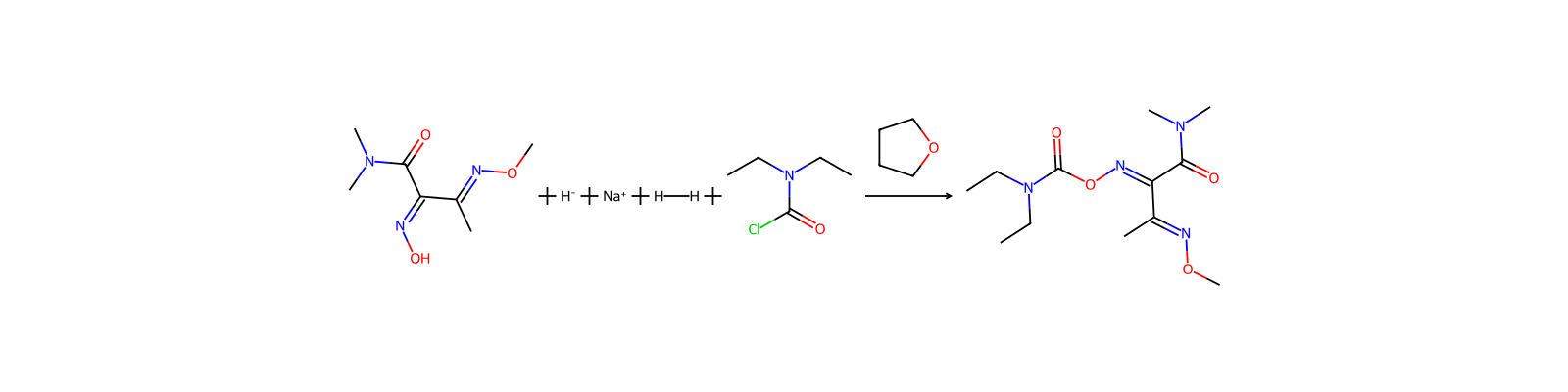
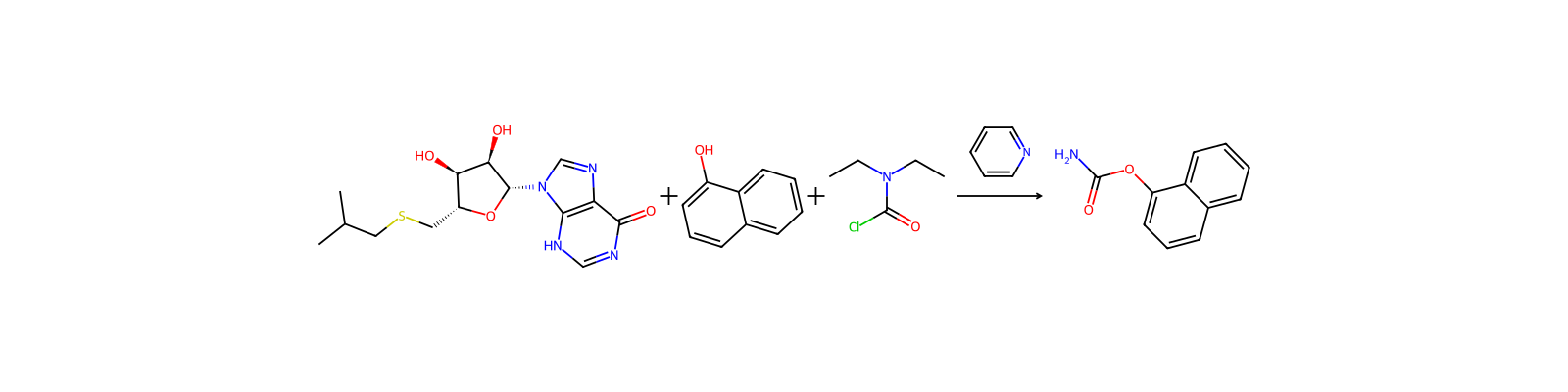
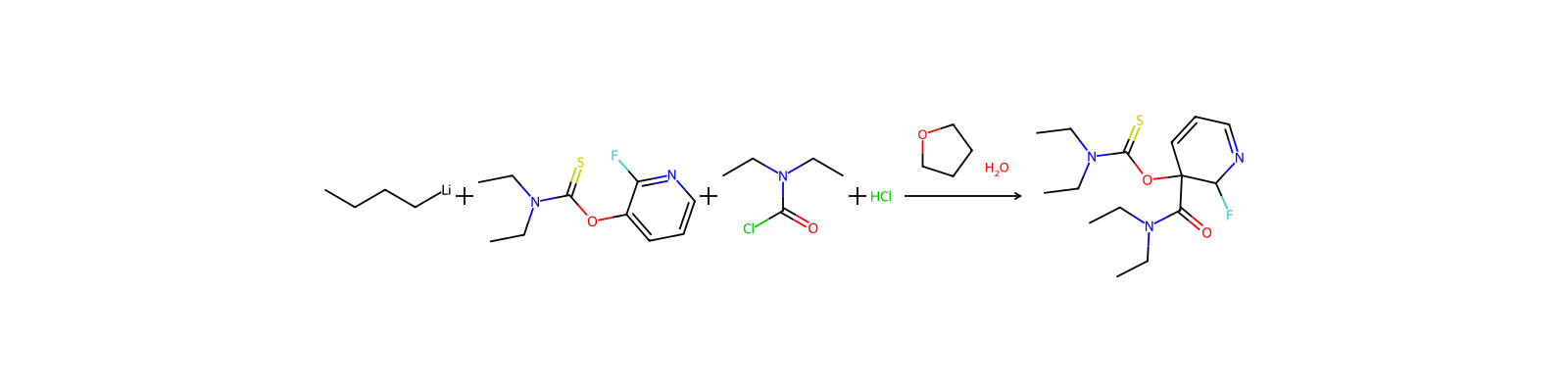
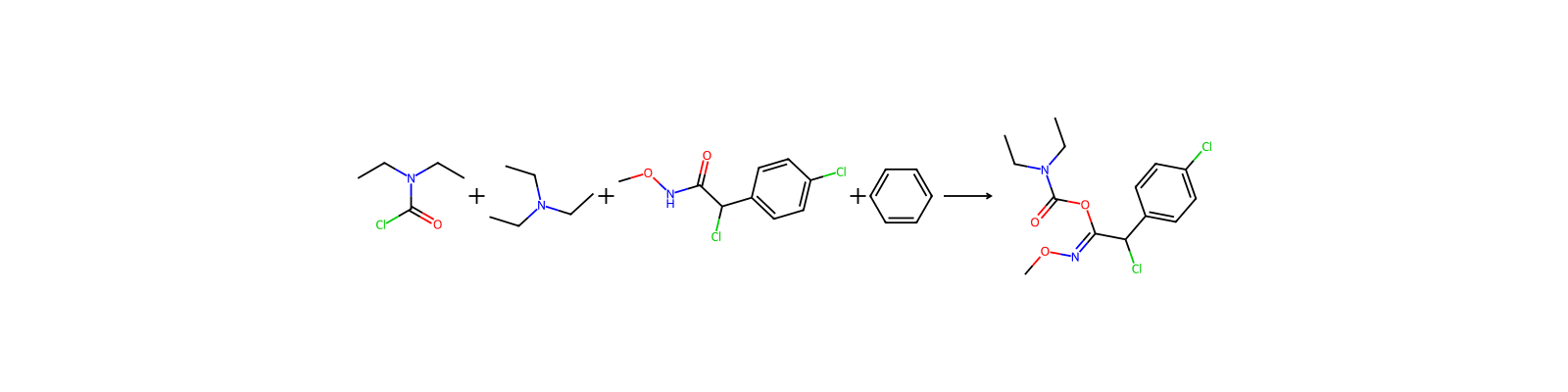
Reaktionsaufzeichnung erstellen
Reaktionsgleichung von HRID 26116
HRID 26116als Eduktuspto-grants-1979_04
Reaktionsgleichung von HRID 26712
HRID 26712als Eduktuspto-grants-1979_04
Reaktionsgleichung von HRID 37685
HRID 37685als Eduktuspto-grants-1995_05
Reaktionsgleichung von HRID 52134
HRID 52134als Eduktuspto-grants-1997_04
Reaktionsgleichung von HRID 66337
HRID 66337als Eduktuspto-grants-1978_12
Reaktionsgleichung von HRID 85841
HRID 85841als EduktTraining data from https://doi.org/10.1039/C8SC04228D (2/10)
Reaktionsgleichung von HRID 98841
HRID 98841als EduktTraining data from https://doi.org/10.1039/C8SC04228D (2/10)
Reaktionsgleichung von HRID 102896
HRID 102896als EduktTraining data from https://doi.org/10.1039/C8SC04228D (2/10)
Seite 1 von 35

Notizen zur Verbindung

Wird geladen…

Auf dieser SeiteGrundinformationenÜberblickNamen und BezeichnerEigenschaftenSicherheit und RegulatorischesChemie und IndustrieZugehörige ReaktionenNotizen zur Verbindung
Weitere Aktionen
Neue NotizNeue ReaktionAnfrage stellen
Physical Description
Liquid; [HSDB] Colorless liquid; [MSDSonline]
Other Experimental PropertiesDecomp in hot water or hot alcohol.

Physikochemische Eigenschaften

Schmelzpunkt
32 °C · −32 °C(lit.)
Siedepunkt
117 · 117-123 °C133 mm Hg(lit.)
Dichte
1.07 g/mL · 1.07 g/mL at 25 °C(lit.)
Brechungsindex
20 · n20/D 1.451(lit.)
Flammpunkt
167 °F · 167 °F
storage temp.
2 · Inert atmosphere,2-8°C
Löslichkeit
Chloroform (Soluble), Methanol (Slightly)
Aggregatzustand
Liquid
pka
-1.85 · -1.85±0.70(Predicted)
Farbe
Clear
Wichte
1.07 · 1.070
Wasserlöslichkeit
HYDROLYSIS
BRN
506687 · 506687
Stabilität
Moisture Sensitive
InChI
1S/C5H10ClNO/c1-3-7(4-2)5(6)8/h3-4H2,1-2H3
InChIKey
OFCCYDUUBNUJIB-UHFFFAOYSA-N
SMILES
CCN(CC)C(Cl)=O
CAS Datenbank
88 · 88-10-8(CAS DataBase Reference)
NIST chemische Informationen
Carbamic chloride, diethyl-(88-10-8)
EPA chemische Informationen
Diethylcarbamoyl chloride (88-10-8)

W - No water: Materials that react violently or explosively with water.

Toxic Combustion ProductsWHEN HEATED TO DECOMP, EMITS HIGHLY TOXIC FUMES OF /CHLORIDE AND NITROGEN OXIDES/.
Hazard Classes and Categories · 4 Einträge

Acute Tox. 4 (100%)

Carcinogenicity - category 2

Flammable agents - 2nd degree, Reactive agents - 2nd degree

Carc. 2

Hazardous Reactivities and IncompatibilitiesREACTS WITH WATER OR STEAM TO PRODUCE TOXIC & CORROSIVE FUMES.

Sicherheit und Schutzausrüstung

Disposal Methods · 1 Eintrag

SRP: At the time of review, criteria for land treatment or burial (sanitary landfill) disposal practices are subject to significant revision. Prior to implementing land disposal of waste residue (including waste sludge), consult with environmental regulatory agencies for guidance on acceptable disposal practices.

Toxikologische Informationen

Adverse EffectsToxic Pneumonitis - Inflammation of the lungs induced by inhalation of metal fumes or toxic gases and vapors.
Human Toxicity ExcerptsSTUDY OF PERSONS EXPOSED TO DIETHYLCARBAMOYL CHLORIDE & DIMETHYLCARBOMYL CHLORIDE FOR 4-10 YR SHOWED A STATISTICALLY INSIGNIFICANT NUMBER OF CHROMOSOME ABERRATIONS WHEN COMPARED TO UNEXPOSED CONTROL GROUPS.
Non-Human Toxicity Excerpts · 2 Einträge

AUTORADIOGRAPHIC IDENTIFICATION OF UNSCHEDULED DNA SYNTH (UDS) IN CULTURES OF RAT HEPATOCYTES PROPOSED AS PREDICTIVE TEST FOR MUTAGENS/CARCINOGENS. CONCN USED FOR QUANTIFICATION: 500 NMOLES/ML; NUCLEAR GRAIN COUNTS 0.8 +/- 1.5; CONTROL 0.5 +/- 1.0. RESULTS: NEGATIVE.

MUTAGENICITY OF DIMETHYLCARBAMOYL CHLORIDE & DIETHYLCARBAMOYL CHLORIDE IN 2 STRAINS OF ESCHERICHIA COLI WAS STUDIED. DIETHYYLCARBAMOYL CHLORIDE WAS A SOMEWHAT WEAKER MUTAGEN THAN DIMETHYLCARBAMOYL CHLORIDE.

Antidote and Emergency Treatment · 2 Einträge

Basic treatment: Establish a patent airway. Suction if necessary. Watch for signs of respiratory insufficiency and assist ventilations if needed. Administer oxygen by nonrebreather mask at 10 to 15 L/min. Monitor for pulmonary edema and treat if necessary ... . Monitor for shock and treat if necessary ... . Anticipate seizures and treat if necessary ... . For eye contamination, flush eyes immediately with water. Irrigate each eye continuously with normal saline during transport ... . Do not use emetics. For ingestion, rinse mouth and administer 5 ml/kg up to 200 ml of water for dilution if the patient can swallow, has a strong gag reflex, and does not drool ... . Cover skin burns with dry sterile dressings after decontamination ... . /Poison A and B/

Advanced treatment: Consider orotracheal or nasotracheal intubation for airway control in the patient who is unconscious, has severe pulmonary edema, or is in respiratory arrest. Positive pressure ventilation techniques with a bag valve mask device may be beneficial. Monitor cardiac rhythm and treat arrhythmias as necessary ... . Start an IV with D5W /SRP: "To keep open", minimal flow rate/. Use lactated Ringer's if signs of hypovolemia are present. Watch for signs of fluid overload. Consider drug therapy for pulmonary edema ... . For hypotension with signs of hypovolemia, administer fluid cautiously. Watch for signs of fluid overload ... . Treat seizures with diazepam (Valium) ... . Use proparacaine hydrochloride to assist eye irrigation ... . /Poison A and B/

Toxicity DataLCLo (rat) = 159 ppm/7h
Non-Human Toxicity ValuesLD50 Mouse ip 750 mg/kg

Sicherheitsdaten

wgk
1
tsca
TSCA listed
ridadr
UN 3265 8/PG 3
hs_code
29241990
RTECS-Nr.
FD4025000
risk_code
20/22-36/37/38-40
hazard_code
Xn
safety_code
26-36/37
hazard_class
8
packing_group
II
Speicherklasse
10 - Combustible liquids
Giftige Stoffe Daten
88-10-8(Hazardous Substances Data)
Hazard Classifications
Acute Tox. 4 InhalationAcute Tox. 4 OralCarc. 2Eye Irrit. 2Skin Irrit. 2STOT SE 3
N,N-Diethylpiperazin-1-carboxamidN,N-Diethyl-4-methyl-1-piperazincarboxamidDiethylcarbamic acid methylN,N-DiethylformamidN,N-Diethylphenylacetamid3-Pyridyl diethylcarbamate