Reaktionsgleichung

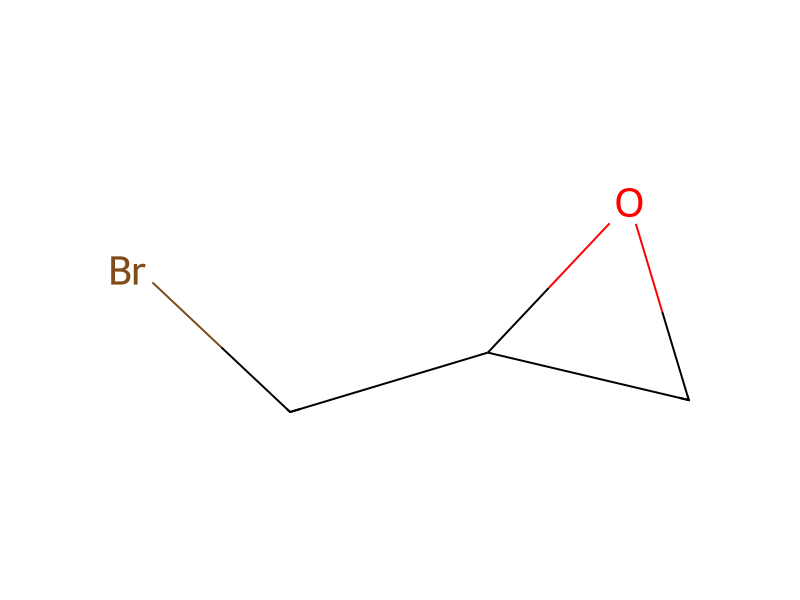
[NH2:1][C:2]1[C:15]2[C:14](=[O:16])[C:13]3[C:8](=[CH:9][CH:10]=[CH:11][CH:12]=3)[C:7](=[O:17])[C:6]=2[C:5]([NH2:18])=[CH:4][CH:3]=1.[CH2:19]([CH:21]1[O:23][CH2:22]1)[Br:20]>C(O)(=O)C.O>[Br:20][CH2:19][CH:21]([OH:23])[CH2:22][NH:1][C:2]1[C:15]2[C:14](=[O:16])[C:13]3[C:8](=[CH:9][CH:10]=[CH:11][CH:12]=3)[C:7](=[O:17])[C:6]=2[C:5]([NH:18][CH2:22][CH:21]([OH:23])[CH2:19][Br:20])=[CH:4][CH:3]=1Komponenten
Edukt 2
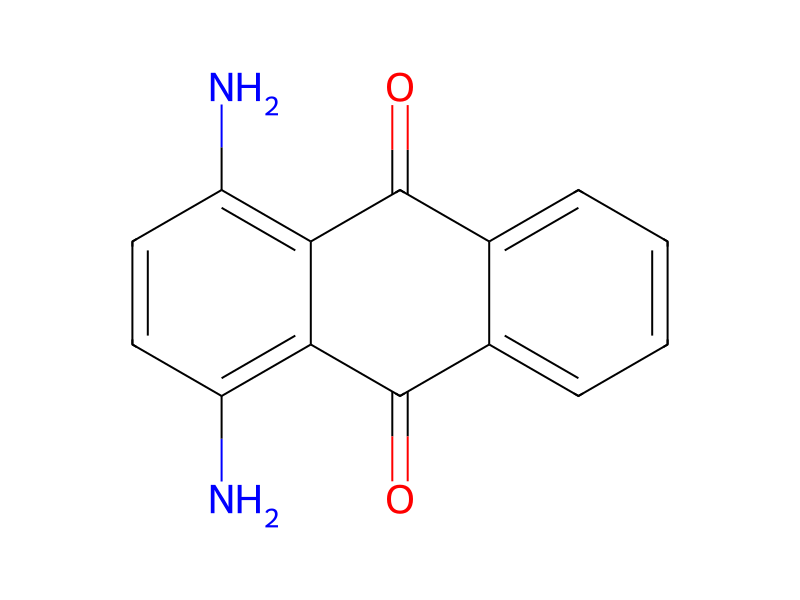
Produkt 1

Reagenzien, Katalysatoren, Lösungsmittel 2


Reaktionsbedingungen
- Temperatur
- 80 °C
Versuchsvorschrift
1,4-Diaminoanthraquinone (2,5 g, 10.49 mmole) was slurried in 20 ml of glacial acetic acid. Water (1.8 ml) was added, followed by epibromohydrin (0.76 ml, 8.88 mmol). The mixture was heated to 80° C. The remaining epibromohydrin (2.24 ml, 26.18 mmol) was dripped in slowly during 5 hours, while the reaction temperature was held at 80° C. After the addition was complete, the 80° C. temperature was maintained for an additional 2 hours for a total of 7 hours. The reaction mixture was diluted with 20 ml of acetic acid and 28 ml of water. After stirring for a few minutes, the resultant mixture was filtered and the filter-cake was rinsed with 20% aqueous acetic acid followed by water, then air dried. After further drying in vacuo over P2O5, 4.76 g of 1,4-bis(3-bromo-2-hydroxypropylamino)-9,10-anthracenedione was obtained.
Aufarbeitung
- customslowly during 5 hours
- customwas held at 80° C
- additionAfter the addition
- temperaturethe 80° C. temperature was maintained for an additional 2 hours for a total of 7 hours
- filtrationthe resultant mixture was filtered
- washthe filter-cake was rinsed with 20% aqueous acetic acid
- customair dried
- dry with materialAfter further drying in vacuo over P2O5
Quellen und Nachweise
- ORD-Eintrag
- ord-b75fe052d6cd453da53d7b1efc6bc3ca
- Quelldatensatz
- uspto-grants-1990_12
- Patentnummer
- US04975459
Verknüpfte Notizen
Wird geladen…