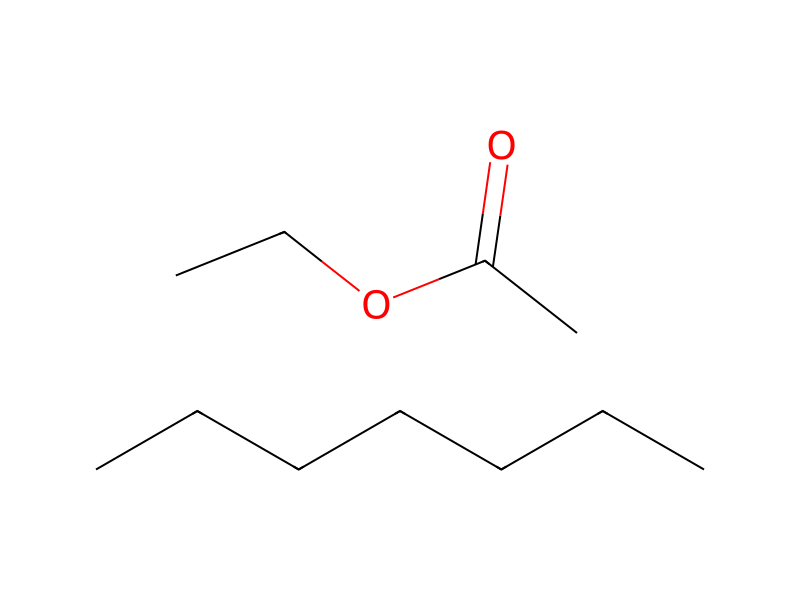
[CH:1]1([NH2:4])[CH2:3][CH2:2]1.C(O)(=O)C.[Cl:9][C:10]1[CH:11]=[C:12]([C:18]2[CH:23]=[CH:22][CH:21]=[CH:20][CH:19]=2)[CH:13]=[CH:14][C:15]=1[CH:16]=O.C([BH3-])#N.[Na+]>CO.CCCCCCC.C(OCC)(=O)C>[Cl:9][C:10]1[CH:11]=[C:12]([C:18]2[CH:19]=[CH:20][CH:21]=[CH:22][CH:23]=2)[CH:13]=[CH:14][C:15]=1[CH2:16][NH:4][CH:1]1[CH2:3][CH2:2]1To a cooled solution of 1.82 ml (26 mmol) of cyclopropylamine and 1.90 ml (33 mmol) of acetic acid, together with 3 g of 3 Å molecular sieves, in 45 ml of methanol, are added 2.85 g (13.1 mmol) of 3-chlorobiphenyl-4-carbaldehyde. The reaction mixture is stirred for 4 hrs at reflux. The reaction mixture is then cooled to ambient temperature and 1.24 g (19.7 mmol) of sodium cyanoborohydride are slowly added. The reaction mixture is further stirred for 2 hrs at reflux. The solvent is removed under vacuum and 100 ml of water are then added to the residue and the pH is adjusted to 10 with sodium hydroxyde. The watery layer is extracted three times with dichloromethane (3×50 ml); the combined organic layers are filtered over a phase separator filter to yield after concentration 11.61 g of a yellow oil. Column chromatography (gradient heptane/ethyl acetate) yielded 2.84 g (79% yield) of N-[(3-chlorobiphenyl-4-yl)methyl]cyclopropanamine as a colourless oil (M+H=258).