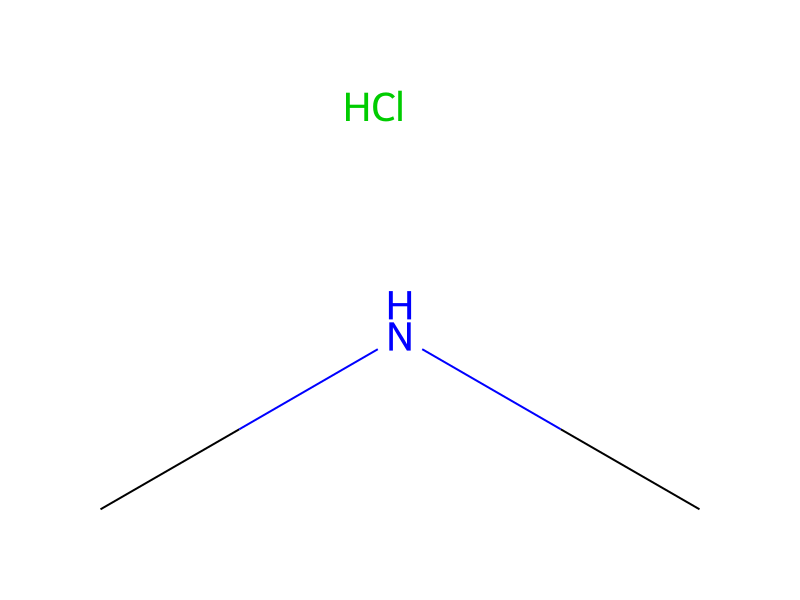
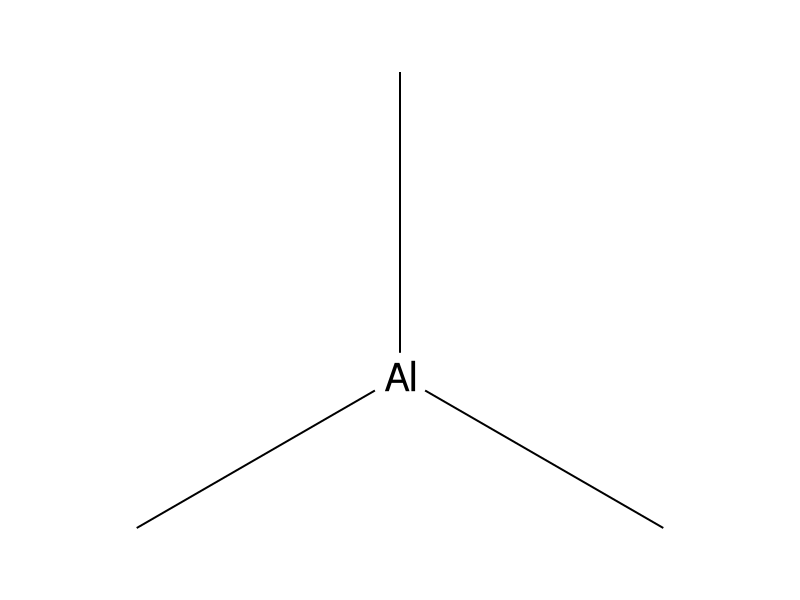
Cl.[CH3:2][NH:3][CH3:4].C1(C)C=CC=CC=1.C[Al](C)C.[Cl:16][C:17]1[CH:18]=[CH:19][C:20]2[C:21]3[C:30]([C:31](OCC)=[O:32])=[N:29][N:28]([C:36]4[CH:41]=[CH:40][CH:39]=[C:38]([Cl:42])[CH:37]=4)[C:27](=[O:43])[C:22]=3[N:23]([CH3:26])[C:24]=2[CH:25]=1>ClCCl.O>[Cl:16][C:17]1[CH:18]=[CH:19][C:20]2[C:21]3[C:30]([C:31]([N:3]([CH3:4])[CH3:2])=[O:32])=[N:29][N:28]([C:36]4[CH:41]=[CH:40][CH:39]=[C:38]([Cl:42])[CH:37]=4)[C:27](=[O:43])[C:22]=3[N:23]([CH3:26])[C:24]=2[CH:25]=10.815 g (10 mmol) of dimethylamine hydrochloride is introduced into 100 ml of toluene under argon, the solution is cooled to 0° C. and then 5 ml (10 mmol) of a trimethylaluminium solution (2M in toluene) are added in small portions. After stirring for 2 h at room temperature, 0.8 g (1.92 mmol) of ethyl 7-chloro-3-(3-chlorophenyl)-5-methyl-4-oxo-3,5-dihydro-4H-pyridazino[4,5-b]indole-1-carboxylate is added and the mixture is heated at reflux for 5 h. The solution is cooled to approximately 0° C. and the metal complex is slowly hydrolysed with water. 100 ml of dichloromethane are added and the solution is filtered. The precipitate is rinsed with dichloromethane, and 100 ml of water and 10 ml of a 1 M aqueous hydrochloric acid solution are added to the filtrate. The organic phase is separated by settling, washed with water, dried over sodium sulphate and concentrated under reduced pressure. The residue is purified by chromatography on a silica column (eluant: dichloromethane/ethyl acetate: 80/20). After recrystallizing from ethyl acetate, 0.43 g (1.0 mmol) of compound is isolated in the form of a white solid.