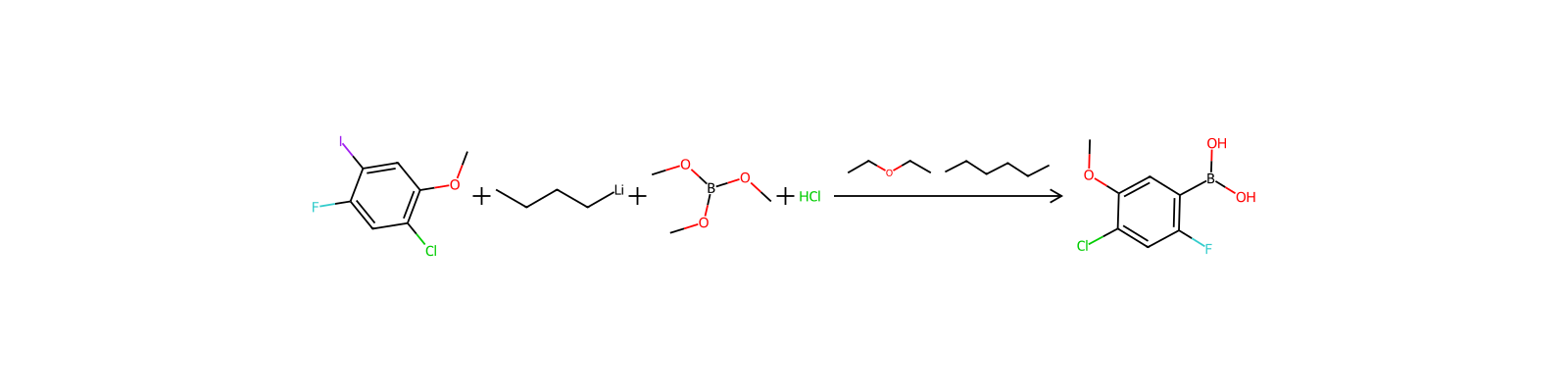
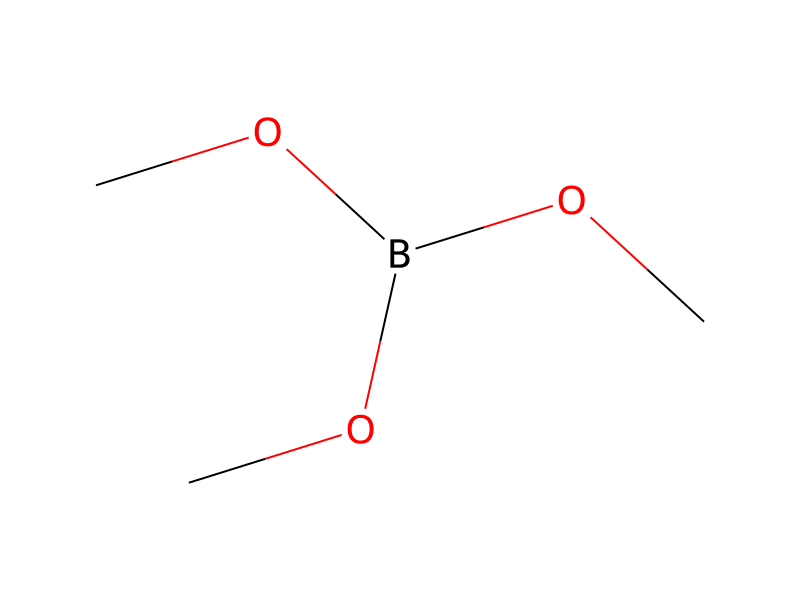
To 2.0 g (7.0 mmol) of 2-chloro-4-fluoro-5-iodo-anisole (made from the compound of Example 11, Step A by methylation) stirring in 30 ml of diethyl ether at -78° C., 4.8 ml (7.7 mmol) of 1.6M n-butyl lithium was added dropwise (keeping the temperature below -69° C.). After stirring 0.5 h, 0.91 ml (8.0 mmol) of trimethyl borate in 15 ml of diethyl ether was added dropwise and the reaction mixture stirred 3 h before allowing to warm to room temperature. Slowly, 1N aqueous hydrogen chloride was added and the resulting biphase system stirred 1 h. The separated aqueous phase was separated and washed with an additional 30 ml of diethyl ether. Combined organic layers were washed with brine and dried over magnesium sulfate. Evaporating in vacuo gave a white solid which was suspended in hexane, filtered, and dried to afford 0.86 g of a technical sample of 4-chloro-2-fluoro-5-methoxyphenylboronic acid (m.p. 280°-290° C.).