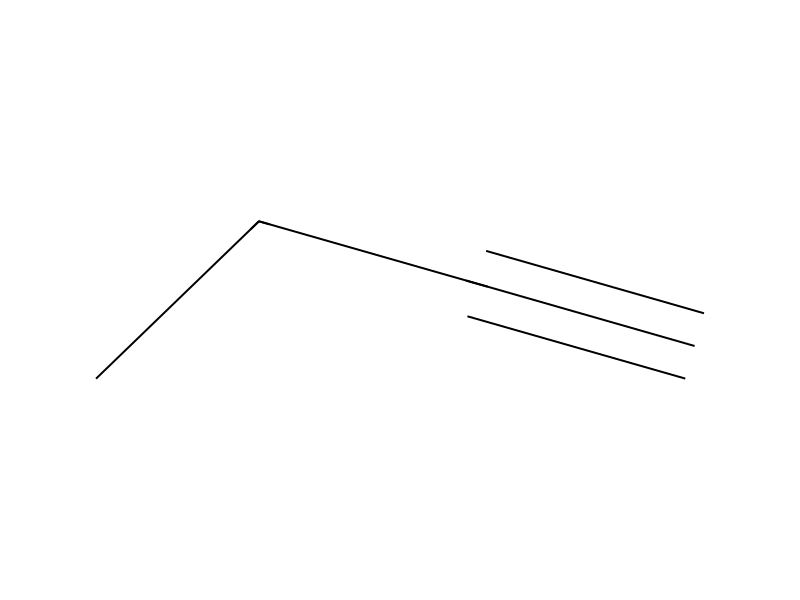
I[C:2]1[CH:15]=[C:14]2[C:5]([C:6]3[CH:7]=[CH:8][C:9]([OH:16])=[CH:10][C:11]=3[CH2:12][CH2:13]2)=[CH:4][CH:3]=1.C(NC(C)C)(C)C.C#CCC.Cl.[CH2:29]1[CH2:33][O:32][CH2:31][CH2:30]1>Cl[Pd](Cl)([P](C1C=CC=CC=1)(C1C=CC=CC=1)C1C=CC=CC=1)[P](C1C=CC=CC=1)(C1C=CC=CC=1)C1C=CC=CC=1.[Cu]I.O>[OH:32][CH2:31][CH2:30][C:29]#[C:33][C:2]1[CH:15]=[C:14]2[C:5]([C:6]3[CH:7]=[CH:8][C:9]([OH:16])=[CH:10][C:11]=3[CH2:12][CH2:13]2)=[CH:4][CH:3]=19.0 g (24.6 mmol) of 7-iodo-9,10-dihydrophenanthren-2-ol are initially introduced in 100 ml of THF, 1.0 g (1.43 mmol) of bis(triphenylphosphine)-palladium(II) chloride, 0.3 g (1.58 mmol) of copper(I) iodide and 11 ml of diisopropylamine are added, and a solution of 3.0 g (42.8 mmol) of 1-butyne in 20 ml of THF is subsequently added dropwise with cooling at max. 30° C. The batch is left to stir at room temp. for 1.5 h, added to water and acidified using 2 N hydrochloric acid. The aqueous phase is separated off and extracted three times with ethyl acetate. The combined org. phases are washed with water, dried over sodium sulfate, and the solvent is removed in vacuo. The crude product is filtered through silica gel with dichloromethane/ethyl acetate (3:1) and recrystallised from toluene, giving 7-(4-hydroxybut-1-ynyl)-9,10-dihydrophenanthren-2-ol as a colourless solid.