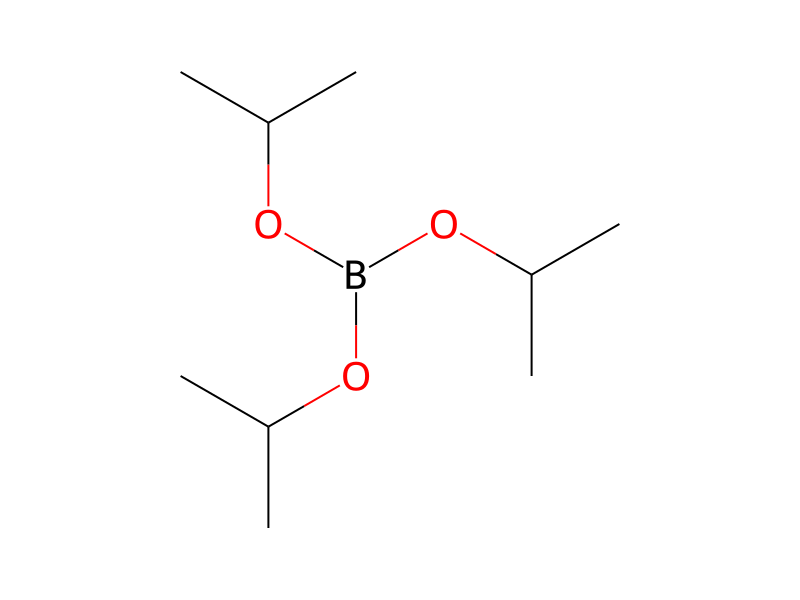
Br[C:2]1[CH:3]=[C:4]2[C:9](=[CH:10][CH:11]=1)[CH:8]=[C:7]([C:12]1[C:13]3[C:18]([C:19]4C=CC=C[C:24]=4[CH:25]=1)=[CH:17][CH:16]=[CH:15][CH:14]=3)[CH:6]=[CH:5]2.[CH2:26]([Li])[CH2:27][CH2:28][CH3:29].[B:31](OC(C)C)([O:36]C(C)C)[O:32]C(C)C.Cl>CCCCCC.C(OCC)C.C1(C)C=CC=CC=1>[CH:26]1[C:24]2[CH:25]=[C:12]([C:7]3[CH:6]=[CH:5][C:4]4[C:9](=[CH:10][CH:11]=[C:2]([B:31]([OH:36])[OH:32])[CH:3]=4)[CH:8]=3)[C:13]3[C:14](=[CH:15][CH:16]=[CH:17][CH:18]=3)[C:19]=2[CH:29]=[CH:28][CH:27]=1In argon atmosphere, a liquid mixture of 9.80 (25.6 mmol) of 6-bromo-2-(9-phenanthrenyl)naphthalene, 100 ml of dry toluene, and 100 ml of dry diethyl ether was cooled to −10° C. and 19.7 ml (30.7 mmol) of a 1.56 M hexane solution of n-butyllithium was added dropwise under stirring. Further, the reaction mixture was stirred at −10° C. for 4 h. The reaction solution was cooled to −60° C., and 14.4 g (76.7 mmol) of triisopropyl borate was added dropwise. The reaction mixture was heated and stirred at room temperature for 16 h. The reaction mixture was added with hydrochloric acid and stirred at room temperature overnight. After the reaction, the reaction mixture was separated into liquid phases, and the organic phase was washed with water. The solvent was removed by distillation under reduced pressure until the mixture was turned to slurry. After adding hexane to the residue, the solid matter was collected by filtration and recrystallized from THF and then from hexane to obtain 5.20 g (yield: 58%) of 2-(9-phenanthrenyl)naphthalene-6-boronic acid.