StartseiteMCPWorkbenchSkills
StartseiteWorkbenchBenachrichtigungenMein Bereich
llms.txt · MCP-AnleitungDatenschutz · Nutzungsbedingungen · Supportv1.8.3
  1. Startseite
  2. /Reaktion

Diiodomethane → Lithium diisopropylamide

HRID 1584388
Drucken

Reaktionsgleichung

Reaktionsgleichung von HRID 1584388
[CH:1]([NH:4][CH:5]([CH3:7])[CH3:6])([CH3:3])[CH3:2].[CH2:8]([O:10][C:11]([CH:13]1[CH2:18][CH2:17][O:16][CH2:15][CH2:14]1)=[O:12])[CH3:9].C([N-]C(C)C)(C)C.[Li+:26].[I:27][CH2:28]I>O1CCCC1.Cl>[CH:1]([N-:4][CH:5]([CH3:7])[CH3:6])([CH3:3])[CH3:2].[Li+:26].[CH2:8]([O:10][C:11]([C:13]1([CH2:28][I:27])[CH2:18][CH2:17][O:16][CH2:15][CH2:14]1)=[O:12])[CH3:9]
KomponentenVersuchsvorschriftAufarbeitungQuellen und NachweiseNotizen zur Reaktion

Komponenten

8

Edukt 4

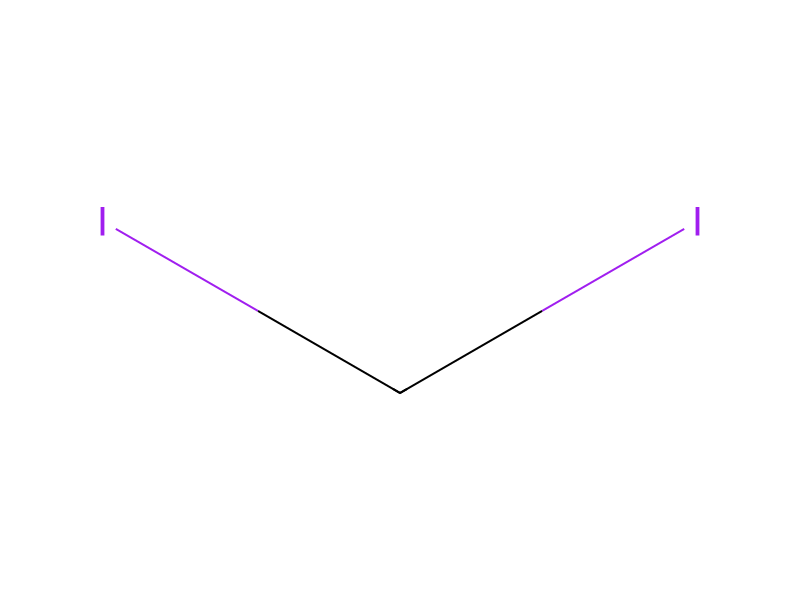
HCID 6346DiiodomethaneHCID 7912DiisopropylamineHCID 2724682Lithium diisopropylamideHCID 13467581Ethyl oxane-4-carboxylate

Produkt 2

HCID 2724682Lithium diisopropylamideHCID 543351764-(Iodomethyl)tetrahydropyran-4-carboxylic acid ethyl ester

Reagenzien, Katalysatoren, Lösungsmittel 2

HCID 313Hydrochloric AcidLösungsmittelHCID 8028TetrahydrofuranLösungsmittel2×

Versuchsvorschrift

Lithium diisopropylamide was prepared by the addition of 2.5M N-butyl lithium (5.6 mL, 13.9 mmol) in hexanes to a solution of diisopropylamine (1.95 mL, 13.9 mmmol) in tetrahydrofuran (30 mL) at 0° C. with stirring for 20 minutes. Then a solution of tetrahydropyran-4-carboxylic acid ethyl ester (2 g, 12.7 mmol) in tetrahydrofuran (8 mL) was added to the solution of lithium diisopropylamide at a temperature of -78° C. over 15 minutes. The resulting solution was stirred an additional 50 minutes, and diiodomethane (1.14 mL, 14.2 mmol) was added. The resulting mixture was stirred an additional 50 minutes, warmed to room temperature over 30 minutes, then recooled to 0° C. The mixture was diluted with 1M aqueous hydrochloric acid (25 ml), extracted with diethyl ether (2×100 mL), and washed with additional portions of diethyl ether (2×50 mL). The combined organic layers were washed once with 1M aqueous hydrochloric acid (100 mL), saturated aqueous sodium bisulfite (100 mL), saturated aqueous sodium bicarbonate (100 mL), and dried over magnesium sulfate, and concentrated in vacuo. The residue was filtered over a plug of silica gel, eluting successively with hexanes and ethyl acetate, removing excess alkylating agent with the hexane wash, to afford pure 4-(iodomethyl)tetrahydropyran-4-carboxylic acid ethyl ester as a pale yellow oil which was taken directly into the next reaction without further purification (3.20 g, 85%). IR (KBr) 1732 cm-1 ; 1HNMR (CDCl3) 1.31 (q, J=7.3 Hz, 3H), 1.56 (ddd, J=14.6, 10.9, 4.5, 2H), 2.17 (ddd, J=14.6, 5.7, 3.3, 2H), 3.31 (s, 2H), 3.51 (ddd, J=11.7, 11.1, 2.5 Hz, 2H), 3.51 (td, J=11.7, 4.3 Hz, 2H), 4.24 (q, J=7.1 Hz, 2H); 13CNMR (CDCl3) δ 14.33 (q) , 15.04 (t), 34.70 (t), 45.26 (s), 61.34 (t), 65.22 (t), 172.89 (s); EIHRMS Calcd. for C9H15IO3 (M+): 298.0066. Found: 298.0066. Anal. Calcd. for C9H15IO3 : C, 36.26; H, 5.07. Found: C, 36.56; H, 5.09.

Aufarbeitung

  1. stirringThe resulting solution was stirred an additional 50 minutes
  2. stirringThe resulting mixture was stirred an additional 50 minutes
  3. customrecooled to 0° C
  4. extractionextracted with diethyl ether (2×100 mL)
  5. washwashed with additional portions of diethyl ether (2×50 mL)
  6. washThe combined organic layers were washed once with 1M aqueous hydrochloric acid (100 mL), saturated aqueous sodium bisulfite (100 mL), saturated aqueous sodium bicarbonate (100 mL)
  7. dry with materialdried over magnesium sulfate
  8. concentrationconcentrated in vacuo
  9. filtrationThe residue was filtered over a plug of silica gel
  10. washeluting successively with hexanes and ethyl acetate
  11. customremoving excess alkylating agent with the hexane
  12. washwash

Quellen und Nachweise

ORD-Eintrag
ord-5776a94f8e6f427cbd9d51db22c632ad
Quelldatensatz
uspto-grants-1999_08
DOI
10.6084/m9.figshare.5104873.v1
Patentnummer
US05932595

Notizen zur Reaktion

Auf dieser SeiteKomponentenVersuchsvorschriftAufarbeitungQuellen und NachweiseNotizen zur Reaktion


