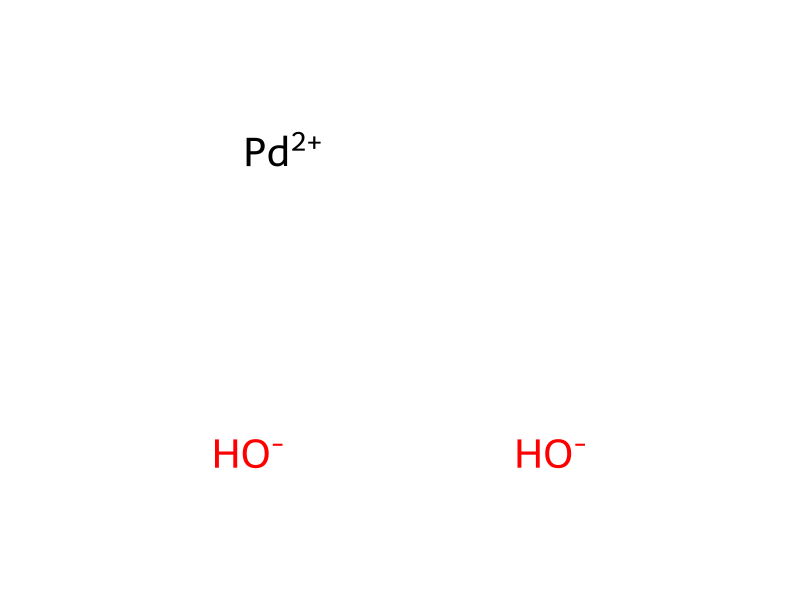
Palladium hydroxide on carbon, Pearlman's catalyst, (0.25 g) was added to a solution containing N,N-bis(phenylmethyl)-1-(2-methylpropyl)-1H-imidazo[4,5-c]quinolin-4-amine (0.4 g, 0.95 mmole, Example 4) in formic acid (20 mL). The reaction was heated at reflux for about 16 hours at which time more catalyst (0.2 g) was added and heating was continued until the reaction was complete as indicated by thin layer chromatography (silica gel; 5% methanol in methylene chloride). The reaction mixture was diluted with water (20 mL), methylene chloride (40 mL) and methanol (10 mL) then filtered. The filtrate layers were separated and the organic layer was concentrated under vacuum. The residue was recrystallized from dimethyl formamide then suspended in methanol and stirred before being isolated by filtration and dried to provide 0.1 g of a solid. The melting point and spectral properties of this material matched those of an authentic sample.